
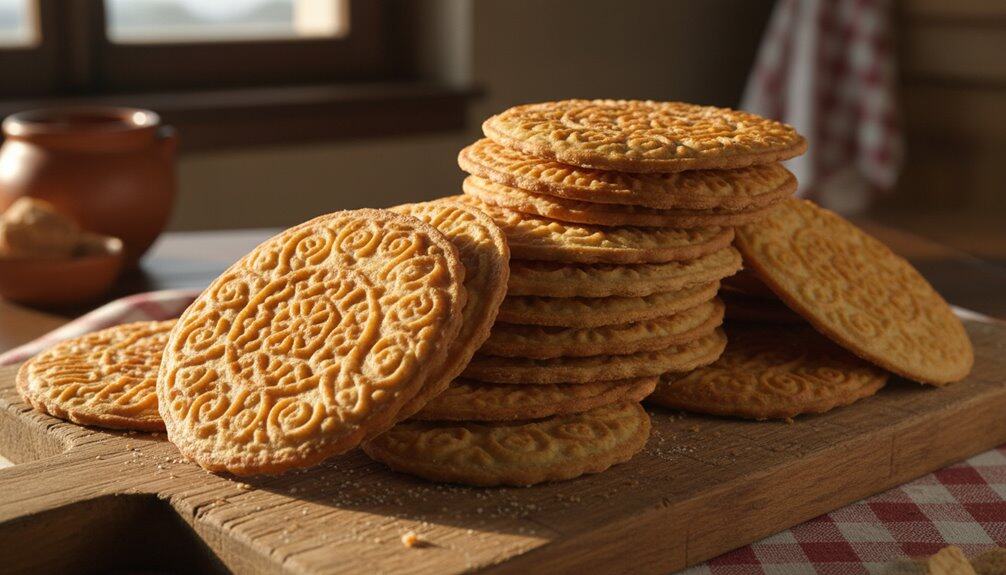
The Secret Behind Perfect Golden Pizzelle That Italian Grandmas Won’t Tell You
The secret to perfect golden pizzelle isn’t just the recipe—it’s mastering the precise timing and temperature that Italian grandmas perfect through years of practice. You’ll need your batter thick like pancake mix after resting it for an hour, your iron heated until the indicator light turns off, and the courage to pull those delicate wafers at exactly 20-90 seconds when they’re perfectly golden. These timing tricks transform ordinary batter into the crispy, golden pizzelle you’ve been craving.
Key Takeaways
- Rest your batter refrigerated for one hour until it transforms into a thick, cookie-dough-like texture that spreads evenly.
- Stir batter between each batch since it continues thickening while sitting, ensuring consistent golden results throughout cooking.
- Wait for indicator lights to turn off or green, not just initial heating, signaling your iron reached optimal temperature.
- Open the iron after 20 seconds to check resistance and golden-brown color rather than relying on preset timers.
- Transfer pizzelle to wire racks within 10 seconds of removal to achieve maximum crispness by preventing steam buildup.
Get Your Pizzelle Batter Thickness Just Right
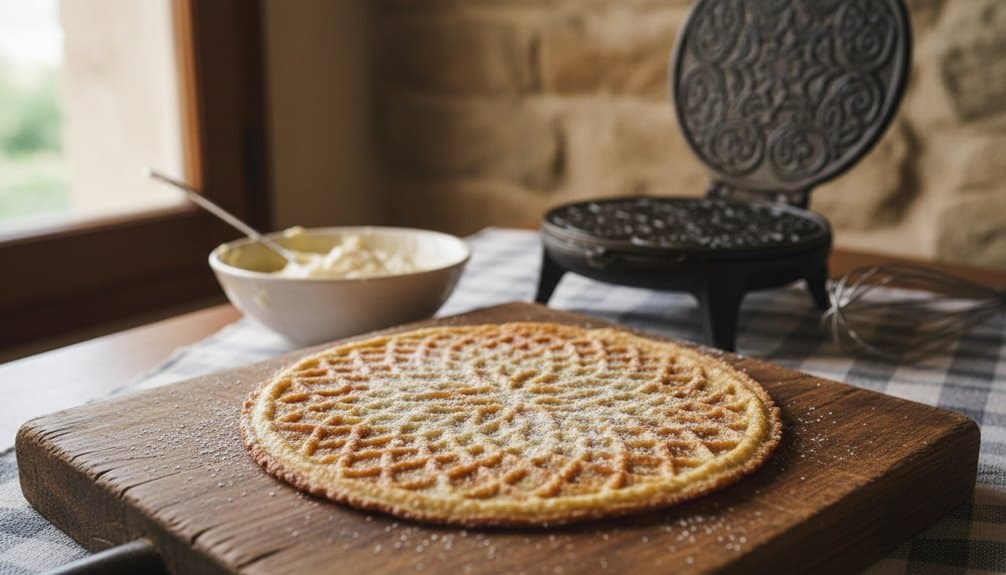
Why does your pizzelle batter need the consistency of thick pancake batter when the cookies turn out paper-thin? You’ll achieve this texture by incorporating 2¼ cups of flour into your egg mixture, creating a viscous batter that’s slightly thicker than cookie dough. This surprising thickness ensures proper spreading and prevents sticking during cooking.
Your resting batter technique makes all the difference. Let it sit refrigerated for one hour – this crucial thickness hydration period allows the flour to fully absorb moisture, transforming your mixture into something resembling cookie batter. You’ll notice it thickens considerably during this time. Use approximately 2 teaspoons per pizzelle to achieve the perfect golden-brown result without overflow.
If your batter clings to the iron after cooking, don’t panic. Simply add more flour gradually until you reach the right consistency. Remember to stir between batches since the batter continues thickening as it sits. This thick foundation spreads perfectly when pressed, creating those delicate, crispy pizzelles you’re after.
Find the Perfect Pizzelle Iron Temperature
How can you tell when your pizzelle iron reaches the perfect temperature for those coveted golden-brown cookies? For electric models, you’ll know it’s ready when the indicator light turns off after plugging in—typically taking 15 minutes for complete heating. Cuisinart irons use a green light signal, and their #3 iron setting delivers that perfect hint of golden brown without overcooking.
If you’re using stovetop cast iron, you’ll need different cues. Preheat for 7-8 minutes until the iron smokes and steams lightly. Your first pizzelle will cook half the normal time, while subsequent ones need three-quarters. You’ll achieve steady stove temperature after making two or three pizzelle. Remember to flip the iron every 15 seconds during the first minute on initial batches to heat both sides evenly. Once properly heated, your pizzelle should cook in 35-55 seconds, developing that signature light golden color—never brown—that signals optimal temperature. Even with non-stick surfaces, it’s advisable to brush the iron with vegetable or canola oil between cookies for best results.
Know When Your Pizzelle Are Done (Not Burned)
Your perfectly heated iron means nothing if you can’t recognize when those delicate cookies reach their peak. Those indicator lights? They’re tricksters. Red lights signal preheating completion in 3-4 minutes, but they’ll cycle on and off during baking to maintain temperature—not to tell you when pizzelle are done.
Here’s what actually works:
- Open the lid after 20 seconds—resistance means they need more time
- Watch for lightly golden brown coloring through visual cues
- Use a stopwatch for consistency (standard times range 20-90 seconds)
- Make a test batch first to nail your preferred browning level
- Add 5-second increments if you feel resistance when lifting the lid
You’re walking a tightrope between underdone and burnt. Most irons need 40-50 seconds for ideal browning, but your PizzellePro might finish in under 30 seconds. For a standard 4-inch pizzelle on a non-stick electric press, expect approximately 1 minute 30 seconds of cooking time. Want rollable shells? Subtract 5 seconds from your standard time. Remember, there’s a quick tipping point between perfect and ruined.
Remove and Cool Pizzelle for Maximum Crispness
When you lift that golden pizzelle from the iron, you’ve got exactly 10 seconds to make or break its signature crispness. Use an offset spatula to transfer each warm pizzelle directly onto wire cooling racks—never onto plates or baking sheets that’ll trap steam and ruin your texture.
Your pizzelle emerge floppy but transform within 1-2 minutes as they cool. Here’s what you’re dealing with:
| Surface Type | Cooling Time | Crispness Result |
|---|---|---|
| Wire Rack | 1-2 minutes | Maximum crisp |
| Parchment | 2-3 minutes | Moderate crisp |
| Baking Sheet | 3+ minutes | Soft/chewy |
These crispness tips guarantee success: place pizzelle in single layers for even ventilation, move cooled batches away to free rack space, and trim edges while they’re warm. Once they’ve turned light golden and feel firm, they’re ready for storage. Skip the fridge—it introduces moisture that’ll destroy your work. Store completely cooled pizzelle in airtight containers for up to seven days.
Frequently Asked Questions
Can I Make Pizzelle Batter Ahead and Refrigerate It Overnight?
Yes, you can absolutely make pizzelle batter ahead and refrigerate overnight. This makeahead batter technique is actually a traditional Italian practice that’ll deepen your flavors beautifully. Just cover your bowl tightly to prevent drying, then refrigerate overnight or at least a few hours. When you’re ready to cook, let the batter reach room temperature first. You’ll find this method makes your pizzelles even more delicious than same-day preparation.
Why Do My Pizzelle Stick Even With Nonstick Spray?
Your pizzelle stick because nonstick spray doesn’t last through multiple batches like vegetable oil does.
You’re experiencing classic spray troubleshooting – the coating breaks down quickly, causing batter adhesion after just a few pizzelle.
To fix sticky issues and prevent nonstick failure, switch to brushing a thin layer of vegetable oil on both plates.
It’ll coat your iron effectively for over 100 pizzelle without reapplication, eliminating those frustrating sticking problems.
How Long Do Homemade Pizzelle Stay Fresh When Stored Properly?
Your homemade pizzelle stay fresh for up to two weeks at room temperature when you store them in airtight containers with parchment paper between layers.
For longer storage tips, you’ll want to freeze them for up to two months in properly wrapped packages.
How to timing matters – always cool them completely for 30 minutes before storing to prevent condensation that’ll ruin their signature crisp texture.
Can I Use Whole Wheat or Gluten-Free Flour Instead?
Yes, you can make both gluten free substitutions and whole wheat adaptation work for pizzelle. For whole wheat, use 1¾ cups flour plus 2 extra tablespoons melted butter since it absorbs more liquid. With gluten-free blends, add ½ teaspoon xanthan gum if needed and increase baking powder to 2½ teaspoons. You’ll get denser, nuttier results with whole wheat, while gluten-free pizzelle turn out more fragile but still delicious.
What’s the Difference Between Pizzelle and Stroopwafel Irons?
You’ll notice pizzelle irons create ultra-thin cookies with intricate snowflake patterns, while stroopwafel irons produce thicker, flat wafers for caramel filling. Iron comparisons reveal pizzelle models make 1/32″ to 1/4″ crispy treats with decorative designs, whereas stroopwafel versions yield 3-5mm plain wafers. Cookie chemistry differs too – pizzelle irons emphasize quick crisping through ornate grids, but stroopwafel irons focus on even heat for pliable, splittable wafers.
Conclusion
You’ve now mastered the Italian grandmas’ secret to perfect golden pizzelle. You’ll get that ideal batter consistency, dial in your iron’s temperature, and know exactly when they’re done. You won’t burn another batch, and you’ll achieve that signature crispness every time. These delicate cookies aren’t mysterious anymore – they’re yours to perfect. Follow these techniques, and you’ll create pizzelle that rival any nonna’s recipe. Your kitchen’s about to smell like an authentic Italian bakery.


Table of Contents
Related posts:
 Top 10 Easy Mediterranean Diet Recipes for a Healthy Heart for Every Occasion
 Deliciously Light: 10 Irresistible Mediterranean Diet Desserts to Boost Your Weight Loss Journey
 Celebrating the Significance of Pentecost Feast Day: Unlocking the Spirit
 Kickstart Your Day: 21 Delicious Mediterranean Diet Breakfast Recipes for a Healthy Lifestyle


No Comments