
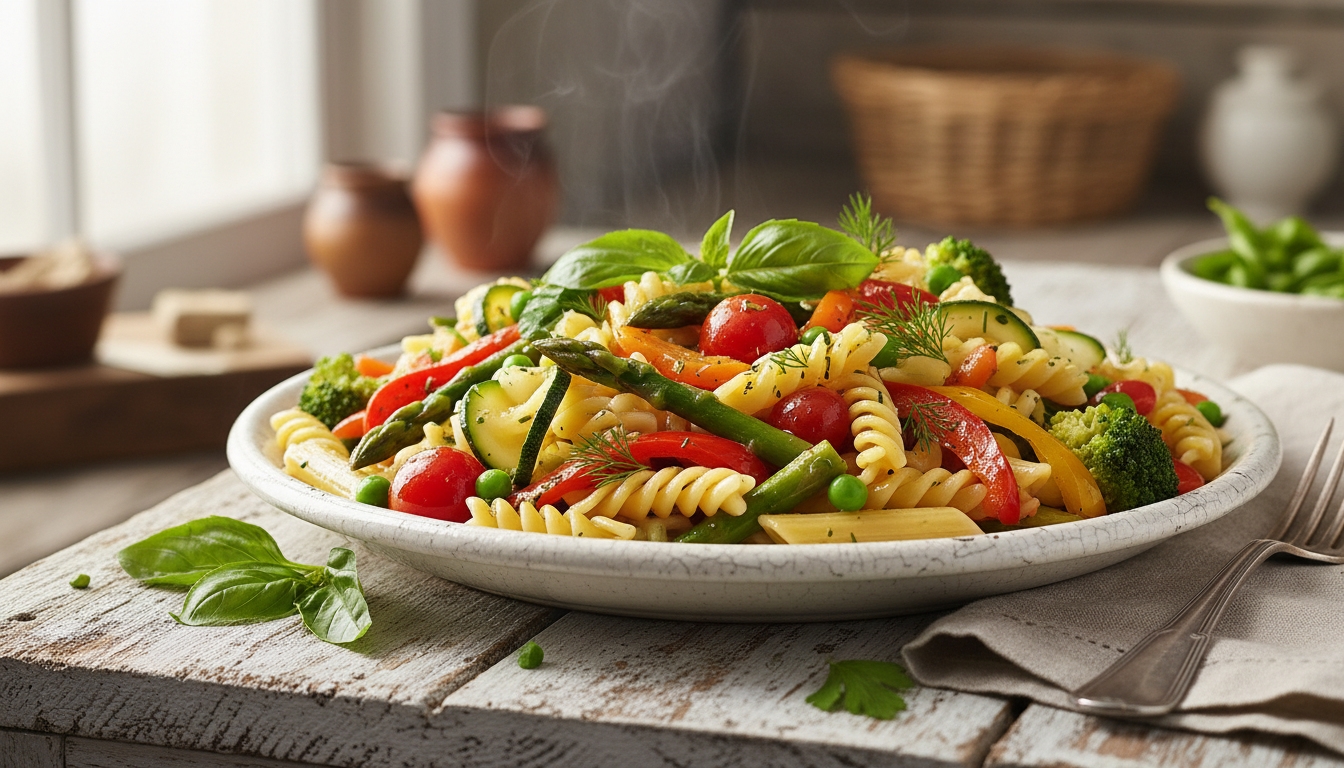
Pasta Primavera That Doesn’t Taste Bland: The Colorful, Veg-Loaded Dinner Everyone Will Actually Crave
Pick a sturdy, ridged pasta like penne, then toss it with bright, seasonal veggies—crisp bell peppers, tender zucchini, sweet snap peas, and carrots—that you’ve sliced uniformly and seared quickly in hot oil. Finish the mix with a splash of lemon juice, a generous handful of Parmesan, and a splash of reserved pasta water for a glossy, flavor‑packed coating. Add fresh herbs, a drizzle of extra‑virgin olive oil, or your favorite protein, and you’ll get a vibrant primavera that never feels bland—keep going for the full step‑by‑step guide.
Key Takeaways
- Choose sturdy, ridged pasta (penne or farfalle) to hold sauce and provide texture.
- Toss uniformly cut, fresh seasonal veggies with olive oil, salt, and pepper before a quick high‑heat sear.
- Finish seared vegetables with lemon juice, generous Parmesan, and a splash of reserved pasta water for a glossy coating.
- Adjust seasoning by tasting, adding more salt, pepper, or lemon as needed, and incorporate fresh herbs like basil or thyme.
- Add optional protein (grilled chicken, shrimp, tofu) and a drizzle of extra‑virgin olive oil for richness and depth.
Pick Pasta and Fresh Veggies for Pasta Primavera
Typically, you’ll start by choosing a sturdy pasta—like penne or farfalle—that holds up to a bright mix of vegetables. Pick a shape that captures sauce and lets each bite deliver texture; short, ridged noodles work best. Next, head to the market for seasonal produce. Look for crisp bell peppers, tender zucchini, sweet snap peas, and vibrant carrots. Choose vegetables that are firm, brightly colored, and free of blemishes. If you can, buy organic or locally grown items for peak flavor. Wash them thoroughly, then cut each piece into uniform, bite‑size chunks so they cook evenly. Toss the veggies with a drizzle of olive oil, a pinch of salt, and a dash of black pepper before they hit the pan. This simple preparation ensures the vegetables retain their natural crunch and vivid color, setting the stage for a lively, satisfying primavera.
Boost Pasta Primavera Flavor: Sear, Lemon, Parmesan
Sear the vegetables briefly in a hot pan to lock in caramelized flavor, then finish the dish with a bright splash of lemon juice and a generous sprinkle of Parmesan. You’ll notice the veggies turn glossy and sweet, while the lemon cuts through richness and the cheese adds umami depth. Use a high‑heat skillet, toss the zucchini, bell pepper, and snap peas for a minute or two, and let the edges brown. Immediately drizzle ½ lemon juice, then stir in cooked pasta and a handful of grated Parmesan. The cheese melts into a silky coating, binding every bite. Serve hot, and you’ll taste a balanced, lively sauce that never feels flat.
| Step | Action |
|---|---|
| 1 | Sear veggies in hot oil |
| 2 | Add lemon juice |
| 3 | Sprinkle Parmesan and toss |
Assemble & Customize Your Pasta Primavera
Once the veggies are seared and the lemon‑Parmesan sauce is ready, toss the cooked pasta into the pan, letting the sauce cling to every strand. Add a splash of reserved pasta water if the mixture feels dry; the starch will bind the sauce and give it a glossy finish. Now, personalize each bite: sprinkle fresh basil, thyme, or dill for aromatic depth, and drizzle a pinch of extra‑virgin olive oil for richness. For a protein boost, fold in grilled chicken, shrimp, or tofu cubes, letting them warm through. If you crave heat, crack in red‑pepper flakes or a drizzle of chili oil. Finish with a generous shaving of Pecorino or a dollop of ricotta for creaminess. Taste, then adjust salt, pepper, or a squeeze of lemon. Serve immediately, letting the vibrant colors and flavors shine on the plate.
Frequently Asked Questions
Can I Use Gluten‑Free Pasta for This Recipe?
Yes, you can swap in gluten‑free pasta; just cook it al dente, then toss it with the same fresh veggies, olive oil, lemon zest, and Parmesan for a vibrant, satisfying Primavera.
How Long Should I Blanch the Vegetables Before Sautéing?
Blanch the veg for two to three minutes—just enough to brighten color and soften slightly. Then shock them in ice water, drain, and toss into the pan for a quick sauté.
Is It Okay to Substitute Pecorino for Parmesan?
Yes, you can swap pecorino for parmesan; its sharper, saltier bite will still complement the veggies. Just use a little less, taste as you go, and adjust seasoning if needed.
Can I Make This Dish Ahead and Reheat It Later?
Yes, you can. Cook the pasta al‑dente, toss it with veggies and sauce, then cool it quickly. Store in airtight containers, refrigerate up to three days, and reheat gently on the stove or microwave, adding a splash of water if needed.
What Wine Pairs Best With a Bright, Lemony Pasta Primavera?
You’ll love a crisp Sauvignon Blanc or a light Pinot Grigio; both cut through the lemony brightness, match the veggies’ freshness, and keep the dish lively without overwhelming its delicate flavors.
Conclusion
Now you’ve got a vibrant, flavor‑packed pasta primavera that never feels bland. The quick sear gives the veggies a caramelized bite, the lemon brightens every forkful, and the Parmesan adds that salty, creamy finish. Mix‑and‑match your favorite herbs or a splash of olive oil for extra depth, and serve it hot. You’ll crave this colorful, satisfying dinner night after night.


Table of Contents





No Comments