
How to Assess Newborn Growth Without a BMI Calculator
You’ll assess your newborn’s growth using weight-for-length ratios plotted on standardized growth charts, not BMI calculations which aren’t appropriate for infants. Track weight, length, and head circumference at each well-child visit, watching for consistent percentile curves rather than single values. Monitor daily weight gain (about one ounce per day initially), feeding patterns (8-12 times daily), and diaper output (six wet diapers after day four). These measurements together reveal whether your baby’s development stays on track.
Key Takeaways
- Track weight, length, and head circumference at regular intervals, plotting measurements on standardized growth charts to monitor percentile consistency over time
- Use weight-for-length ratios instead of BMI to assess proportional growth in infants under two years old
- Monitor weight gain patterns: expect birth weight doubling by five months and tripling by one year
- Assess feeding adequacy through diaper output (six wet diapers daily after day four) and steady weight gain
- Watch for consistent tracking along percentile curves rather than focusing on single percentile values
Understanding Growth Charts and Percentile Curves for Babies
When your baby arrives, healthcare providers immediately begin tracking their growth using standardized charts that compare your child’s measurements to thousands of other babies. These charts plot weight, length, and head circumference against age, creating curves that show typical growth patterns.
You’ll see your baby’s measurements expressed as percentiles. Percentile interpretation isn’t about grades—if your baby’s weight falls at the 25th percentile, they’re heavier than 25% of babies their age and lighter than 75%. What’s important isn’t the specific number but your baby’s consistency along their curve.
Growth velocity matters more than absolute percentiles. Your pediatrician watches how quickly your baby grows between visits. A baby steadily following the 15th percentile curve is thriving just as well as one at the 85th. You should worry only if your baby’s measurements suddenly cross multiple percentile lines up or down, which could signal feeding issues or health concerns requiring attention.


| Fitness Calculation | Result |
|---|---|
| BMI Calculation: | cal... |
| BFP Calculation: | cal... |
| Ideal Weight : | cal... |
| BMR Calculation : | cal... |
Tracking Weight Gain Patterns During the First Year
Nearly all newborns lose weight in their first few days of life—typically 5-10% of their birth weight—before beginning their upward growth trajectory. You’ll see your baby regain birth weight by two weeks old, then gain roughly one ounce daily during months one through three.
Track your baby’s weight through daily clustering of measurements rather than focusing on single data points. You’ll notice faster growth spurts around weeks three and six, followed by steadier gains. Between months four and six, expect weight gain to slow to half an ounce daily. After six months, growth decelerates further to about one pound monthly.
Pattern visualization helps you spot trends over time. Plot weekly weights on graph paper or use a tracking app to see the overall curve. You’ll identify normal fluctuations versus concerning patterns more easily. Remember that breastfed babies often gain weight differently than formula-fed infants, with more rapid early gains followed by slower steady growth.
Measuring Length and Height at Regular Intervals
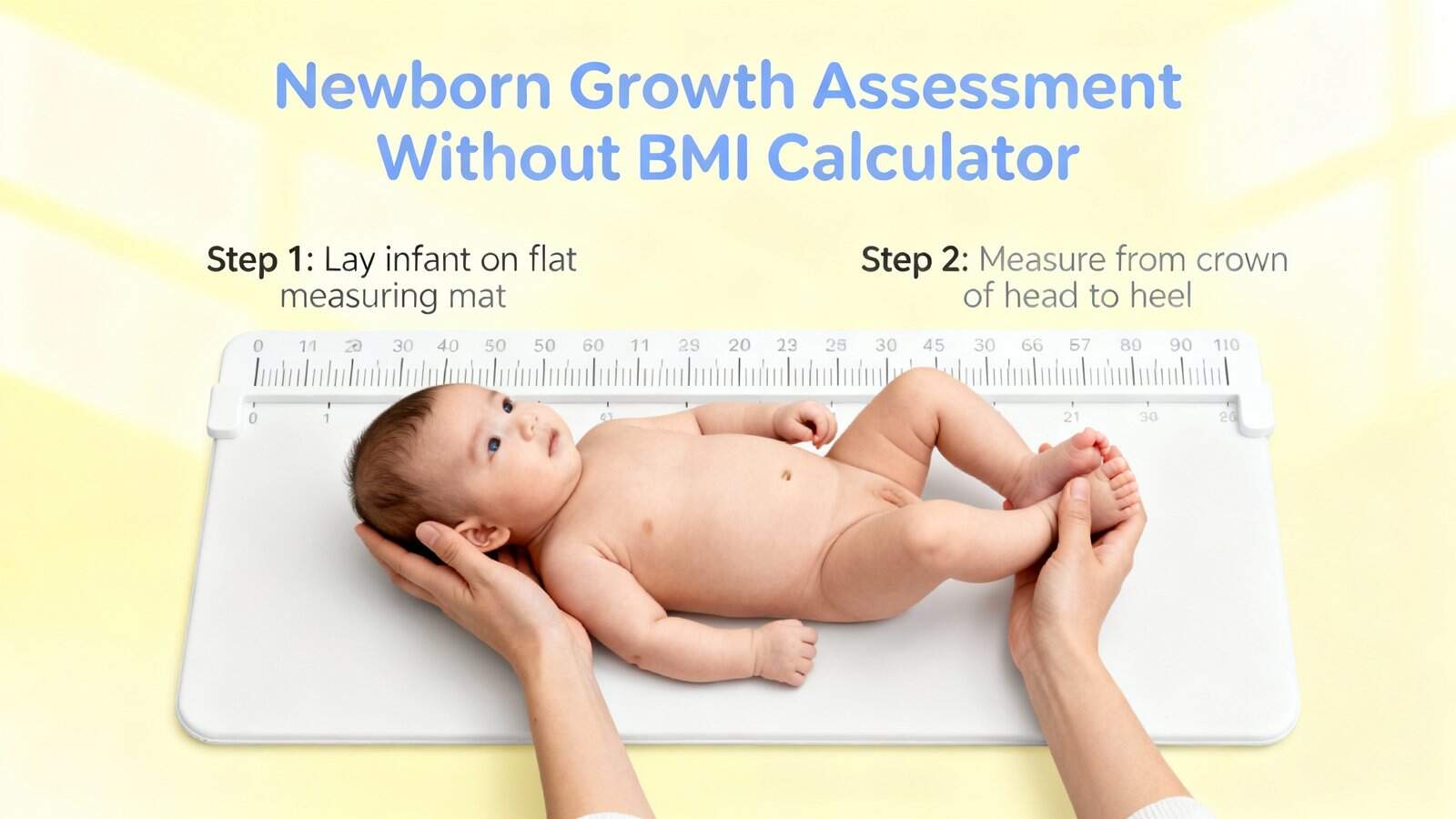
You’ll need to measure your baby’s length correctly by laying them flat on a measuring board with their legs fully extended and head positioned against the fixed headpiece.
Your pediatrician will plot these measurements on growth charts to track whether your child’s following their expected growth curve over time.
Recording these measurements at each well-child visit helps identify any potential growth concerns early.
Proper Measurement Techniques
Stretch your baby gently on a firm, flat surface to get an accurate length measurement during those crucial first months.
You’ll need two people for accurate positioning – one to hold your baby’s head against the headboard while the other straightens their legs.
Don’t force your baby’s knees down; instead, apply gentle pressure until they’re extended naturally.
Place the measuring tape alongside your baby’s body, ensuring proper tape alignment from the crown of their head to their heels.
Keep the tape straight and flat against the surface, not curved around your baby’s body.
Take three measurements and record the average for consistency.
If you’re measuring alone, mark the head and heel positions on paper beneath your baby, then measure between the marks.
Tracking Growth Patterns
During your baby’s first year, you’ll track their length at every well-child visit to ensure they’re growing at a healthy rate. Your pediatrician will plot these measurements on growth charts, showing how your baby compares to standard percentiles for their age.
Between appointments, you can maintain parent-led tracking by measuring your baby monthly at home. Record these measurements in a notebook or use a mobile app that checks automatically and calculates percentiles and flags concerning patterns. You’re looking for consistent growth along their established curve rather than hitting specific numbers.
Watch for sudden drops or plateaus lasting more than two months. If your baby’s length crosses two percentile lines up or down, contact your pediatrician. Remember, healthy babies grow at different rates, but steady progress matters most.
Monitoring Head Circumference as a Growth Indicator
You’ll measure your baby’s head circumference by wrapping a measuring tape around the widest part of the head, just above the eyebrows and ears, keeping it level and snug but not tight.
This measurement follows standardized techniques that ensure accuracy and allow comparison with growth percentile charts specific to your baby’s age and sex.
Measuring Technique Standards
Position your measuring tape correctly around the newborn’s head to capture accurate growth data that healthcare providers rely on for developmental assessments. You’ll need to place the tape just above the eyebrows, over the ears, and around the most prominent part of the back of the head. Keep the tape snug but not tight against the skin.
Before measuring, check your tape meets calibration standards by comparing it against a ruler monthly. You’re responsible for equipment sanitation between uses—wipe the tape with approved disinfectant to prevent cross-contamination.
Take three measurements and record the largest one to the nearest millimeter. If readings vary by more than 0.5 cm, remeasure. Document the measurement immediately in the growth chart, noting the infant’s age in weeks.
Percentile Chart Interpretation
After obtaining accurate measurements, you’re ready to plot the data on standardized growth charts that track head circumference against age-specific percentiles. You’ll find separate charts for boys and girls, as their growth patterns differ slightly.
When growth charting, mark your baby’s measurement at the intersection of their age and head circumference value. This point shows which percentile your infant falls into compared to other babies. For example, the 50th percentile means your baby’s head circumference is larger than 50% of same-age infants.
During percentile interpretation, you’re looking for consistent tracking along a curve rather than specific numbers. A healthy baby typically follows their established percentile line. Sharp increases or decreases warrant medical attention, as they may indicate underlying issues. Regular plotting helps you spot these trends early.
Recognizing Healthy Feeding Patterns and Milk Intake

Most newborns naturally develop predictable feeding patterns within their first few weeks of life, giving you clear signals about whether they’re getting enough milk.
You’ll notice your baby’s feeding cues become more distinct—rooting, sucking on hands, and increased alertness mean it’s time to eat. Crying is actually a late hunger sign.
For breastfed babies, you can’t measure milk volumes directly, but you’ll see they’re satisfied after 15-20 minutes per breast. They’ll release the breast naturally and appear relaxed.
Formula-fed newborns typically consume 2-3 ounces per feeding in the first month, gradually increasing to 4-5 ounces by month two.
Watch for these healthy intake indicators: your baby feeds 8-12 times daily, produces six wet diapers and several stools after day four, and gains weight steadily.
You’ll hear rhythmic swallowing during feeds and see milk in their mouth. Between feedings, they’ll seem content and have periods of alertness.
Observing Physical Development Milestones by Age
You’ll track your baby’s physical development through three key measurements that pediatricians use to assess growth. Head circumference reveals brain development, while length measurements show skeletal growth, and weight gain patterns indicate overall health and nutrition.
These measurements, when plotted on growth charts, help you and your healthcare provider spot any concerns early and ensure your newborn is thriving.
Head Circumference Tracking
Healthcare providers typically measure your baby’s head circumference at every well-child visit during the first two years of life. They’ll wrap a measuring tape around your baby’s head at its widest point, just above the eyebrows and ears. This measurement tracks brain growth and helps identify potential developmental concerns early.
You can monitor cranial symmetry by observing your baby’s head shape from different angles. Note any flattening or asymmetry, which might indicate positional plagiocephaly. Watch for fontanelle changes too—the soft spots should feel flat and firm, not sunken or bulging. The posterior fontanelle closes by two months, while the anterior one remains open until 18 months.
Record measurements on growth charts to track patterns over time. Consistent growth along the same percentile curve indicates healthy development.
Length Measurement Techniques
Stretching your baby gently from head to toe requires proper technique to get an accurate length measurement. You’ll need two people for best results—one to hold your baby’s head against the measuring board‘s headpiece while you straighten the legs and press the feet flat against the footboard.
Don’t worry about length variability between measurements. Babies naturally curl up, and their muscle tone affects how much they’ll stretch. You’re establishing an infant baseline for tracking growth over time, not seeking perfect precision in single readings.
Place your baby on a firm, flat surface with a proper measuring board. If you don’t have one, mark your baby’s head and heel positions on paper beneath them. Measure between marks with a tape measure. Always record measurements immediately to track growth patterns accurately.
Weight Gain Patterns
While most newborns lose 5-10% of their birth weight in the first few days, they’ll typically regain it by two weeks old and then follow predictable growth patterns. You’ll notice your baby gains approximately 5-7 ounces weekly during the first month, then 1-2 pounds monthly until six months.
Watch for consistent feeding cues and early satiety signs like turning away from the breast or bottle, which indicate your baby’s getting enough nutrition. Hormonal influences, particularly growth hormone and insulin-like growth factor, regulate these weight gain patterns naturally. Your baby should double their birth weight by five months and triple it by their first birthday. Track weekly weight measurements initially, then monthly after two months. If your baby’s following their growth curve steadily, they’re developing appropriately regardless of their percentile ranking.
Assessing Diaper Output as a Sign of Proper Nutrition
Regularly monitoring your baby’s diaper output provides one of the most reliable indicators that they’re receiving adequate nutrition in their first weeks of life. You’ll notice distinct patterns emerge as your newborn’s digestive system develops and milk intake increases.
During the first few days, expect minimal wet diapers—about one to two daily. By day five, you should see at least six wet diapers within 24 hours. These diapers should feel heavy, and the urine should appear pale yellow or clear. Dark, concentrated urine signals potential dehydration.
Soiled diapers follow predictable changes too. Your baby’s first bowel movements consist of thick, black meconium. Within three to four days, stools transition to greenish-brown, then yellow.
Breastfed babies typically produce three to four soiled diapers daily after the first week, while formula-fed infants may have fewer. Tracking these outputs helps you confirm your baby’s getting enough nutrition without relying on weight measurements alone.
| Carbs Requirement | Women | Men |
|---|---|---|
| Recommended amount: | 20-25% | 8-14% |
| Adults in United States, average : | 22-25% | 15-19% |
| Obese : | 30+% | 25+% |
Evaluating Skin Tone, Energy Levels, and General Appearance

Beyond diaper counts, your baby’s physical appearance and behavior offer valuable clues about their nutritional status and overall health. You’ll notice well-nourished babies display distinct characteristics that signal proper growth.
Watch for these healthy signs:
- Pink, warm skin color – Your baby’s skin should appear pink-toned (regardless of ethnicity) without yellowing or blue tinges
- Alert periods between sleep – Expect 1-2 hours of quiet alertness daily where your baby observes surroundings
- Strong crying when hungry – A robust cry indicates good energy reserves and lung capacity
- Smooth, elastic skin – When you gently pinch the skin, it should spring back immediately
Your baby’s activity level reveals their energy status. They should move their arms and legs periodically, even during sleep.
Lethargic behavior or excessive sleepiness warrants immediate medical attention. Similarly, persistent mottled skin, especially with cold extremities, suggests circulation issues requiring evaluation. Trust your instincts—you know when something seems off.
Using Weight-for-Length Ratios Instead of BMI
Physical appearance gives you immediate feedback about your baby’s health, but tracking proportional growth requires specific measurements. You’ll find weight-for-length ratios more appropriate than BMI for assessing your newborn’s body proportions. These ratios directly compare your baby’s weight to their length, providing a clearer picture of growth patterns during rapid developmental changes.
To get accurate measurements, ensure optimal positioning by laying your baby flat on a firm surface with legs fully extended. Measure from the crown of the head to the heel. Then weigh your baby on a calibrated infant scale. Plot these measurements on ratio charts specifically designed for infants, which differ from standard BMI charts used for older children and adults.
Your pediatrician uses these weight-for-length percentiles to track whether your baby’s growing proportionally. Values between the 5th and 95th percentiles typically indicate healthy growth. These measurements help identify potential feeding issues or growth concerns earlier than visual assessment alone.
When to Contact Your Pediatrician About Growth Concerns

While most babies follow predictable growth patterns, certain signs warrant immediate medical attention. You’ll need to schedule pediatrician consultations when you notice deviations from your baby’s established growth curve or concerning physical symptoms.
Watch for these critical growth alarms:
- Weight loss exceeding 10% after birth – Normal newborns lose 5-7% initially, but greater losses indicate feeding problems
- No weight gain by two weeks old – Your baby should return to birth weight by day 14
- Crossing growth percentile lines – Dropping from 50th to 10th percentile signals potential issues
- Poor feeding with lethargy – Decreased alertness combined with weak sucking requires evaluation
Don’t wait for scheduled appointments if you’re concerned. Trust your instincts—you know your baby best. Early intervention prevents complications and ensures proper development. Your pediatrician can assess whether growth variations are normal for your child or require additional testing and support.
Frequently Asked Questions
How Do Premature Babies’ Growth Expectations Differ From Full-Term Infants?
You’ll track premature babies differently than full-term infants because they’re starting behind developmentally.
Your preemie’s growth charts use adjusted age, calculating from their due date rather than birth date.
They’ll typically grow faster initially to “catch up” but may face medical complications affecting their progress.
You shouldn’t expect them to match full-term milestones immediately – they need extra time to reach similar weight, length, and head circumference measurements.
Can Genetics Affect My Baby’s Growth Rate Compared to Standard Charts?
Yes, your baby’s growth rate can differ from standard charts due to family genetics and ethnic variation. If you’re tall or petite, your baby will likely follow similar patterns.
Standard growth charts don’t always account for ethnic variation – Asian babies often measure smaller while Polynesian babies tend larger. Your pediatrician should consider your family’s build when evaluating growth. What matters most is that your baby follows their own consistent growth curve.
What Home Tools Do I Need to Measure My Baby Accurately?
You’ll need a few essential tools for accurate measurements at home.
Get a flat measuring board or mat specifically designed for babies to track length – don’t use a tape measure as it won’t give precise readings.
A digital kitchen scale works well for weight checks between doctor visits.
You’ll also want a flexible measuring tape for head circumference.
Keep a growth chart and notebook to record all measurements consistently.
How Does Breastfeeding Versus Formula Feeding Impact Growth Assessment Methods?
Your assessment methods stay the same regardless of feeding type, but you’ll track different indicators.
With breastfeeding patterns, you’ll monitor feeding frequency, duration, and wet/dirty diapers since you can’t measure exact intake. For formula volumes, you’ll record ounces consumed per feeding.
Both groups use the same growth charts, though breastfed babies may gain weight differently – typically faster initially, then slower after three months compared to formula-fed infants.
Should I Worry if My Baby Drops Percentile Curves Temporarily?
You shouldn’t panic about temporary dips in percentile curves. Your baby might cross percentiles during growth spurts, illness, or developmental leaps like learning to crawl.
While parental concern is natural, most short-term fluctuations aren’t worrisome if your baby’s alert, feeding well, and meeting milestones. Track the overall trend rather than individual measurements. Contact your pediatrician if drops persist beyond two consecutive check-ups or you notice other concerning symptoms.
Conclusion
You don’t need a BMI calculator to track your baby’s growth effectively. By monitoring weight gain patterns, measuring length and head circumference, and observing feeding habits and diaper output, you’ll get a complete picture of your newborn’s development. Trust your instincts—if your baby’s energetic, feeding well, and meeting milestones, they’re likely thriving. Remember, weight-for-length ratios work better than BMI for infants. When concerns arise, don’t hesitate to contact your pediatrician for guidance.


No Comments