
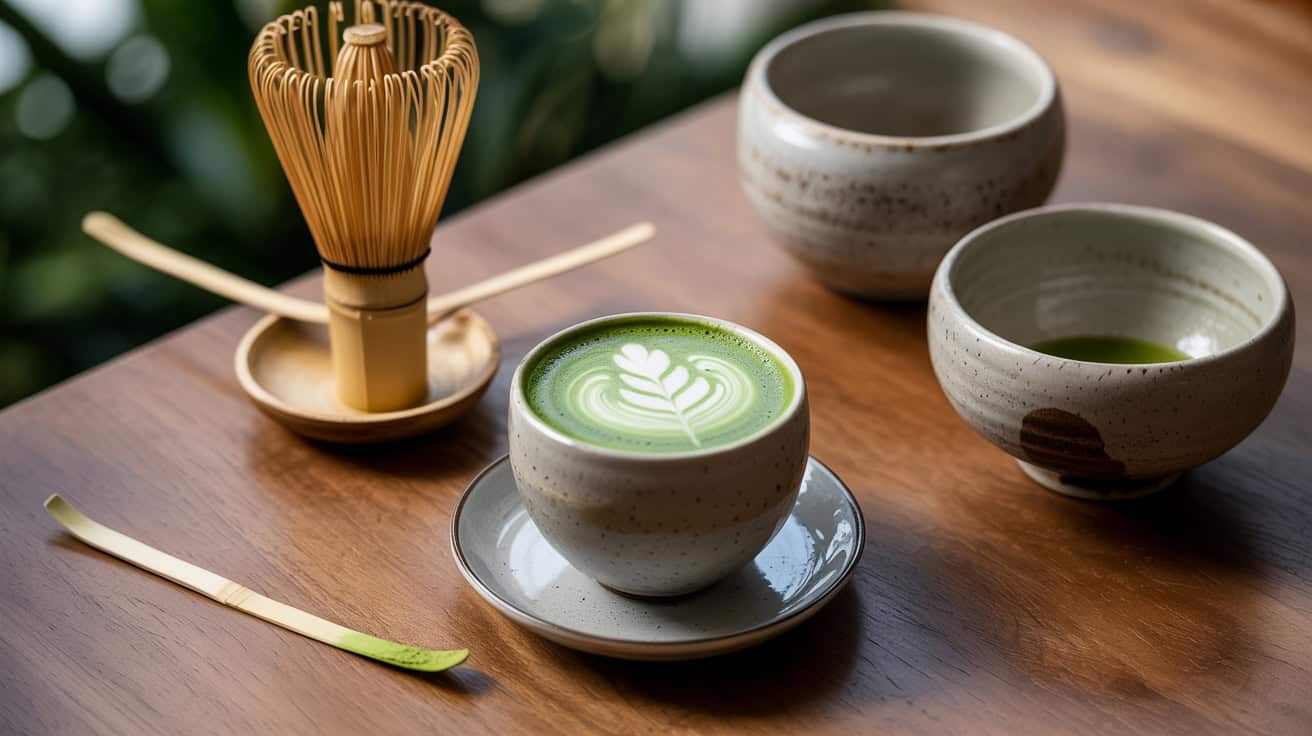
Matcha Zanmai Exploring This Unique Matcha Experience
You’ll find Matcha Zanmai blends centuries-old Japanese tea ritual with modern culinary creativity to give you an immersive, matcha experience. You’ll taste vegetal umami, bright sweetness, and a velvety texture from stone‑ground ceremonial powder. Hosts balance precise whisking, water temperature, and serving bowls to highlight aroma and harmony. Whether you prefer a traditional usucha or a creamy latte, you’ll appreciate graded matcha and mindful preparation. Keep going to uncover brewing tips, pairings, and sourcing notes.
Key Takeaways
- Matcha Zanmai celebrates immersive matcha enjoyment, blending traditional tea ceremony rituals with modern culinary creativity.
- It highlights ceremonial-grade matcha for whisked usucha or koicha, emphasizing texture, color, and umami.
- The experience focuses on mindful preparation: sifting, 70–80°C water, brisk whisking, and immediate serving for optimal flavor.
- Tasting explores layered flavors—sweet honey or melon, savory umami, floral finish, and balanced bitterness.
- Matcha Zanmai values proper storage, freshness, and health benefits like antioxidants and L-theanine–supported calm energy.
A Brief History of Matcha and Its Cultural Roots
Although you might think of matcha as a modern health trend, its story stretches back nearly a thousand years to China and then Japan, where powdered green tea evolved into a ritual centerpiece.
You trace tea origins to Zen monks who carried powdered tea and mindfulness practices across Asia; later Japanese artisans refined preparation, elevating matcha into chanoyu, the tea ceremony, where every gesture conveys restraint and hospitality.
You’ll notice how matcha’s vivid color, powdered texture, and bitter-sweet taste became symbols of refinement, influencing poetry, ceramics, lacquerware, and garden design.
Its cultural significance lies in ritualized hospitality, aesthetic discipline, and social hierarchy—it’s small gestures with large meaning.
When you drink matcha traditionally, you’re participating in centuries of etiquette and philosophy that value presence over haste.
That historical arc explains why matcha isn’t just a beverage; it’s a living cultural artifact that connects you to layered traditions and history.
How Matcha Is Grown, Harvested, and Ground
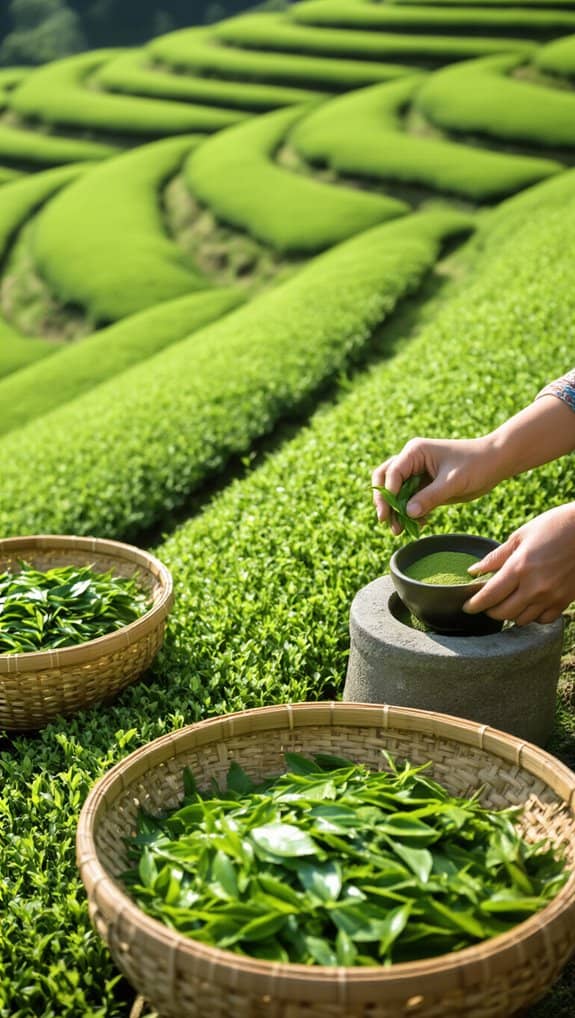
When farmers shade tea bushes for several weeks before harvest, they boost chlorophyll and L-theanine in the leaves, creating the vivid color and savory umami that define quality matcha.
You’ll see careful cultivation techniques at every stage: terraces carved into hills, balanced soil management, and shade cloth deployed to limit sunlight and encourage tender, nutrient-rich leaves.
During harvesting methods, experienced pickers selectively pluck the top two leaves and buds to preserve flavor concentration; some producers use gentle mechanical harvesters for consistency on larger plots.
After picking, leaves are quickly steamed to halt oxidation, then laid out and dried to retain aroma.
Skilled artisans remove stems and veins, producing tencha—the precursor to matcha—which you’d recognize by its soft texture.
Finally, you watch stone mills grind tencha into a fine, bright-green powder, a slow process that preserves volatile compounds and yields the smooth mouthfeel you expect from premium matcha today.
Matcha Grades: Ceremonial, Premium, and Culinary Explained
Because matcha comes in distinct grades, you’ll want to choose the right one for how you’ll drink or cook it:
ceremonial-grade is made from the youngest, most tender leaves for a bright color, fine texture, and delicate umami suited to traditional whisked preparations;
premium (or everyday) grade balances flavor and cost, offering good color and smoothness for lattes and regular servings;
culinary-grade is tougher and more robust, engineered to hold up under heat and sweeteners for baking, sauces, and blended drinks.
You’ll recognize ceremonial matcha by its velvet texture, vivid green hue, and clean, lingering sweetness; use it when you want pure leaf expression.
Premium grade gives approachable depth without excess cost.
For recipes, culinary matcha delivers a bitter backbone and stability.
Consider aroma, mouthfeel, and pairing when buying. Trust texture over labels. Choose deliberately, savor intentionally.
- Bright sip, joyful lift
- Cozy daily comforting ritual
- Bold baking, sensory thrill
Traditional Japanese Preparation and Tea Room Rituals
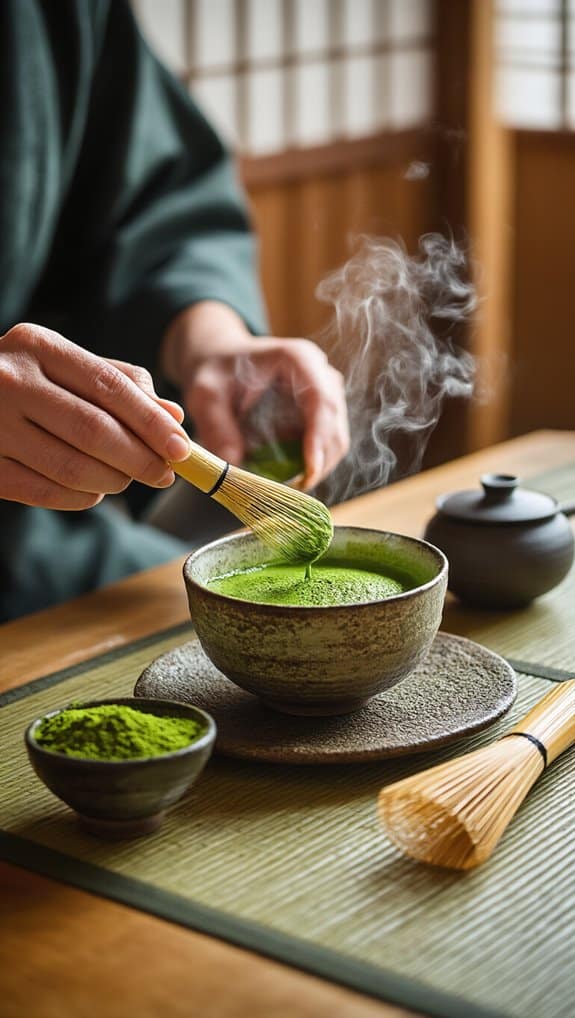
While you step across the raised threshold into a tearoom, you’ll notice how every movement and object is calibrated to focus the senses: tatami mats mark your place, a hanging scroll sets the seasonal mood, and the host arranges the chashitsu with knife-sharp precision.
You bow, remove your shoes, and settle; silence frames the coming act. The host’s choreography governs tea preparation: warming bowls, sifting fine matcha, whisking with a swift, controlled motion to produce a smooth, frothy green.
Every utensil—the chawan, chasen, chashaku, and kama—has its moment, cleaned and displayed to honor guests. You learn the meanings behind gestures: how offering the bowl, turning it twice, and sipping slowly express humility, respect, and shared presence.
This ritual significance isn’t decorative; it’s functional, aligning mind and body, contracting haste into a measured interval of attention. In that focused span, matcha becomes a conduit for etiquette, aesthetics, and calm.
Modern Preparation Methods, Lattes, and Creative Recipes
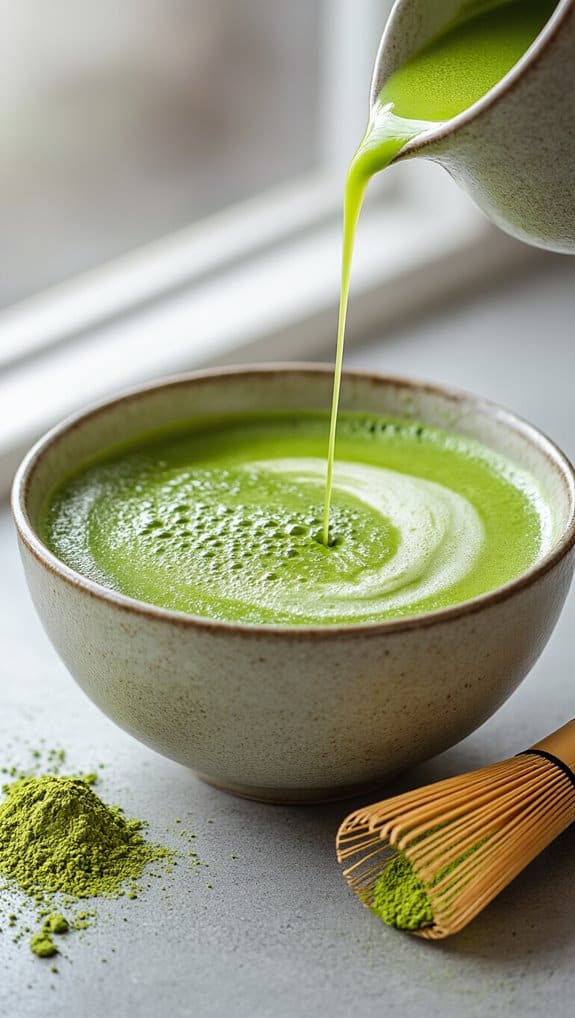
Although rooted in ceremony, matcha adapts readily to contemporary methods and recipes, and you can tailor its texture and intensity with simple tools—a fine sieve, a milk frother, or a blender.
When you make modern lattes, whisking remains useful, but you can also dissolve sifted matcha in hot water, then steam or froth milk for silky integration. A blender yields iced matcha drinks with velvety froth; a handheld frother gives quick crema for cups.
For creative recipes, think beyond beverages: incorporate matcha into smoothies, pancakes, or yogurt bowls, calibrating sweetness and liquid to preserve vibrancy. Keep powder dry, measure precisely, and pre-sift to prevent lumps.
Your experimentation should be deliberate: adjust water temperature, whisking time, and milk ratio to match desired boldness and mouthfeel. Small tools and good technique turn ceremonial powder into everyday delights.
- Serene warmth
- Bright morning lift
- Playful culinary curiosity now
Tasting Notes: Umami, Bitterness, Sweetness, and Aroma
As you taste, you’ll notice a pronounced umami depth and a velvety texture that gently coats the palate.
You’ll also appreciate how bitterness is balanced—firm enough to give structure but restrained to avoid astringency.
Subtle sweetness and a delicate floral aroma lift the profile, creating a long, layered finish.
Umami Depth and Texture
The umami of high-grade matcha comes forward as a broad, savory backbone that coats your palate with a velvety, almost broth-like texture; you’ll feel it settle into the mid-palate while a restrained, pleasant bitterness frames the edges and keeps the sweetness from becoming cloying.
You’ll notice umami characteristics: green sweetness and a floral aroma that lift the savory base, while texture profiles reveal a creamy, lingering mouthfeel.
When you sip, concentrate on mid-palate weight and how the powder suspends in saliva, offering density without grit.
Use the following impressions to connect emotionally:
- A warm savor that feels like home.
- A mouthcoat that invites slow, sipping.
- A bright, mellow sweetness that soothes the savory depth.
These descriptors help you discern quality and appreciate matcha’s layered architecture.
Balanced Bitterness Levels
Notice how bitterness acts as a shaping element against the umami-led mouthcoat you just explored, balancing sweetness and lifting floral and vegetal aromas rather than overpowering them.
When you sip, pay attention to where bitterness registers—mid-palate or finish—and how it modulates the overall flavor profile. A restrained bitterness balance sharpens clarity without producing harsh astringency; an aggressive edge signals over-extraction or overly mature leaf.
You can soften it by shortening whisk time, lowering water temperature, or reducing powder dose incrementally.
In tastings, evaluate persistence: a clean, tapered finish indicates harmony, whereas lingering metallic notes reveal imbalance.
Train your palate to quantify intensity and duration, and you’ll adjust preparation to achieve precise, repeatable bitterness control.
Record adjustments so you reproduce the preferred bitter expression consistently.
Sweetness and Floral Aroma
Sweetness acts like a backbone that lifts umami and tempers bitterness, and you’ll often detect it as a soft, lingering honey or melon note that brightens the mid-palate.
You notice how the sweetness balance makes each sashimi-like umami line clearer, while floral notes hover on the finish, delicate but decisive. As you sip, focus on interactions: sweetness rounds edges, floral notes add height, and acidity or bitterness provides contrast.
- A warm, honeyed comfort that reassures
- A fleeting floral whisper that intrigues
- A clean, balanced finish that satisfies
Train your palate to separate layers, note intensity, and describe sweetness precisely; you’ll then communicate Matcha Zanmai’s refined aroma and taste with authority.
Practice sampling small doses, compare grade differences, and record impressions to refine your sensory vocabulary.
Health Benefits, Caffeine Content, and Nutritional Insights
You’ll find matcha packs concentrated antioxidants—especially catechins like EGCG—that support cellular health and metabolic function.
Because you consume the whole leaf, matcha delivers more caffeine than steeped green tea, while L-theanine moderates that stimulant effect for steadier, focused energy.
Nutritionally, a typical serving is low in calories but supplies fiber, chlorophyll, vitamins (A, C, K) and trace minerals; next we’ll quantify average caffeine levels and nutrient values.
Matcha Health Benefits
While matcha shares tea’s familiar compounds, it concentrates them because you’re ingesting the whole powdered leaf rather than an infusion. You’ll notice potent antioxidant properties that help protect cells, and matcha’s amino acid profile supports calm focus and mental clarity without the jittery peaks you fear.
Regular, moderate enjoyment can complement a balanced lifestyle by supporting metabolism, immune resilience, and sustained alertness. Matcha also delivers chlorophyll and vitamins inherent to the leaf.
- A warm cup that soothes and sharpens you
- A bright, vegetal flavor that energizes your senses
- A ritual that grounds daily intention
Choose quality matcha, measure portions, and consult a professional if you have specific health concerns. Start small, savor deliberately, and note how your body responds to daily changes.
Caffeine and Nutrition
Because you’re consuming the whole leaf, matcha packs more caffeine per serving than steeped green tea, but its effects feel different: L-theanine and other amino acids blunt the spike and promote a steady, focused alertness rather than jittery highs.
You’ll notice caffeine effects that are calmer, longer-lasting, and paired with improved concentration. Nutrition-wise, matcha supplies concentrated antioxidants (catechins like EGCG), vitamins A, C, K, and a modest amount of fiber and chlorophyll.
A typical serving delivers more polyphenols than brewed tea, supporting cellular protection and metabolic activity. Mind the dose: excessive intake can still disrupt sleep or raise heart rate.
Balance serving size with timing to maximize nutritional benefits and enjoy sustained, clear energy without abrupt crashes. Ask your clinician if concerned about intake.
Pairing Matcha With Food, Sweets, and Savory Dishes
When pairing matcha with foods, consider its umami, vegetal bitterness, and subtle astringency so you can balance sweetness, fat, and acidity for the best contrast. You’ll find matcha pairings that elevate delicate sweets and sculpt savory desserts; aim for textures that let the tea’s creaminess shine.
Lean sweets—honeyed cakes, light custards—temper bitterness, while fatty items like white chocolate and nuts amplify mouthfeel without overwhelming green notes.
- Imagine the hush of a warm matcha crème brûlée, a delicate torch crack.
- Picture toasted sesame shortbread, its oil smoothing vegetal edges.
- Feel the surprise when miso-glazed eggplant meets brisk, frothy matcha.
You’ll match intensities: thin usucha with citrus or fruit, thicker koicha beside richer, umami-rich bites. Trust balance and contrast; they turn simple pairings into memorable experiences.
You can experiment slowly, tasting each combination and adjusting sugar, salt, or oil until the harmony feels just right for your unique palate today.
Where to Find Authentic Matcha Experiences and Tea Houses
You can seek out traditional tea houses for a serene, ritual-rich matcha experience where every utensil and movement follows centuries-old etiquette.
For a more casual yet authentic taste, matcha café spots let you sample single-origin whisked matcha and creative pairings prepared by skilled baristas.
And if you want hands-on learning, tea ceremony workshops teach precise whisking techniques, seasonal etiquette, and the cultural context behind each bowl.
Traditional Tea Houses
Where can you find the most authentic matcha ceremony? You step into a traditional tea house, where subdued light, tatami, and a quiet attendant guide you through matcha aesthetics and precise tea etiquette.
You’ll watch the host whisk vibrant green tea with deliberate motion, smell roasted seaweed and vegetal notes, and feel the ritual’s calm.
- Quiet anticipation as the bowl is presented.
- Warmth of the vessel connecting you to centuries.
- Respectful silence that sharpens taste.
In these buildings, architecture and utensils matter: chawan, chasen, and iron kettles are curated for season and mood.
You’ll leave with clearer senses and a deeper respect for craft, history, and the disciplined art of preparing matcha.
Seek established tea houses near temples or cultural districts for genuine experiences.
Matcha Café Spots
Although traditional tea houses preserve ceremony, matcha cafés offer a more approachable, contemporary way to experience high-quality matcha. You’ll find spots that balance artisanal whisking with relaxed seating, where a silky matcha latte sits beside delicate matcha desserts. Look for cafés sourcing ceremonial-grade powder and training staff in proper whisking; that precision shapes flavor. You can sample flight menus, compare origins, and learn tasting notes. Use the table below to note nearby favorites and what to order.
| Café | Recommendation |
|---|---|
| Local specialty | Iced matcha latte |
| Minimalist shop | Uji-origin tasting |
| Dessert bar | Matcha desserts sampler |
| Neighborhood spot | Cold brew matcha |
Take photos, ask about grade, and savor each cup to refine your palate. Seek seasonal menu items too regularly.
Tea Ceremony Workshops
After savoring cafés’ modern takes, try a tea ceremony workshop to experience matcha’s ritual form in a traditional setting.
In a tatami room you’ll learn precise tea techniques, observe matcha rituals and participate in guided bowl preparation. An instructor corrects posture, whisking speed and water temperature so each movement feels intentional.
Search cultural centers, ryokan with tea rooms, or dedicated chashitsu where authenticity matters. Expect quiet focus, seasonal sweets, and history that links taste to context.
You’ll leave with improved whisking rhythm, a sharper palate, and respectful appreciation for form.
Practical tips:
- Book small classes to feel seen and calm.
- Ask about the instruction language and pace.
- Arrive curious and present.
You’ll find workshops listed online, through embassies, and local guides often.
Storage, Freshness, and Tips for Brewing Perfect Matcha
Because matcha oxidizes rapidly once exposed to air and light, you’ll preserve its vibrant flavor and color by storing it airtight, cool, and dark—ideally in a sealed tin placed in the refrigerator for long-term storage or a pantry for short-term use. Use opaque storage containers and follow freshness tips: minimize air, avoid heat, limit moisture, and label with purchase date. When brewing, sift powder, use 70–80°C water, and whisk briskly into a fine froth. Measure precisely — 1 teaspoon (2 g) per 60–80 ml water for usucha, more for koicha. Serve immediately to enjoy vegetal sweetness and umami.
| Step | Action | Why |
|---|---|---|
| 1 | Sift matcha | Remove clumps for smooth texture |
| 2 | Water 70–80°C | Preserves sweetness, reduces bitterness |
| 3 | Whisk fast | Creates creamy froth and integrates powder |
Rotate tins, avoid strong odors nearby, and use within weeks of opening for peak aroma and balanced taste, everyday rituals.
Frequently Asked Questions
Is Matcha Production Environmentally Sustainable?
Yes, matcha production can be environmentally sustainable when producers use sustainable farming and eco-friendly practices that reduce chemical inputs, conserve water, and protect soil.
You’ll want to choose producers who shade crops for quality and biodiversity, apply compost and integrated pest management, and process leaves locally to cut transport emissions.
You can further support sustainability by favoring transparent sourcing, regenerative techniques, and brands that measure ecological impact and accountability.
Are There Certifications for Ethically Sourced or Fair-Trade Matcha?
Yes, you can find certifications for ethically sourced and fair-trade matcha.
Look for certification standards like Fair Trade, Rainforest Alliance, and organic labels that verify ethical sourcing, labor practices, and environmental care.
You’ll also see producer-specific traceability programs and third-party audits that validate worker welfare and sustainable farming.
When shopping, check batch codes, certification logos, and company transparency reports so you know you’re buying responsibly produced matcha from trusted growers.
Can Matcha Be Used Safely in Skincare or Cosmetic Formulations?
Yes, you can safely use matcha in skincare; it delivers antioxidant, anti-inflammatory, and soothing matcha benefits when formulated.
You’ll want to choose standardized extracts, test for contaminants, and follow recommended inclusion rates to avoid irritation and instability.
In skincare formulations, matcha pairs well with humectants, emollients, and preservative systems; perform stability, microbial, and patch testing, and label concentrations to ensure safety and efficacy for end users and consult regulatory guidelines.
How Can I Detect Counterfeit or Adulterated Matcha Products?
Check color analysis and flavor profile first: authentic matcha shows vibrant emerald-green and a sweet, grassy umami with lingering astringency.
You’ll sniff for fresh, vegetal aroma and taste a smooth, creamy finish. Inspect texture—fine, silky powder—then verify origin, grade, and lab-tested certificates for chlorophyll and catechin levels.
Beware overly bright neon green, sandy grit, or exaggerated sweetness; those indicate fillers or colorants. You’ll also check batch dates and supplier reputation.
What Are the Main Costs That Determine Matcha’s Retail Price?
You’ll find that matcha’s retail price depends on leaf quality, labor, and processing. Key Pricing factors include shading, selective top-leaf harvest, and specialized milling.
Harvesting techniques—hand-picking shaded shoots—boost flavor but raise costs. Post-harvest sorting, steaming, drying, stone-grinding, and quality control add labor and equipment expenses.
Origin, limited supply, packaging, and brand positioning further increase retail price, so you’re paying for craftsmanship, traceability, consistent taste, and premium tea heritage worldwide.
Conclusion
You’ve seen matcha’s journey from shaded tea gardens to fine stone‑ground powder and learned how ceremonial, premium, and culinary grades suit different uses. Whether you’re whisking in a tearoom or frothing a latte at home, you’ll taste vegetal complexity, umami depth, and delicate sweetness. Keep fresh storage and proper brewing in mind, and you’ll consistently enjoy vibrant flavor and healthful antioxidants—making matcha a versatile, enriching ritual for everyday moments that elevate small daily pleasures naturally.


No Comments