
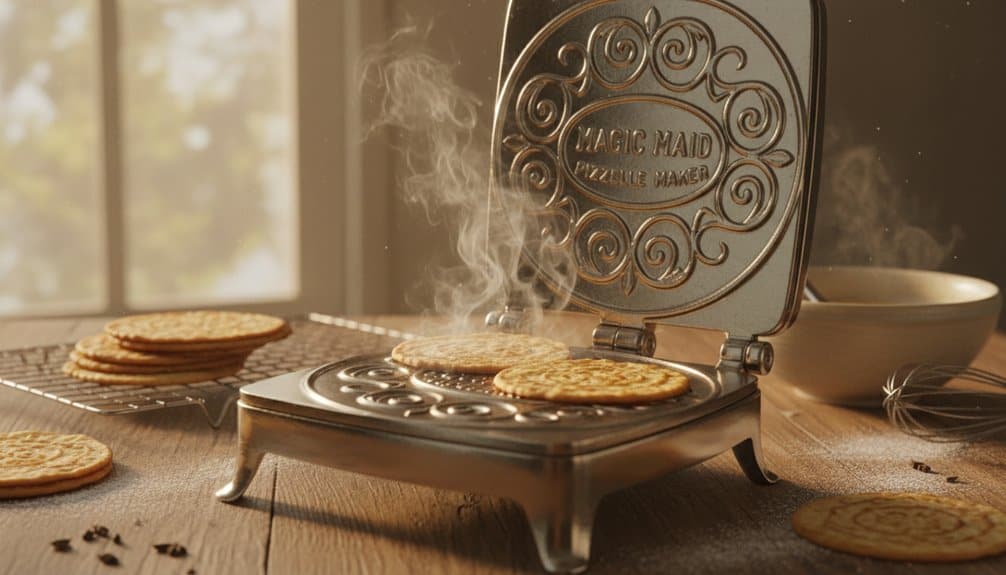
Magic Maid Pizzelle Maker: The Vintage Tool That’s Making a Comeback
You’ll spot authentic Magic Maid pizzelle makers by their embossed branding and Model 920 stamps on cast aluminum plates featuring distinctive 5-inch snowflake patterns. These 1960s dual-function irons double as sandwich grills and outperform modern models with superior heat distribution. Check for frayed cords and test the heating element’s 20-30 ohm resistance before restoration. Once you’ve replaced worn components and preheated to 350-400°F, you’re ready to master the perfect 30-60 second bake time.
Key Takeaways
- The Magic Maid Model 920 features distinctive 5-inch snowflake or basket-weave grid patterns embossed on cast aluminum plates.
- Original models from the mid-20th century served dual functions as both pizzelle makers and sandwich grills.
- Restoration involves replacing frayed electrical cords, cleaning corroded terminals, and buffing aluminum plates with steel wool.
- Properly restored units heat to 350-400°F and produce authentic crisp pizzelles in 30-60 seconds.
- Collectors identify genuine Model 920s by checking for “Magic Maid” embossing and model numbers stamped on bases.
How to Identify Your Magic Maid Model and Year
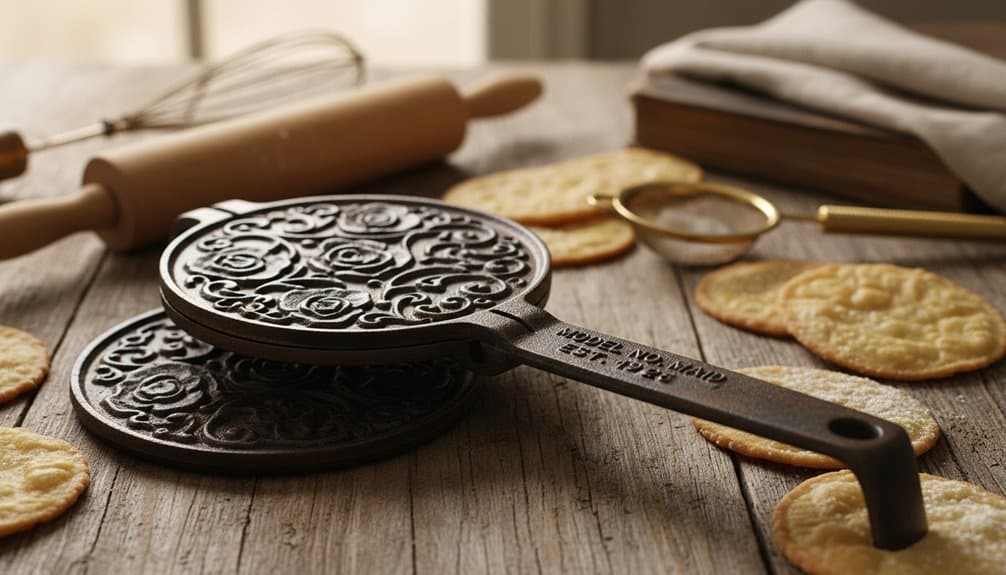
When you’re examining a vintage pizzelle maker at an estate sale or online listing, you’ll need to know the telltale signs that distinguish a genuine Magic Maid from other brands. Look for “Magic Maid” or “Miracle Maid” embossed on exterior surfaces, with model number 920 stamped on the base or heating plates. This dual-function model serves as both a pizzelle iron and sandwich grill.
Check the grid patterns for authenticity—genuine Magic Maid pizzelles feature 5-inch diameter snowflake or basket-weave designs. While dating vintages proves challenging without patent stamps, you can assess age through construction quality and surface patina. Original electric cords and plugs indicate authentic automatic models versus manual antiques. When identifying models, verify the grid thickness, as vintage units produce thinner, crispier pizzelles. Don’t confuse these with Crumb Bakers or generic cookie irons. Compare your findings against WorthPoint photo references to confirm you’ve found a genuine model 920. Note that sellers often remove handles for safer shipping, which can be easily reattached with a screwdriver upon arrival.
Testing and Troubleshooting Your Magic Maid Pizzelle Maker
How can you ensure your vintage Magic Maid pizzelle maker works safely before making your first batch? Start by inspecting the cord for frays and testing the plug’s fuse continuity. Once you’ve verified the basics, plug it in and confirm the indicator light activates—this isn’t time for unrelated topic discussions about recipes yet.
Your preheating phase should reach 350-400°F within 10 minutes. Use an infrared thermometer to check for hot spots across the plates. If you’re experiencing issues, don’t engage in random chatter about other appliances—focus on troubleshooting. Won’t heat? Test the fuse. Sticking pizzelles? Apply light oil before use.
During testing, apply thin batter layers and time your first pizzelle for 30-45 seconds. You’ll achieve golden-brown results with even browning when everything’s working correctly. Clean any residue blocking heating elements if you notice uneven cooking. Check switch contacts for corrosion if the unit won’t turn on at all. The Model #920 version features the same reliable double-plate design that made these vintage electric irons so popular for both pizzelles and sandwich grilling.
Restoring Common Magic Maid Electrical and Coating Issues
The restoration process for your vintage Magic Maid pizzelle maker often starts with addressing its most vulnerable components: the electrical system and cooking surface. If you’ve discovered frayed cords, you’ll need to replace them entirely with UL-listed 3-prong alternatives matching the original 120V, 600W specifications. Clean corroded terminals with vinegar solution before soldering new connections using 60/40 rosin-core solder.
When your heating element fails, check resistance with a multimeter—it should read 20-30 ohms. Replace burnt coils with universal 110V nichrome wire cut to match the original length. Following restoration ethics means preserving functionality while prioritizing vintage safety through proper insulation and ground continuity testing. Always read through any available safety precautions before beginning electrical work on vintage appliances.
For sticky aluminum plates, buff ridges with #0000 steel wool and 400-grit sandpaper. Season the surface by applying Crisco and baking at 350°F for 30 minutes. Repeat this process 3-5 times to restore the non-stick properties without compromising the maker’s authentic character.
Perfect Pizzelle Settings for Magic Maid Models 920 and 400
Now that your restored Magic Maid pizzelle maker is running safely with its refreshed cooking surfaces, you’ll want to master the specific settings that make Models 920 and 400 perform at their best. Preheat your machine completely before adding batter—the cast aluminum plates need uniform heat distribution to match modern 800-watt standards. Apply minimal Crisco to both patterned surfaces, as excess grease produces soft pizzelles rather than the crisp texture you’re after.
For optimal results:
- Spoon one tablespoon of batter onto the bottom plate’s center
- Close the lid firmly and bake 30-60 seconds per side
- Remove pizzelles promptly to prevent overcooking
Your old fashioned Magic Maid creates authentic 5-inch pizzelles when you respect its intended用途 vs safety requirements. Don’t rush the preheating process or overload the plates. These vintage models produce two cookies per cycle efficiently, delivering professional-quality results that rival contemporary machines.
Frequently Asked Questions
What’s the Difference Between Magic Maid and Pizzelle Maid Brands?
You won’t find Pizzelle Maid as an actual brand – it doesn’t exist in any documented sources. Magic Maid‘s the real vintage brand you’re looking for, featuring electric pizzelle irons like model #920.
While exploring differences in branding, you’ll discover Magic Maid’s established history in vintage sales listings. Feature comparisons aren’t possible since Pizzelle Maid isn’t a real product.
Magic Maid remains the authentic vintage pizzelle maker brand with verified models.
How Much Are Vintage Magic Maid Pizzelle Makers Worth Today?
You’ll find vintage Magic Maid pizzelle makers’ vintage pricing varies significantly based on condition and model. The Model 920 appears on WorthPoint’s auction tracking system, indicating collector value interest.
While specific Magic Maid prices aren’t detailed in current listings, comparable vintage pizzelle makers range from $48 for used electric models to $247 for antique cast-iron versions. You’re looking at moderate collector value compared to other vintage kitchen appliances.
Where Can I Find Replacement Parts for Magic Maid Models?
You’ll find replacement parts through C. Palmer Manufacturing, which stocks power cords, thermostats, and heating elements specifically for vintage pizzelle makers. They’re offering cords at $5.00 and elements at $7.50. For where to source parts, check resale platforms listing Model 920-compatible power cords with 2-pin configurations. Vintage repair tips suggest verifying pin spacing matches your model’s requirements before ordering. CucinaPro also carries replacement feet, though they’re not Magic Maid specific.
Can Magic Maid Pizzelle Makers Make Other Cookies Besides Pizzelles?
Yes, you can make other cookies with your Magic Maid pizzelle maker!
The iron’s other uses include creating krumkake (Norwegian waffle cookies) and stroopwafels by adjusting your batter recipe.
You’ll find that any thin waffle-like cookie batter works well.
Can cookies like these be successful? Absolutely – just ensure your batter’s consistency matches pizzelle dough’s stiffness.
You’re essentially using the same cooking method, just switching up the flavors and ingredients.
Who Originally Manufactured Magic Maid and Vitantonio Pizzelle Makers?
You’ll find limited documented manufacturing history about these vintage brands, as detailed company records aren’t readily available in public archives. Magic Maid (also known as Miracle Maid) produced electric pizzelle makers, but the brand evolution and original manufacturer details remain unclear. Vitantonio’s pizzelle heritage similarly lacks accessible historical documentation. Both companies contributed to American pizzelle-making tradition, though their founding stories and ownership structures aren’t well-documented in available sources today.
Conclusion
You’ve discovered that your Magic Maid pizzelle maker isn’t just a kitchen relic—it’s a treasure worth reviving. Whether you’re troubleshooting electrical issues, restoring the non-stick coating, or perfecting your temperature settings on Model 920 or 400, you’re joining countless bakers who’ve rediscovered these vintage gems. Don’t let that sturdy aluminum beauty gather dust. Fire it up, experiment with those settings, and start creating the crispy, delicate pizzelles that made these machines legendary.


Table of Contents




No Comments