
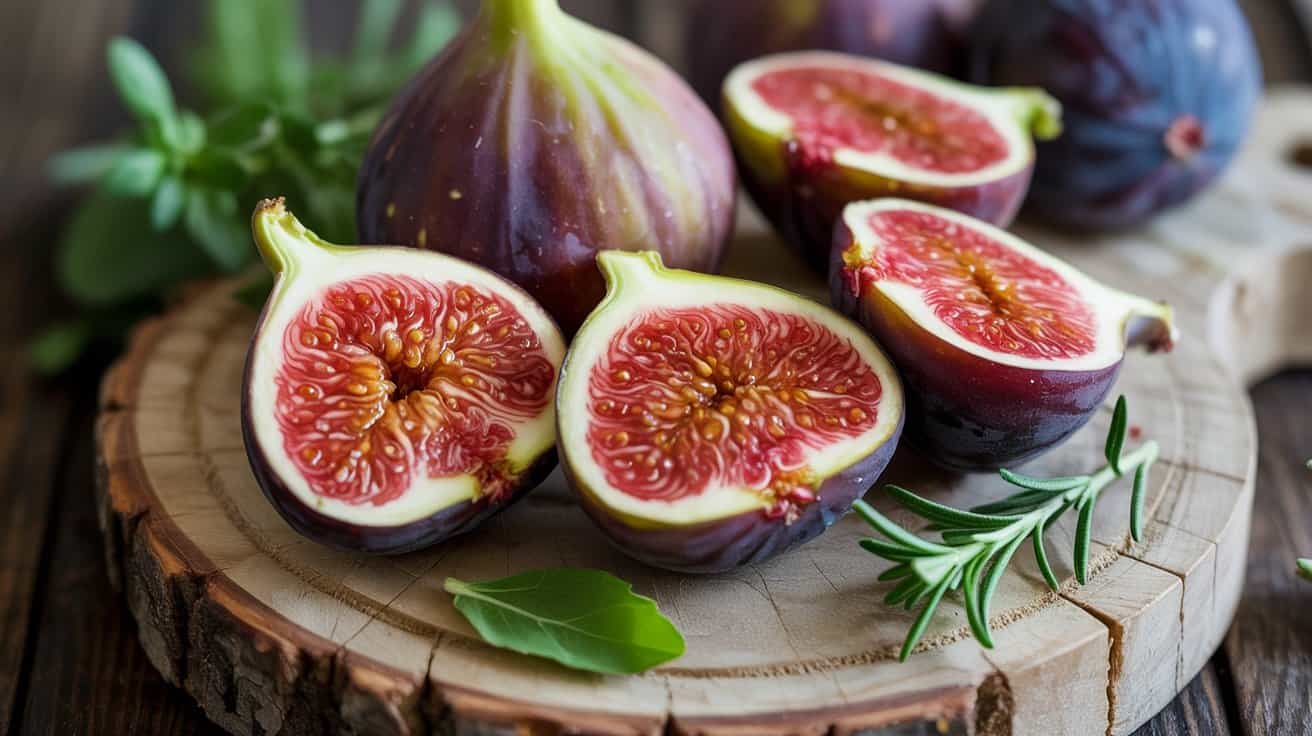
You’ll discover figs shine in both sweet and savory dishes, from simple appetizers to elegant desserts. Quarter fresh figs for a burrata salad with peppery arugula and balsamic reduction, or wrap them with prosciutto and mascarpone for classic Italian bites. Roast figs with honey and goat cheese, create rustic galettes with almond cream, or simmer them into vanilla-cardamom jam. These versatile fruits caramelize beautifully when baked and pair perfectly with cheese, nuts, and herbs for endless flavor combinations.
Table of Contents
Key Takeaways
- Fresh figs pair beautifully with creamy cheeses like burrata, mascarpone, or goat cheese in salads and appetizers.
- Roasting or poaching figs intensifies their natural sweetness and creates jammy textures perfect for desserts or cheese boards.
- Fig galettes and tarts showcase figs’ versatility in pastries, especially when combined with almond cream and citrus zest.
- Classic fig and prosciutto appetizers balance sweet and salty flavors, served fresh or baked until crispy.
- Homemade fig jam with vanilla and cardamom preserves seasonal figs for year-round enjoyment on toast or cheese.
Fresh Fig and Burrata Salad With Arugula and Balsamic Reduction
Slice into a perfectly ripe fig, and you’ll discover why this fruit transforms a simple salad into something extraordinary. You’ll need fresh figs, creamy burrata, peppery arugula, and a tangy balsamic reduction to create this elegant dish that celebrates seasonal pairings at their finest.
Start by quartering four ripe figs and arranging them on a bed of fresh arugula. Tear your burrata into chunks and nestle them between the figs. The texture contrasts make this salad memorable—the figs’ jammy sweetness against the milky burrata, the tender leaves providing a bitter counterpoint.
For the reduction, simmer one cup of balsamic vinegar until it’s syrupy and coats the back of a spoon. Drizzle it over your salad, then finish with cracked black pepper and flaky sea salt. You’ve created a restaurant-worthy dish that takes just fifteen minutes but delivers maximum impact through its balanced flavors and stunning presentation.
Honey-Roasted Figs With Goat Cheese and Thyme
Transform fresh figs into caramelized jewels with this simple yet sophisticated recipe that’ll have your guests asking for seconds. You’ll need ripe figs, creamy goat cheese, honey, and fresh thyme to create this elegant appetizer or dessert.
Start by halving your figs and arranging them cut-side up on a baking sheet. Drizzle with honey and roast at 400°F for 15-20 minutes until they develop that perfect roasted texture with caramelized edges. The natural sugars intensify, creating a jammy interior that pairs beautifully with tangy goat cheese.
Consider these thyme variations for different flavor profiles:
- Lemon thyme adds citrus brightness
- Orange thyme brings subtle sweetness
- Traditional thyme offers earthy depth
Once roasted, top each fig half with a dollop of goat cheese while they’re still warm. The cheese slightly melts, creating a creamy contrast. Finish with fresh thyme leaves and an extra drizzle of honey. You can serve these on crostini or enjoy them on their own.
Classic Fig and Prosciutto Appetizers With Mascarpone
Step up your appetizer game with fresh figs, salty prosciutto, and creamy mascarpone—a trio that’s graced Italian tables for centuries. You’ll love how these seasonal pairings balance sweet, salty, and savory in each bite.
Start by selecting ripe but firm figs. Cut them into quarters, leaving the bottom intact so they open like flowers. Wrap each fig with a thin slice of prosciutto, then pipe or spoon mascarpone into the center. You can enhance the mascarpone with honey, black pepper, or fresh herbs like basil or rosemary.
For serving variations, try these approaches: arrange them on individual spoons for elegant passed appetizers, skewer them with toothpicks for easy grabbing, or present them on a platter drizzled with aged balsamic. You can also stuff whole figs, wrap them completely in prosciutto, and bake at 400°F for 10 minutes. Serve immediately while the prosciutto’s crispy and the mascarpone’s slightly melted.
Rustic Fig Galette With Almond Cream and Orange Zest
You’ll create a stunning rustic galette by mastering two essential components: the almond cream filling and the free-form assembly.
Start by blending butter, ground almonds, sugar, and eggs into a smooth frangipane that’ll complement the figs’ natural sweetness.
Then you’ll arrange fresh fig slices over the cream, fold the pastry edges loosely around them, and finish with bright orange zest before baking.
Preparing Almond Cream Filling
Whisk together softened butter and sugar until the mixture turns pale and fluffy, creating the foundation for your almond cream filling. Beat in one egg until fully incorporated, then fold in almond flour and vanilla extract. The almond texture should be smooth and spreadable, not grainy or lumpy.
Here’s what you’ll need:
- Base ingredients: 4 tablespoons butter, 1/4 cup sugar, 1 egg
- Flavor elements: 1/2 cup almond flour, 1 teaspoon vanilla extract
- Optional additions: 1 tablespoon rum or amaretto for depth
For vegan alternatives, substitute the butter with coconut oil and replace the egg with 3 tablespoons aquafaba. Mix until you achieve a pipeable consistency that won’t run when spread on your galette dough. Chill the cream for 15 minutes before using.
Assembling Your Galette
With your chilled almond cream ready, roll out the galette dough on parchment paper into a rough 12-inch circle, keeping the edges intentionally rustic and uneven.
Spread the almond cream in the center, leaving a 2-inch border for proper edge seating when you fold the sides.
Arrange fresh fig slices over the cream in overlapping circles. You’ll need about 6-8 figs, quartered lengthwise.
Sprinkle orange zest across the figs for brightness.
Now comes the rustic folding technique that defines a galette. Lift one section of dough and fold it over the filling’s edge, then work around the circle, pleating and overlapping each fold.
Don’t aim for perfection—irregular folds create the galette’s signature charm. Press gently where the dough overlaps to secure each pleat.
Fig Jam With Vanilla and Cardamom
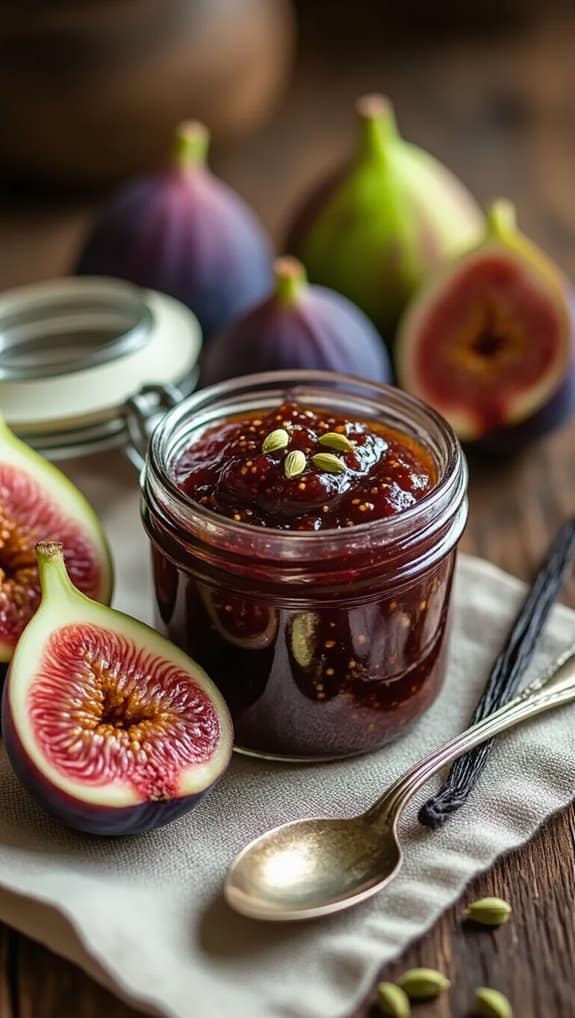
This aromatic fig jam transforms fresh figs into a luxurious preserve that’s perfect for spreading on toast, pairing with cheese, or gifting to friends. You’ll create layers of flavor by combining the natural sweetness of figs with warm spices.
Start by preparing your ingredients properly. For the vanilla infusion, split a whole vanilla bean lengthwise and scrape out the seeds. Add both the seeds and pod to your fig mixture. When cardamom bruising, gently crush the pods with the flat side of a knife to release their essential oils without pulverizing them.
Follow these essential steps:
- Macerate figs with sugar and lemon juice for 30 minutes before cooking
- Simmer gently for 45 minutes, stirring occasionally to prevent sticking
- Test consistency by dropping jam onto a frozen plate—it’s ready when it wrinkles
Remove the vanilla pod and cardamom before jarring. You’ll achieve a perfect set at 220°F on a candy thermometer.
Grilled Figs With Blue Cheese and Walnuts
Halving fresh figs and placing them cut-side up on a hot grill creates a sophisticated appetizer that balances sweet, savory, and smoky flavors in every bite. You’ll achieve perfect charred sweetness in just 3-4 minutes per side, watching as the natural sugars caramelize into golden edges.
Before serving, crumble blue cheese directly into each fig’s center while they’re still warm. The heat slightly melts the cheese, creating an irresistible cheese pairing that complements the fruit’s honeyed notes. Top with toasted walnut pieces for textural contrast.
| Component | Purpose |
|---|---|
| Fresh figs | Natural sweetness base |
| Blue cheese | Tangy, creamy contrast |
| Walnuts | Crunchy texture |
| Olive oil | Prevents sticking |
| Black pepper | Subtle heat enhancement |
You can substitute goat cheese if you prefer milder flavors, or try pecans instead of walnuts. Drizzle with honey and add fresh thyme for an elevated finish that’ll impress your guests.
Fig and Caramelized Onion Flatbread With Rosemary
You’ll create an elegant flatbread by pairing sweet figs with deeply caramelized onions and aromatic rosemary.
Start by selecting figs that yield slightly to pressure but aren’t mushy, then master the low-and-slow technique for transforming onions into jammy, golden strands.
Once you’ve assembled these elements on your dough with a drizzle of olive oil, you’ll bake at high heat until the crust turns golden and the figs begin to caramelize at their edges.
Choosing Perfect Figs
Pick up each fig gently and check for slight softness that yields to pressure without being mushy—that’s your sign of peak ripeness.
You’ll notice perfectly ripe figs have smooth, unblemished skin with a sweet aroma at the stem end. Don’t buy figs with tears, bruises, or excessive firmness.
Look for these indicators when selecting figs:
- Color consistency – Deep purple, green, or brown depending on variety, without pale spots
- Plump shape – Full-bodied fruit that hasn’t started shriveling
- Dry stem – Fresh but not wet or moldy
Fig ripeness directly affects storage longevity—riper figs last only 2-3 days refrigerated, while slightly underripe ones keep for up to a week.
You can’t ripen figs after picking, so choose wisely based on when you’ll use them.
Caramelizing Onions Properly
While fresh figs bring natural sweetness to flatbread, properly caramelized onions create the perfect savory-sweet balance that elevates this dish from simple to spectacular. You’ll need patience and precise heat control to achieve deep golden-brown onions with concentrated flavor.
| Time | What You’ll See |
|---|---|
| 0-5 min | Onions soften, release moisture |
| 5-15 min | Turn translucent, edges brown |
| 15-25 min | Golden color develops |
| 25-35 min | Deep caramelization begins |
| 35-45 min | Rich brown, jammy texture |
Start with medium-low heat and don’t rush the sugar breakdown process. Slice onions uniformly at ¼-inch thickness. Add them to your pan with oil and a pinch of salt. Stir every 5-7 minutes, scraping up the brown bits that form. If they’re browning too quickly, reduce heat immediately. Perfect caramelization transforms sharp onions into sweet, complex ribbons.
Assembly and Baking Tips
Once you’ve prepared your caramelized onions and gathered fresh figs, assembling the flatbread requires strategic layering to prevent sogginess and ensure even cooking.
After dough resting for 30 minutes, stretch it gently to maintain air bubbles. Brush olive oil on the base before adding toppings.
Follow these assembly steps:
- Spread onions first – Create a thin, even layer leaving a half-inch border
- Arrange fig slices – Quarter them and distribute evenly without overlapping
- Add cheese sparingly – Dot with goat cheese or ricotta between figs
For optimal oven placement, position your rack in the lower third. This ensures a crispy bottom while the toppings cook perfectly.
Preheat to 475°F and bake for 12-15 minutes until the crust’s golden and figs caramelize slightly. Finish with fresh rosemary and a drizzle of honey.
Poached Figs in Red Wine and Cinnamon
When you’re craving an elegant dessert that transforms fresh figs into something extraordinary, poaching them in red wine and cinnamon creates a sophisticated treat that’s surprisingly simple to make.
You’ll need eight fresh figs, two cups of dry red wine, half a cup of sugar, two cinnamon sticks, and three whole cloves.
Combine the wine, sugar, and spices in a saucepan over medium heat.
Once the sugar dissolves, add your halved figs and simmer for 15 minutes.
They’ll absorb the wine’s deep color while becoming tender and fragrant.
Remove the figs with a slotted spoon, then reduce the poaching liquid until it’s syrupy.
For wine pairing, serve these with the same red you used for poaching or a tawny port.
Serving suggestions include spooning them over vanilla ice cream, pairing with mascarpone cheese, or arranging them alongside a cheese board.
You can refrigerate leftovers for up to five days.
Fresh Fig Tart With Pastry Cream and Pistachios
You’ll create an elegant fresh fig tart by mastering three essential components that work in perfect harmony.
First, you’ll prepare a silky pastry cream that serves as the luxurious base, then select perfectly ripe figs that offer the right balance of sweetness and texture.
Finally, you’ll finish with crushed pistachios that add both visual appeal and a subtle nutty crunch to complement the fruit’s natural flavors.
Pastry Cream Preparation
Whisk together egg yolks and sugar in a medium bowl until the mixture turns pale and thick, about 2 minutes of vigorous stirring. You’re creating an emulsion that’s essential to custard chemistry—the sugar dissolves while air incorporates into the yolks.
Heat milk in a saucepan until it barely simmers. Temper your egg mixture by slowly adding hot milk while whisking constantly. This prevents curdling.
Follow these critical steps:
- Strain the mixture back into the saucepan to remove lumps
- Cook over medium heat, stirring continuously until it coats a spoon
- Add vanilla extract off heat, then cover with plastic wrap
For dairy substitutions, you can use coconut milk or cashew cream. They’ll alter the flavor slightly but maintain the creamy texture your tart needs.
Fresh Fig Selection
Always choose figs that yield slightly to gentle pressure but aren’t mushy—they’re at peak ripeness when the skin shows tiny cracks near the stem.
You’ll notice other ripeness indicators like a sweet fragrance at the base and a slight bend in the neck.
The fruit’s color should be deep and rich, whether it’s purple, green, or brown, depending on the variety.
Don’t select figs with bruises, tears, or sour smells.
Once you’ve brought them home, proper storage methods will maintain their quality.
Keep ripe figs in the refrigerator’s crisper drawer for up to three days.
If they’re slightly underripe, leave them at room temperature for a day.
Never wash figs until you’re ready to use them—excess moisture accelerates spoilage.
Pistachio Garnish Techniques
Transform your fresh fig tart into a showpiece by mastering the art of pistachio garnishing. You’ll elevate your dessert’s visual appeal and add textural contrast with these professional techniques.
Start with properly prepared toasted pistachios for optimal flavor and crunch. Here’s how to create stunning garnishes:
- Chopped Border: Roughly chop toasted pistachios and press them along the tart’s edge, creating a defined frame around your figs
- Center Clusters: Place whole pistachios between fig quarters, forming decorative patterns that guide the eye
- Fine Dusting: Create pistachio dusting by grinding nuts into powder, then sift over the entire tart for an elegant finish
You’ll achieve the best results when you apply garnishes just before serving. This preserves the pistachios’ crispness and prevents moisture absorption from the pastry cream.
Pan-Seared Duck Breast With Fig and Port Wine Sauce
When you’re ready to elevate your dinner game with restaurant-quality cuisine, pan-seared duck breast with fig and port wine sauce delivers an unforgettable combination of rich, savory meat and sweet, complex fruit flavors.
You’ll start by scoring the duck’s skin in a crosshatch pattern, then placing it skin-side down in a cold pan. This technique renders the fat perfectly while creating crispy skin.
Cook for 8-10 minutes until golden, flip, and sear for 3-4 minutes for medium-rare. While it rests, you’ll make the sauce pairing by deglazing with port wine, adding halved fresh figs, butter, and thyme. The reduction takes just 5 minutes.
For stunning duck presentation, slice the breast diagonally into medallions and fan them across the plate. Drizzle the glossy fig sauce over and around the meat. You’ve now created a sophisticated dish that’ll impress any guest with minimal effort and maximum flavor impact.
Frequently Asked Questions
How Do I Tell When Fresh Figs Are Perfectly Ripe?
You’ll know your figs are perfectly ripe when they’ve a soft give when gently squeezed.
They shouldn’t be mushy, but they’ll yield slightly to pressure.
The aromatic skin will release a sweet, honey-like fragrance at the stem end.
Look for figs that feel heavy for their size and have skin that’s begun to crack slightly.
They’ll droop a bit on the tree rather than standing upright when they’re ready.
Can I Substitute Dried Figs for Fresh Figs in Recipes?
You can substitute dried figs for fresh ones, but you’ll need to adjust your recipe. The dried texture requires rehydration—soak them in warm water, juice, or wine for 30 minutes before using.
Due to their flavor concentration, use fewer dried figs than fresh (typically 1:3 ratio). They’ll add intense sweetness and chewiness to your dishes. Remember they won’t provide the same moisture content as fresh figs.
What’s the Best Way to Store Fresh Figs?
Store ripe fresh figs in your refrigerator’s crisper drawer for up to three days.
You’ll want to place them in a single layer on a paper towel-lined container to prevent bruising.
For unripe figs, use the paper bag ripening method – put them in a paper bag at room temperature for a day or two.
They’re ready when they yield slightly to gentle pressure and develop a sweet aroma.
Which Fig Varieties Work Best for Cooking Versus Eating Fresh?
You’ll find Black Mission figs perfect for eating fresh with their sweet, jammy flavor and deep purple skin. They’re also excellent for preserves and baking.
Brown Turkey figs work wonderfully for cooking due to their mild sweetness and ability to hold their shape when heated. You can use them in tarts, roasted dishes, or grilled preparations.
For fresh eating, choose Adriatic or Kadota varieties with their honey-like sweetness.
How Do I Prevent Figs From Falling Apart During Cooking?
You’ll prevent figs from falling apart by using low heat simmering instead of rapid boiling.
Choose slightly underripe fruits since they’re firmer.
Add figs during the final cooking stages and avoid excessive stirring.
Practice gentle handling techniques like using a slotted spoon to turn them carefully.
Don’t overcook—most figs need just 5-10 minutes.
Adding sugar or honey creates a protective coating that helps maintain their shape during cooking.
Conclusion
You’ve discovered nine incredible ways to celebrate figs, from simple appetizers to elegant desserts. Whether you’re drizzling honey over roasted figs or crafting a sophisticated duck breast with port wine sauce, you’ll find these recipes transform this ancient fruit into modern culinary masterpieces. Don’t wait for fig season to pass—grab some fresh figs from your local market and start experimenting. Your taste buds will thank you for exploring these sweet and savory combinations.


No Comments