
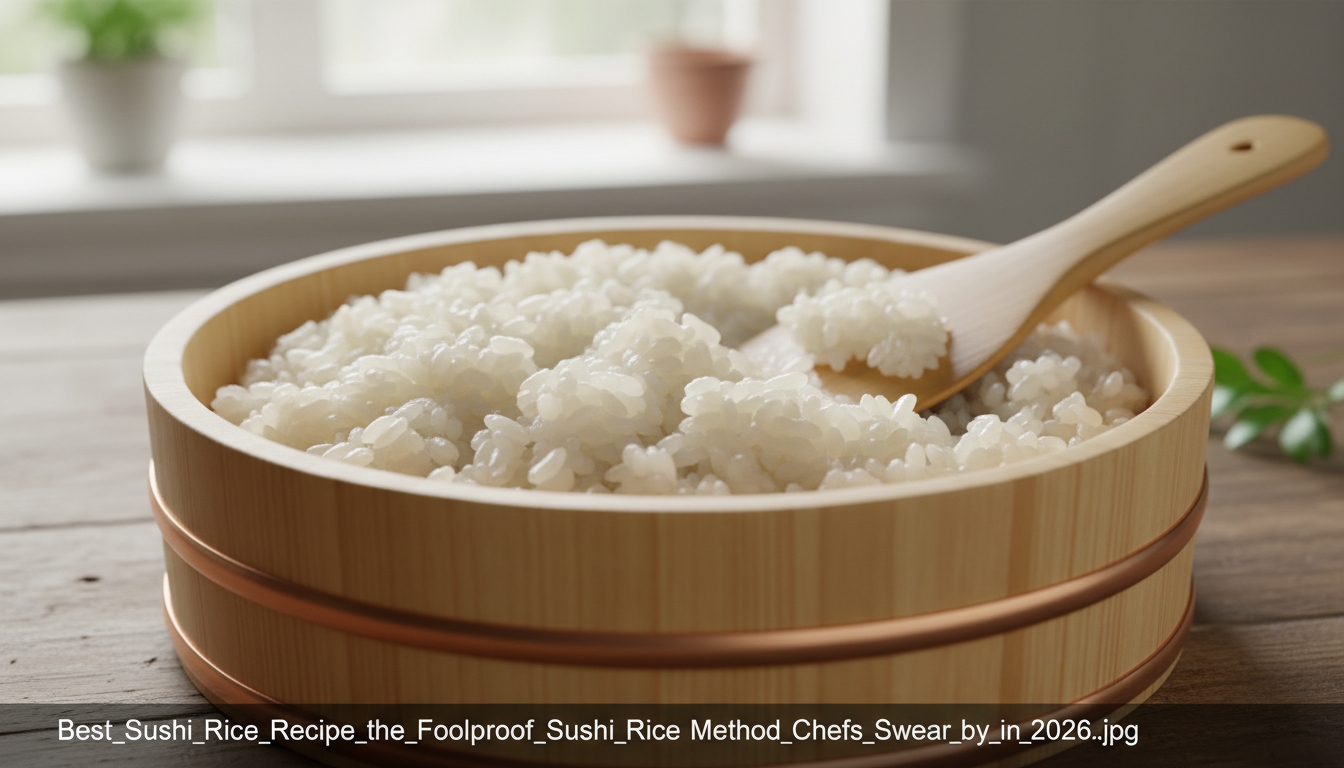
Best Foolproof Sushi Rice Method Chefs Swear by
To craft the best sushi in 2026, you’ll need to master cooking high-quality, sticky yet tender sushi rice. Start by thoroughly rinsing the rice until the water runs clear, then cook it with the perfect rice-to-water ratio. Dress the warm rice with a blend of vinegar, sugar, and salt, folding it in gently to maintain the grain structure. With this foolproof method, you’ll achieve the optimal texture and flavor for your sushi – and you’ll soon discover even more secrets to elevate your sushi skills.
Table of Contents
Key Takeaways
- Use high-quality short-grain rice as the foundation to achieve the perfect sticky yet tender texture for sushi.
- Thoroughly rinse the rice to remove excess starch, then cook it with the optimal rice-to-water ratio and gentle simmering.
- Blend a delicate seasoning of rice vinegar, sugar, and salt, and fold it gently into the cooked rice to preserve the grain structure.
- As the seasoned rice cools, continue folding and fanning it to ensure even distribution of flavors and a glossy appearance.
- Address common issues like overly sticky or dry rice by adjusting the vinegar quantity and water ratio, and avoid over-mixing to maintain the ideal texture.
Understanding the Importance of High-Quality Sushi Rice
Why is high-quality sushi rice so crucial for making exceptional sushi? The truth is, the rice is the foundation of sushi. It must be perfectly cooked, seasoned, and prepared to create the desired texture and flavor. Inferior rice will result in sushi that’s gummy, bland, or even fall apart.
On the other hand, using the right type of short-grain rice, cooking it properly, and seasoning it just right yields sushi that’s sticky yet tender, with a subtle sweetness that perfectly complements the other ingredients. Whether you’re crafting nigiri, maki, or hand rolls, mastering sushi rice is key.
It’s the difference between sushi that’s merely good and sushi that’s truly transcendent.
Mastering the Technique of Cooking Perfect Sushi Rice
How do you master the art of cooking perfect sushi rice? It’s all about precision and attention to detail. First, rinse the rice thoroughly until the water runs clear, ensuring you remove excess starch. Next, cook the rice using the optimal rice-to-water ratio and simmer it gently. Finally, dress the cooked rice with a delicate blend of rice vinegar, sugar, and salt, folding it in with care to preserve the grains’ integrity. With these simple steps, you’ll achieve the ideal texture – sticky yet separate – that’s essential for crafting mouthwatering sushi. Master this technique, and you’ll be on your way to creating restaurant-quality sushi at home.
- Rinse the rice thoroughly to remove excess starch.
- Cook the rice using the optimal rice-to-water ratio and gentle simmering.
- Dress the cooked rice with a blend of rice vinegar, sugar, and salt, folding it in gently.
Seasoning and Conditioning the Sushi Rice for Optimal Flavor
Once you’ve mastered the basic technique of cooking the rice, it’s time to season and condition it for the best possible flavor.
Start by mixing in a seasoning blend of rice vinegar, sugar, and salt.
Gently fold this into the warm rice, being careful not to break the grains.
The vinegar will lend a subtle tang, the sugar a touch of sweetness, and the salt will balance the flavors.
As the rice cools, continue to fold and fan it to ensure even distribution of the seasonings.
This conditioning process helps the rice achieve a shiny, glossy appearance and the perfect texture for sushi.
Take your time with this step – it’s crucial for creating sushi rice that’s flavorful, sticky, and ready to be molded into your favorite rolls.
Troubleshooting Common Sushi Rice Issues and Solutions
Even with careful preparation, sometimes sushi rice can present unexpected challenges. Don’t worry – we’ve got your back! Here are 3 common sushi rice issues and their solutions:
- Rice is too sticky or gloppy: This can happen if you’ve overcooked the rice or added too much rice vinegar. The fix? Next time, use a lighter hand with the vinegar and consider rinsing the cooked rice before seasoning to remove excess starch.
- Rice is dry and crumbly: Undercooked or not enough liquid can lead to this. Increase the water-to-rice ratio slightly and make sure to let the rice steam fully after cooking.
- Rice has lost its shine and texture: Over-mixing the seasoned rice can break down the grains. Gently fold in the seasonings instead of stirring vigorously.
Master these tips, and you’ll be crafting restaurant-quality sushi rice in no time!
Frequently Asked Questions
Can I Use Regular Rice Instead of Sushi Rice?
You can use regular rice instead of sushi rice, but the result won’t be the same. Sushi rice has a unique texture and flavor that comes from the short-grain rice, rice vinegar, sugar, and salt used in the preparation. Regular rice won’t have the same stickiness and subtle sweetness that makes sushi rice so special. If you’re not concerned about authenticity, you can try using regular rice, but it won’t be the same as using the proper sushi rice.
How Long Does Sushi Rice Last in the Refrigerator?
Sushi rice can last in the refrigerator for up to 5 days. However, it’s best to use it within 3 days for optimal freshness and texture. Be sure to store the rice in an airtight container to prevent it from drying out or absorbing unwanted flavors.
With proper storage, you can enjoy your sushi rice for several days after preparing it.
Do I Need a Rice Cooker to Make Sushi Rice?
You don’t need a rice cooker to make sushi rice. You can easily prepare it on the stovetop using a pot and following the right technique. The key is to use the proper rice to water ratio, cook it until tender, and then season it properly with rice vinegar, sugar, and salt. With a bit of practice, you can make delicious sushi rice without a specialized appliance.
Can I Freeze Leftover Sushi Rice?
Yes, you can freeze leftover sushi rice. Simply let it cool completely, then transfer it to an airtight container or resealable bag. It’ll keep in the freezer for up to 2-3 months. When you’re ready to use it, thaw it in the refrigerator overnight before reheating and seasoning as needed for your sushi rolls.
What Is the Difference Between Sushi Rice and Regular Rice?
The primary difference between sushi rice and regular rice is in their preparation.
Sushi rice is seasoned with a mix of rice vinegar, sugar, and salt, while regular rice is typically cooked without additional seasonings.
Sushi rice has a stickier texture that allows it to hold its shape when molded, making it ideal for sushi rolls and nigiri.
Regular rice, on the other hand, has a fluffier texture.
Conclusion
You’ve now learned the foolproof sushi rice method that chefs swear by in 2026. Remember to use high-quality rice, cook it precisely, and season it properly. With a bit of practice, you’ll be making restaurant-worthy sushi rice at home. Enjoy the delicious results of your hard work!


No Comments