

Easy Mince Pie Recipe for Busy Bakers
You’ll need ready-made shortcrust pastry, store-bought mincemeat, and an egg for this quick recipe. Roll pastry to 3mm thickness, cut circles, and place in muffin tins. Add one heaped spoonful of mincemeat per pie, top with pastry lids, and seal edges. Brush with beaten egg and bake at 200°C for 15-20 minutes until golden-brown. The entire process takes under an hour, and you’ll discover additional time-saving shortcuts and make-ahead techniques below.
Table of Contents
Key Takeaways
- Use pre-made shortcrust pastry instead of homemade to save significant time while maintaining quality results.
- Roll pastry to 3mm thickness, cut circles, and use one heaped spoonful of store-bought mincemeat per pie.
- Brush tops with beaten egg and bake for 15-20 minutes at 200°C until golden-brown and bubbling.
- Assemble pies in advance and freeze unbaked, or fully bake and freeze for up to 3 months.
- Store baked pies at room temperature for 3 days or refrigerate for 1 week for convenient serving.
Essential Ingredients for Quick Mince Pies
Since most mince pies rely on just a handful of pantry staples, you’ll likely have everything needed to create these festive treats without a special shopping trip. Smart ingredient selection starts with plain flour, cold butter, and a pinch of salt for your pastry base. The secret to perfect dough texture lies in keeping everything chilled and working quickly.
You’ll need ready-made mincemeat from any grocery store, saving hours of preparation time. Choose quality mincemeat with visible fruit pieces and aromatic spices for the best flavor. An egg provides the golden wash that gives your pies their bakery-worthy appearance.
Optional additions include a splash of brandy or rum to elevate the mincemeat, and icing sugar for dusting. Cold water helps bind your pastry without making it tough. Keep butter straight from the fridge until you’re ready to rub it into the flour for flaky, tender results.
Kitchen Tools and Equipment You’ll Need
You don’t need fancy equipment to make delicious mince pies from scratch. A few essential baking tools will get you started, though some optional upgrades can make the process even smoother.
Let’s look at what you’ll actually use versus what might be nice to have.
Essential Baking Tools
Before diving into this delicious mince pie recipe, gather the right tools to ensure your baking success. You’ll need a large mixing bowl for combining ingredients and a pastry cutter or knife for incorporating butter into flour. A rolling pin is essential for proper pastry rolling techniques, helping you achieve even thickness throughout your dough.
Don’t forget measuring cups, measuring spoons, and a kitchen scale for accurate ingredient portions. A 12-cup muffin tin creates perfectly sized individual pies, while a round cookie cutter helps shape your pastry tops. Keep a clean kitchen towel nearby for covering dough during resting periods, as proper dough resting methods improve texture. Finally, have a pastry brush ready for egg wash application and a wire cooling rack for post-baking cooling.
Optional Equipment Upgrades
Efficiency in the kitchen transforms your mince pie making experience from good to exceptional. While basic tools handle the fundamentals, optional equipment upgrades can streamline your baking process significantly.

Customized mixers with specialized dough attachments create perfectly consistent pastry without overworking. You’ll achieve uniform texture every time, reducing preparation effort considerably. Stand mixers with variable speed controls let you adapt mixing intensity for different ingredients.
Temperature controllers offer precise oven management, ensuring even baking across multiple batches. Digital probe thermometers eliminate guesswork when checking internal temperatures. Silicone baking mats provide non-stick surfaces that distribute heat evenly, preventing bottom burning.
Consider investing in adjustable rolling pins for consistent pastry thickness. Professional-grade pastry wheels create clean, decorative edges effortlessly. These upgrades aren’t essential, but they’ll elevate your mince pie quality while reducing hands-on time.
Preparing Your Pastry in Minutes
Although making pastry from scratch might seem daunting, you’ll have perfectly workable dough ready in just minutes with this streamlined approach.
For time efficient pastry making, combine 225g plain flour with 115g cold butter, rubbing the mixture between your fingertips until it resembles breadcrumbs. Add 2-3 tablespoons cold water gradually while mixing with a knife. Once the dough holds together, wrap it in cling film and chill for 15 minutes.
Alternatively, pre made dough options can save you even more time. Shop-bought shortcrust pastry works excellently and eliminates the mixing stage entirely. Simply roll it out directly from the fridge.
Whether you’re making homemade or using store-bought pastry, dust your work surface with flour and roll the dough to 3mm thickness. Cut circles using a fluted cutter, ensuring they’re large enough to line your muffin tin with slight overhang for crimping edges.
Assembling the Perfect Mince Pie
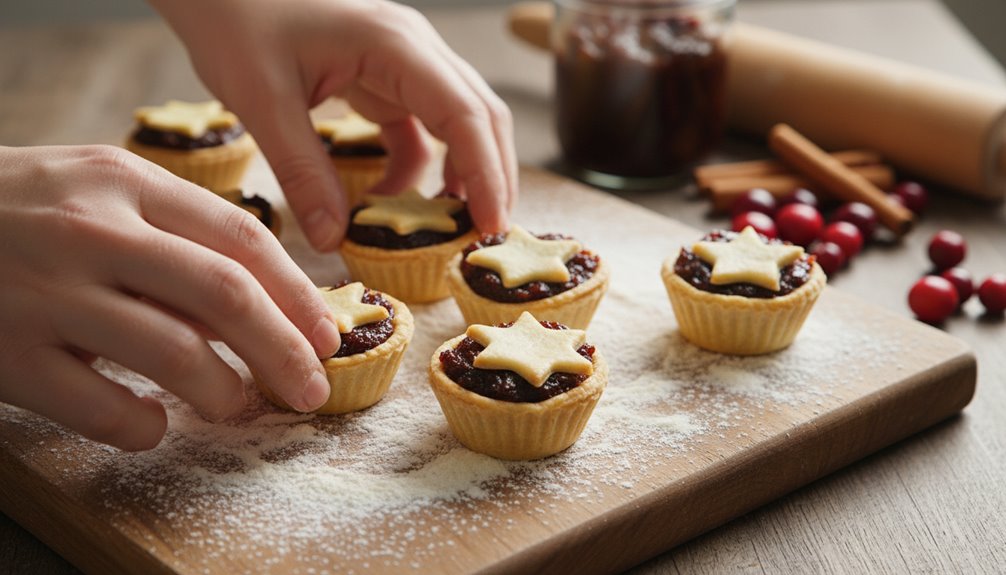
Now that you’ve prepared your pastry, it’s time to transform it into beautiful mince pies. You’ll need to roll your dough to the right thickness, distribute your filling evenly, and master the sealing technique for professional-looking results.
These three steps will ensure your mince pies hold together perfectly and bake to golden perfection.
Rolling Perfect Pastry
The secret to exceptional mince pies lies in achieving perfectly rolled pastry that’s neither too thick nor too thin. Your pastry consistency should feel smooth and pliable when you begin rolling. Start with chilled dough for optimal pastry workability, as this prevents sticking and tearing.

Roll from the center outward using gentle, even pressure. You’ll want approximately 3mm thickness for perfect results. Dust your surface lightly with flour, but don’t overdo it.
- Quarter turns – Rotate dough 90 degrees regularly to maintain circular shape
- Even pressure – Apply consistent force to avoid thin spots
- Work quickly – Warm pastry becomes sticky and difficult to handle
- Check thickness – Use a ruler if you’re unsure about measurements
Filling Distribution Tips
Proper mincemeat distribution makes the difference between a mediocre pie and an exceptional one. You’ll want to achieve even filling distribution across all your pastry cases to ensure consistent baking and flavor in every bite.
Use a dessert spoon to measure your mincemeat, aiming for one heaped spoonful per pie. This ensures consistent filling quantity without overstuffing. Don’t press the filling down—simply level it gently with the back of your spoon. Leave a small border around the edges so your pastry lids seal properly.
Avoid the temptation to overfill. Too much mincemeat causes spillover during baking, creating messy results and soggy bottoms. The filling should sit just below the rim of your pastry case for optimal results.
Sealing and Finishing
Once you’ve distributed your mincemeat evenly, it’s time to create those professional-looking sealed edges that’ll keep your filling secure during baking. Proper sealing prevents leakage and ensures your pies maintain their shape.
- Press and seal – Gently press pastry lid edges against the base, using water to help adhesion
- Crimping edges – Use a fork or your fingers to create decorative ridges around the rim
- Vent holes – Pierce small holes in tops with a knife tip for steam release
- Decorating tops – Add pastry stars, holly leaves, or brush with beaten egg for golden finish
Work quickly but carefully to prevent pastry from becoming too warm. These finishing touches transform simple mince pies into bakery-quality treats that’ll impress everyone.
Baking Tips for Golden Results
Achieving picture-perfect mince pies comes down to mastering a few essential baking techniques. You’ll want to maintain consistent oven temperature throughout the baking process – avoid opening the door frequently, as this causes heat fluctuations that lead to uneven browning. Ensure uniform dough thickness when rolling your pastry, aiming for approximately 3mm thick for both base and tops.
Position your mince pies on the middle rack for optimal heat distribution. Brush the tops with beaten egg or milk before baking to create that coveted golden finish. If your pies brown too quickly, cover them loosely with foil during the final minutes.
Watch for visual cues: properly baked mince pies display a rich golden-brown color with slightly puffed pastry. The filling should bubble gently around the edges. Most mince pies need 15-20 minutes at 200°C, but every oven varies, so trust your eyes over the timer.
Time-Saving Shortcuts and Make-Ahead Options
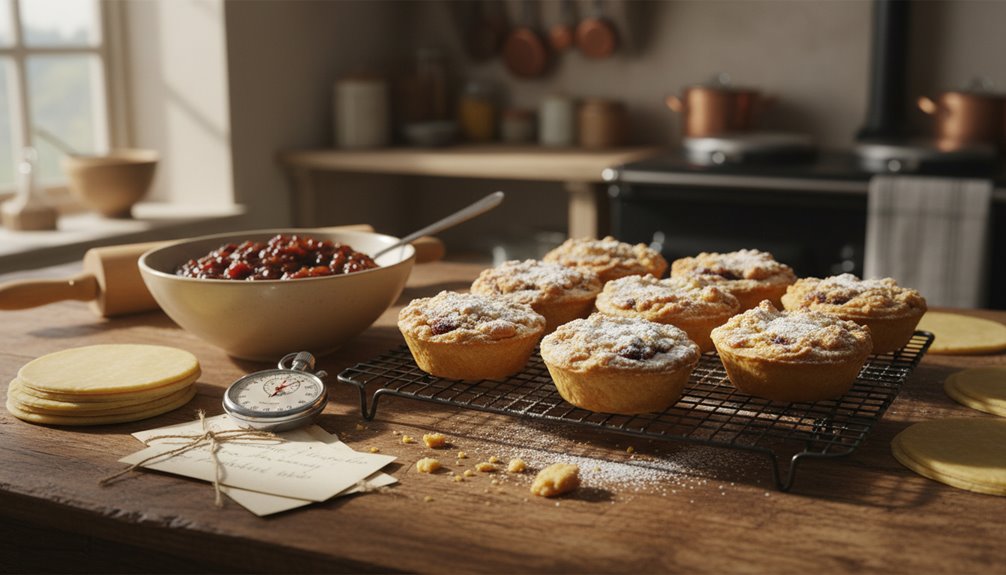
When time’s running short during the busy holiday season, smart preparation strategies can transform your mince pie making from stressful to seamless. You’ll discover that effective batch preparation and freezer friendly options make creating dozens of mince pies manageable even with your packed schedule.
Prepare pastry in advance – Make double or triple batches of pastry dough and freeze portions for up to three months
Assemble and freeze unbaked pies – Complete pies freeze beautifully for six weeks; bake directly from frozen, adding five extra minutes
Pre-make mincemeat filling – Homemade mincemeat improves with time and keeps refrigerated for weeks
Bake and freeze finished pies – Fully baked mince pies freeze perfectly for two months; thaw at room temperature or warm gently in the oven
These strategies ensure you’re never caught empty-handed when unexpected guests arrive.
Storage and Serving Suggestions
After you’ve invested time creating perfect mince pies, proper storage will preserve their flavor and texture for maximum enjoyment.
For short-term storage, keep your mince pies at room temperature for up to three days in an airtight container. For longer storage, refrigerator storage extends their freshness up to one week. You can also freeze baked pies for up to three months.
| Storage Method | Duration | Best For |
|---|---|---|
| Room Temperature | 3 days | Daily consumption |
| Refrigerator | 1 week | Extended freshness |
| Freezer | 3 months | Long-term storage |
When serving, bring refrigerated pies to room temperature serving for optimal flavor. You can warm them in a 300°F oven for 5-7 minutes to restore that fresh-baked taste. Dust with powdered sugar just before serving, and consider pairing with brandy butter, vanilla ice cream, or custard for an extra special treat.
Frequently Asked Questions
Can I Substitute Store-Bought Mincemeat With Homemade Filling?
Yes, you can absolutely substitute store-bought mincemeat with homemade filling. You’ll control the homemade filling ingredients, choosing your preferred fruits, spices, and sweeteners.
The homemade filling preparation involves mixing dried fruits, fresh apples, spices like cinnamon and nutmeg, sugar, and brandy or rum. Let the mixture macerate for better flavor development. Your homemade version will taste fresher and more personalized than commercial alternatives.
How Do I Prevent Soggy Bottoms in Mince Pies?
You’ll prevent soggy bottoms by blind baking pastry for 10-12 minutes before adding filling. Prick the base with a fork and use baking beans to weigh it down.
After adding mincemeat, create small cuts in the pastry lid for ventilating mince pies – this allows steam to escape during baking. Bake on the oven’s bottom rack for crispier results.
What’s the Best Way to Reheat Leftover Mince Pies?
You’ll get the best results with oven warming at 300°F for 10-15 minutes, which restores the pastry’s crispness perfectly.
Microwave heating works for quick reheating, but use 30-second intervals on medium power to avoid making the pastry tough. Cover with a damp paper towel when microwaving to prevent drying out.
Let them cool slightly before eating, as the filling gets extremely hot.
Can Mince Pies Be Frozen Before or After Baking?
Yes, you can freeze mince pies both before and after baking.
For freezing unbaked mince pies, assemble them completely, then freeze on a tray before transferring to containers. They’ll keep for three months and can go straight from freezer to oven.
For freezing baked mince pies, cool them completely first, then freeze in airtight containers for up to three months.
Are There Gluten-Free Pastry Alternatives for This Recipe?
Yes, you can easily substitute regular pastry with gluten free pastry options. Use gluten-free flour blends containing xanthan gum for best results, or try pre-made gluten-free shortcrust pastry from stores.
For dairy free pastry alternatives, replace butter with vegan margarine or coconut oil. Almond flour mixed with rice flour also works well. These substitutions won’t compromise your mince pies’ delicious taste or texture.
Conclusion
You’ve mastered the art of quick mince pie making! With these time-saving techniques, you’ll create delicious homemade treats without spending hours in the kitchen. Don’t forget to prepare extra pastry and filling ahead of time for stress-free baking sessions. Store your finished pies properly to maintain freshness, and remember they taste even better the next day. You’re now ready to impress family and friends with your effortless baking skills this holiday season.


No Comments