
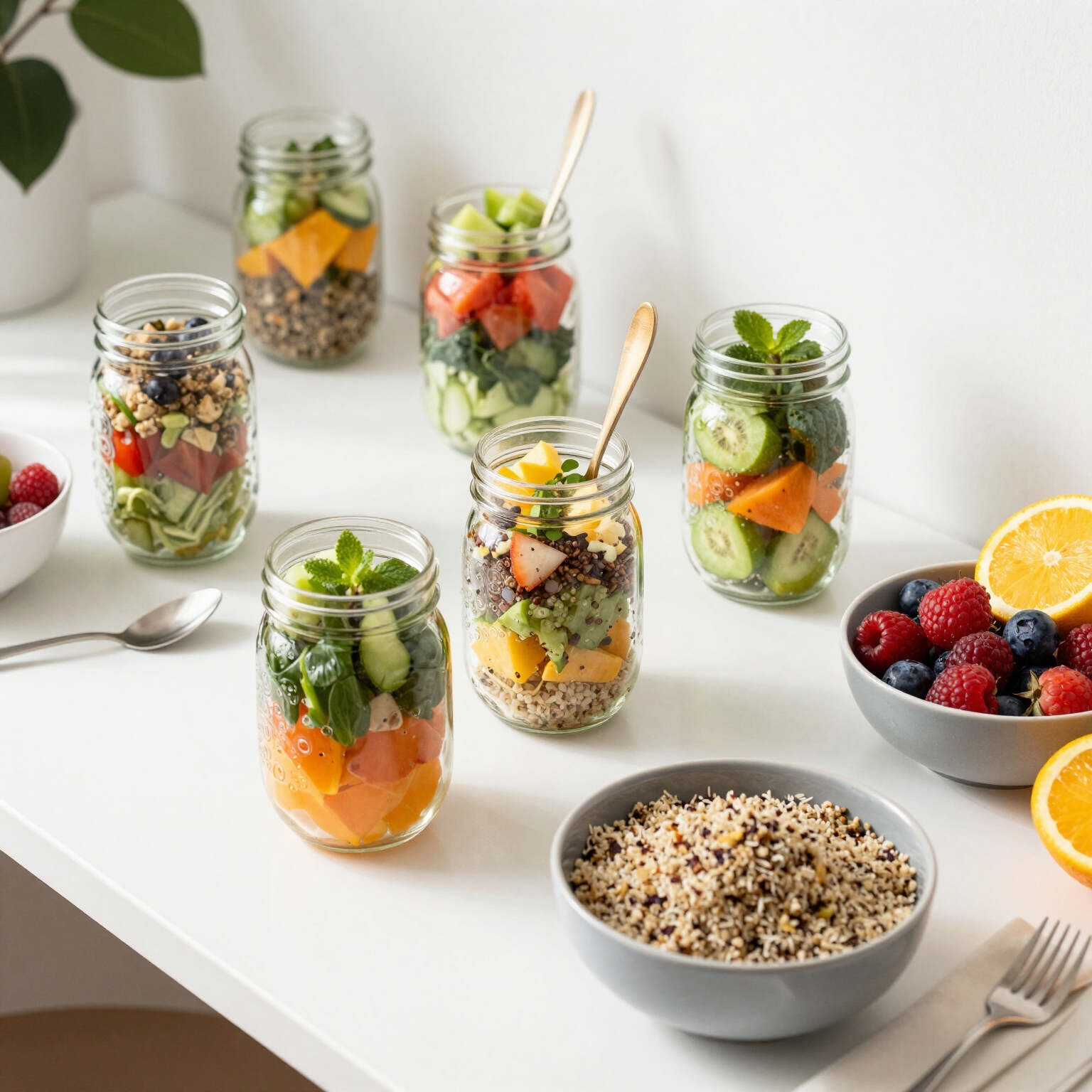
Easy Healthy Homemade Lunches for Work That Save Time, Money & Keep You Energized All Day
You can whip up a nutrient‑dense lunch box in five minutes by pre‑cooking protein like hard‑boiled eggs, tuna, or tofu, then pairing it with whole‑grain carbs (quinoa, farro, or rice cakes), fresh veggies, and a drizzle of healthy fats from avocado or nuts. Store each component separately in a reusable container, add dressings just before you eat, and you’ll avoid mid‑day crashes while saving money. Keep reading to discover more quick‑assembly tricks.
Table of Contents
How to Build a Balanced Lunch Box in 5 Minutes
Ever wonder how you can throw together a nutritious lunch box in just five minutes? You start with a protein source—hard‑boiled eggs, a scoop of hummus, or a handful of chickpeas—already portioned in a small container. Next, grab a carb: a whole‑grain pita, a few crackers, or a pre‑cooked rice cup. Then add veggies: sliced cucumbers, baby carrots, or a handful of cherry tomatoes, all ready from the fridge. Finish with a healthy fat: avocado wedges, a drizzle of olive oil, or a few nuts. Toss everything into a reusable box, seal, and you’re set. The key is pre‑prepping each component once a week, so assembly is just a matter of grabbing and stacking. By balancing protein, carbs, veggies, and fat, you keep energy steady, avoid mid‑day crashes, and stay satisfied without spending extra time or money.
Protein Picks for a Balanced Lunch Box That Keep You Full
What protein will keep you satisfied without slowing you down? Pick lean options you can prep fast and stash for the week.
Hard‑boiled eggs give 6 g of protein per egg and stay firm in a fridge drawer.
Cook a batch of chickpeas, toss them with olive oil, salt, and smoked paprika, then roast for a crunchy salad topping.
Canned tuna or salmon, mixed with a dash of Greek yogurt and mustard, makes a creamy spread that resists sogginess.
Firm tofu, pressed and sliced, can be marinated in soy‑ginger sauce and baked for a plant‑based boost.
When you need a quick bite, grab a handful of edamame or a cup of cottage cheese, both rich in casein that releases slowly.
Pair any of these with whole‑grain carbs and veggies, and you’ll stay full, focused, and energized through the workday.

No‑Cook Assemblies for Busy Mornings
Looking for a quick, nutritious start that doesn’t require a stove? You can pull together a balanced bite in minutes by pairing pre‑cooked proteins, fresh veggies, and healthy fats. Keep a stash of rotisserie chicken, canned tuna, hummus, and sliced avocado in the fridge. Toss in cherry tomatoes, baby spinach, or shredded carrots for crunch and micronutrients. A whole‑grain pita, sprouted bread, or rice cakes gives you lasting energy without the need for cooking.
- Protein – chicken salad, tuna mash, or marinated tofu cubes.
- Carb – whole‑grain wrap, pita, or sturdy crackers.
- Veggie – spinach, cucumber slices, or roasted‑pepper strips.
- Fat – avocado slices, olives, or a drizzle of olive‑oil‑based dressing.
Assemble each component in a reusable container, seal, and head out the door. The result is a portable, nutrient‑dense meal that fuels your morning without any stovetop hassle.
Batch‑Prep Peanut Noodles, Roasted Veggies, and Hard‑Boiled Eggs
How can you keep lunch exciting while slashing prep time? Batch‑prep peanut noodles, roasted veggies, and hard‑boiled eggs give you a balanced, tasty trio you can mix‑and‑match all week. Cook a pot of whole‑grain noodles, then whisk together peanut butter, soy sauce, lime juice, a dash of sriracha, and a splash of warm water for a silky sauce. Toss the noodles in the sauce, cool, and store in a large container. Roast a mix of broccoli, bell pepper, carrots, and snap peas on a sheet pan, drizzle with olive oil, sprinkle sea salt, and bake at 425 °F for 20‑25 minutes. Let them cool, then portion into zip‑top bags. Boil a dozen eggs, shock in ice water, peel, and keep them in the fridge. Each morning you grab a serving of noodles, a handful of veggies, and two eggs, then drizzle extra sauce or sprinkle sesame seeds for variety. This system delivers protein, fiber, and healthy fats without daily cooking.
Snack‑Style Lunchables to Add Variety Without Extra Cost
You can create budget‑friendly protein packs by mixing boiled eggs, hummus, or chickpea fritters with a handful of cheese or nuts.
Pair them with versatile veggies like cucumber slices, grapes, or baby carrots for crunch and vitamins.
With a few simple containers, you’ll assemble these snack‑style lunchables in minutes and keep costs low.
Budget‑Friendly Protein Packs
Ever wondered how to keep lunch exciting without breaking the bank? You can build tiny protein packs that sit beside your main dish, giving you extra fuel and variety for pennies. Choose ingredients that stay fresh, need no cooking, and pair well with any snack‑style lunchable. Keep portions small so you stay satisfied without feeling weighed down.
- Two hard‑boiled eggs, a sprinkle of sea salt, and a few cherry tomatoes.
- A scoop of hummus, a handful of baby carrots, and a few whole‑grain crackers.
- Cottage cheese, sliced cucumber, and a dash of paprika.
- Chickpea fritters, a few grapes, and a few almonds (if you’re not nut‑free).
These packs cost under $1 each and deliver 10‑15 g protein, keeping you energized all day.
Versatile Veggie Pairings
Looking for a quick way to boost flavor and nutrients without spending extra? Pair a handful of crisp veggies with a simple dip or protein bite to keep lunch exciting. Slice cucumbers, bell peppers, and snap peas; toss them with a drizzle of lemon‑olive oil or a dollop of hummus. Add a few cherry tomatoes and a sprinkle of feta for a Mediterranean twist, or mix in edamame and a splash of soy‑ginger sauce for an Asian vibe. Swap carrots for radish ribbons when you crave peppery bite, and keep a small container of olives or pickles for briny contrast. These versatile pairings stay fresh all day, cost pennies, and let you mix‑and‑match without reheating.
Quick Assembly Tips
Switching from veggie pairings to snack‑style lunchables, grab a few pre‑pped components and assemble a balanced bite in seconds. Keep your pantry stocked with versatile staples so you can mix and match without extra cost. Use containers that separate protein, carbs, and fruit to keep flavors fresh. When you’re short on time, focus on items that require no cooking and pair well together.

- Protein – boiled eggs, hummus, tuna salad, or chickpea fritters.
- Carb – whole‑grain crackers, pita wedges, or roasted sweet‑potato cubes.
- Veggie – cucumber slices, baby carrots, or edamame.
- Fruit/Fat – grapes, berries, cheese cubes, or avocado.
These four groups let you build a snackable lunchable in under a minute, keeping you energized and satisfied all day.
Budget‑Friendly Swaps for Your Lunch Box
Why not stretch your lunch budget without sacrificing flavor? Swap pricey deli meats for canned tuna or chickpeas; a can costs a fraction and still packs protein.
Use frozen mixed veggies instead of fresh— they’re cheaper, last longer, and retain nutrients when blanched.
Replace specialty cheeses with block cheddar or mozzarella; a small block can be sliced for multiple meals.
Trade processed snack packs for bulk nuts or popcorn, which you portion yourself.
Opt for whole‑grain pasta or rice bought in bulk; a pound stretches over several lunches.
Cook a big batch of lentil soup on Sunday and reheat portions throughout the week—lentils are inexpensive and filling.
Use Greek yogurt as a creamy base for dressings or dip, cutting out costly store‑bought sauces.
Finally, bring your own reusable containers; you’ll avoid single‑use packaging fees and keep food fresher longer.
These simple swaps keep costs low while delivering tasty, satisfying lunches.
Energy‑Boosting Add‑Ons: Avocado, Nuts, and Whole‑Grain Carbs
You’ve already cut costs with smart swaps; now boost your midday stamina by adding avocado, nuts, and whole‑grain carbs. These three power‑ups deliver sustained energy, healthy fats, and fiber that keep blood sugar steady through the afternoon. Pair them with your base lunch for a balanced bite that satisfies cravings without the crash.
- Slice avocado onto salads or wraps – its creamy monounsaturated fats slow digestion and provide a buttery texture.
- Sprinkle a handful of mixed nuts – almonds, walnuts, or pistachios add protein, crunch, and omega‑3s.
- Swap white rice for quinoa or farro – whole‑grain carbs release glucose slowly, extending fullness.
- Combine all three in a grain bowl – layer cooked grain, diced avocado, and toasted nuts for a nutrient‑dense, energizing meal.
These simple add‑ons turn ordinary lunches into fuel‑rich powerhouses, keeping you focused and alert all day.
Storage Hacks to Keep Your Lunch Box Fresh and Sog‑Free
Ever wonder how to keep salads crisp and wraps dry until noon? Start by layering your container: place a paper towel or a small lettuce leaf at the bottom to absorb excess moisture. Pack dressings in a separate leak‑proof bottle and only pour them just before you eat.
For wraps, wrap the tortilla in parchment paper, then a zip‑top bag; the paper draws away steam, keeping the filling from sogging.
Store crunchy veggies like carrots and bell peppers in a dry compartment with a splash of lemon juice to prevent browning. Use silicone food‑storage bags for items that release water, such as cherry tomatoes, and press out any air before sealing.
Keep a small ice pack in the cooler section of your bag to maintain a fresh temperature, especially for protein‑rich foods like boiled eggs or chickpea salad.
Finally, re‑seal the container tightly after each bite to lock out humidity and preserve texture all day long.
Frequently Asked Questions
How Can I Keep Salads Crisp Without a Cooler?
Pack the greens in a sealed container with a paper towel to absorb moisture, keep dressing separate until you eat, use sturdy lettuce like romaine, and add crunchy veggies or nuts right before lunch.
What Are the Best Portable Sauces That Won’T Leak?
You’ll love these leak‑proof sauces: a thick tahini‑lemon drizzle, a chunky avocado‑lime mash, a honey‑mustard vinaigrette, and a sturdy pesto‑yogurt blend. Pack them in screw‑top containers or zip‑lock bags.
Can I Substitute Dairy With Plant‑Based Options in Snackables?
Yes, you can swap dairy for plant‑based alternatives in snackables—use almond or cashew cheese, coconut yogurt, vegan mayo, and tofu‑based spreads. They keep protein high, texture creamy, and flavors satisfying.
How Long Do Pre‑Cooked Grains Stay Fresh in the Fridge?
They’ll stay fresh for three to five days in the fridge if you store them in an airtight container. Cool them quickly after cooking, label the date, and reheat only what you need each day.
Do I Need a Separate Container for Dressings?
Yes, you should keep dressings separate so they stay crisp and don’t sog the the ingredients. Use a small, airtight container or a leak‑proof bottle, then pour it over your salad right before eating.
Conclusion
You’ve got the tools to craft tasty, energizing lunches in minutes—protein‑packed, no‑cook combos, batch‑prepped staples, and budget swaps keep you full and focused. Toss in avocado, nuts, or whole‑grain carbs for an extra boost, and use smart storage hacks to stay fresh. With these quick, affordable strategies, you’ll power through the workday feeling satisfied, saving money, and ditching the afternoon slump.


Sorry, the comment form is closed at this time.