
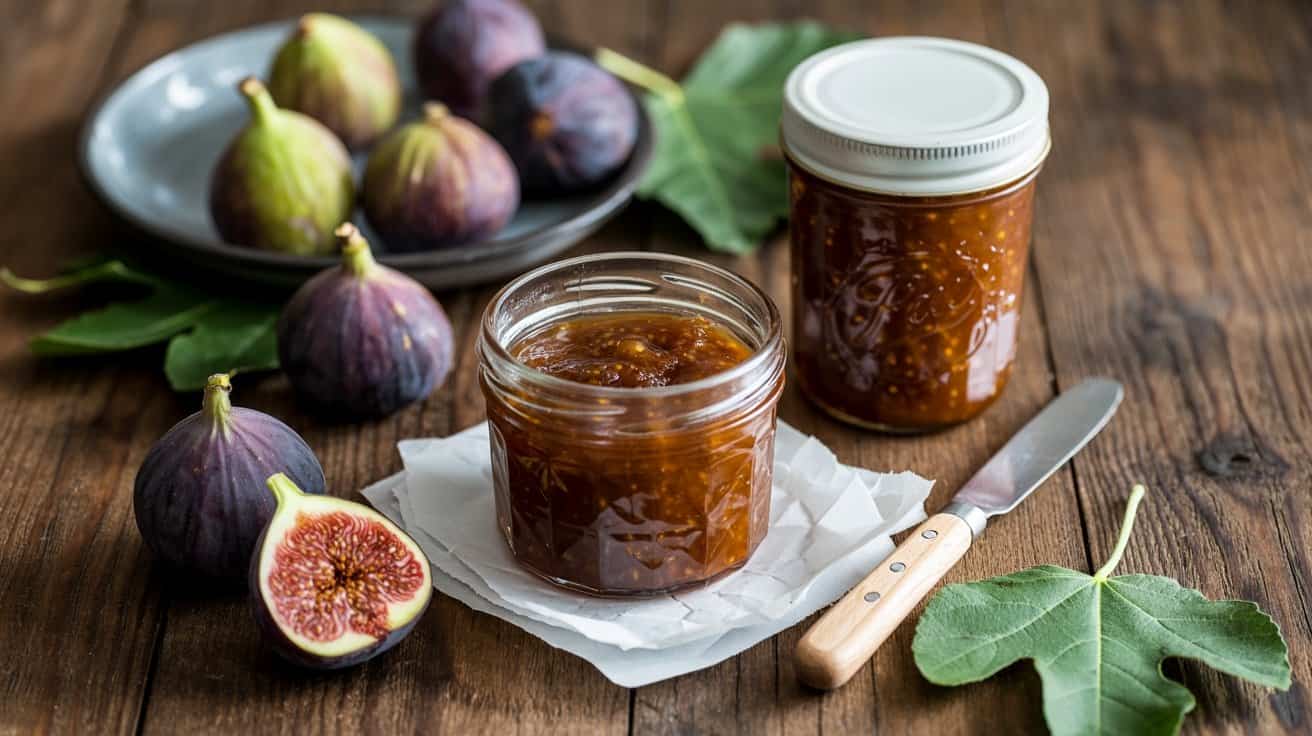
Easy Fig Jam Recipe Making Your Own With Easy Steps
You’ll need two pounds of ripe figs, 1½ cups sugar, 3 tablespoons lemon juice, and ¼ cup water to make classic fig jam. Quarter the figs, combine everything in a heavy-bottomed pot, and cook for 20-25 minutes at medium-high heat, stirring frequently. Test doneness by dropping jam on a frozen plate—it should wrinkle when pushed. Pour into sterilized jars leaving ¼-inch headspace. Master the perfect consistency, storage techniques, and creative serving ideas below.
Table of Contents
Key Takeaways
- Combine 2 pounds ripe figs, 1½ cups sugar, 3 tablespoons lemon juice, and ¼ cup water in a heavy-bottomed pot.
- Macerate mixture 15 minutes, then boil on medium-high heat for 20-25 minutes, stirring frequently to prevent sticking.
- Test doneness using frozen plate method: jam should wrinkle when pushed and hold its shape after cooling briefly.
- Sterilize jars, fill leaving ¼-inch headspace, and process in boiling water bath for 10 minutes for shelf-stable storage.
- Add optional flavorings like vanilla extract, honey, balsamic vinegar, or cardamom during final cooking stages for depth.
Essential Ingredients for Homemade Fig Jam
Fresh figs form the foundation of any exceptional jam, and you’ll need about two pounds of ripe fruit for a standard batch. Choose figs with deep color and a sweet, ripe aroma that indicates they’re at peak flavor. You’ll find the best options through seasonal sourcing at farmers’ markets or specialty grocers during late summer and early fall.
Beyond figs, you’ll need granulated sugar—typically one and a half cups—which acts as both sweetener and preservative. Fresh lemon juice is crucial; add three tablespoons to balance sweetness and activate natural pectin. You don’t need commercial pectin since figs contain enough naturally.
Optional ingredients enhance complexity: a teaspoon of vanilla extract adds warmth, while a pinch of salt brightens flavors. Some recipes include honey or balsamic vinegar for depth. Keep ingredients minimal to let the figs shine. You’ll also need water—just a quarter cup—to prevent scorching during initial cooking.
Kitchen Tools and Equipment You’ll Need
Before you start making fig jam, you’ll need to gather the right kitchen tools to ensure success.
You’ll work with specific cooking vessels for heating and reducing the fruit mixture, various stirring implements to prevent scorching, and proper containers for storing your finished jam.
Having these essentials ready will make your jam-making process smooth and efficient.
Essential Cooking Vessels
Gather your essential cooking vessels before diving into fig jam making, as having the right equipment ensures smooth preparation and perfect results.
You’ll need a heavy-bottomed pot that distributes heat evenly to prevent scorching your delicate figs.
Your best options include:
- Cast iron Dutch oven – Retains heat exceptionally well and prevents hot spots that can burn jam
- Copper saucepan – Offers superior heat conductivity and allows precise temperature control during cooking
- Stainless steel stockpot – Provides durability and won’t react with acidic ingredients
Choose a vessel that’s at least 6-8 quarts to accommodate bubbling jam without overflow.
The pot’s wide surface area helps moisture evaporate faster, achieving that perfect jam consistency you’re after.
Avoid aluminum pots since they’ll react with the fruit’s natural acids and create metallic flavors.
Stirring and Mixing Tools
With your cooking vessel selected, you’ll need proper stirring tools to keep your fig jam from sticking and burning during the cooking process. A wooden spoon works perfectly for this task since it won’t conduct heat and won’t scratch your pot’s surface. Its long handle keeps your hand safely away from bubbling jam.
You’ll also want a silicone spatula for scraping down the sides of your pot and ensuring every bit of fruit gets incorporated. It’s heat-resistant and flexible enough to reach into curved corners.
Keep a bench scraper nearby for transferring chopped figs from your cutting board to the pot efficiently. This tool makes quick work of moving ingredients without leaving anything behind.
These three tools will handle all your stirring and mixing needs throughout the jam-making process.
Storage Containers Required
Having stirred your jam to perfection, you’ll need the right containers to store your finished product safely. Your storage choices directly impact how long your fig jam stays fresh and flavorful.
Here’s what you’ll need for proper storage:
- Glass canning jars – Choose 8-ounce or 16-ounce sizes with new lids and rings for the best seal
- Airtight jars – Perfect for refrigerator storage if you’re not canning, these keep your jam fresh for up to three weeks
- Vacuum sealer bags – Use a vacuum sealer for freezer storage, extending shelf life up to one year
Don’t use old mayo or pickle jars—they won’t seal properly for long-term storage. Always sterilize your containers in boiling water before filling them with hot jam.
Selecting and Preparing Fresh Figs
When you’re making fig jam, choosing perfectly ripe figs makes all the difference between a mediocre preserve and an exceptional one. Your fig selection starts with understanding harvest timing. Ripe figs feel soft and hang downward from branches. For ripeness testing, gently squeeze the fruit—it should yield slightly without being mushy. If you’re picking from your own trees, proper tree pruning throughout the season ensures better fruit quality.
| Ripeness Indicator | What to Look For |
|---|---|
| Color | Deep purple, brown, or green-yellow |
| Texture | Soft, slight give when pressed |
| Stem | Bent, not straight |
| Skin | Small cracks near stem |
| Bottom | Slightly open eye |
Once you’ve selected your figs, rinse them gently under cool water. Remove stems and any damaged spots. You’ll want to quarter larger figs while keeping smaller ones whole. Don’t peel them—the skin adds pectin and texture to your jam.
Step-by-Step Cooking Instructions
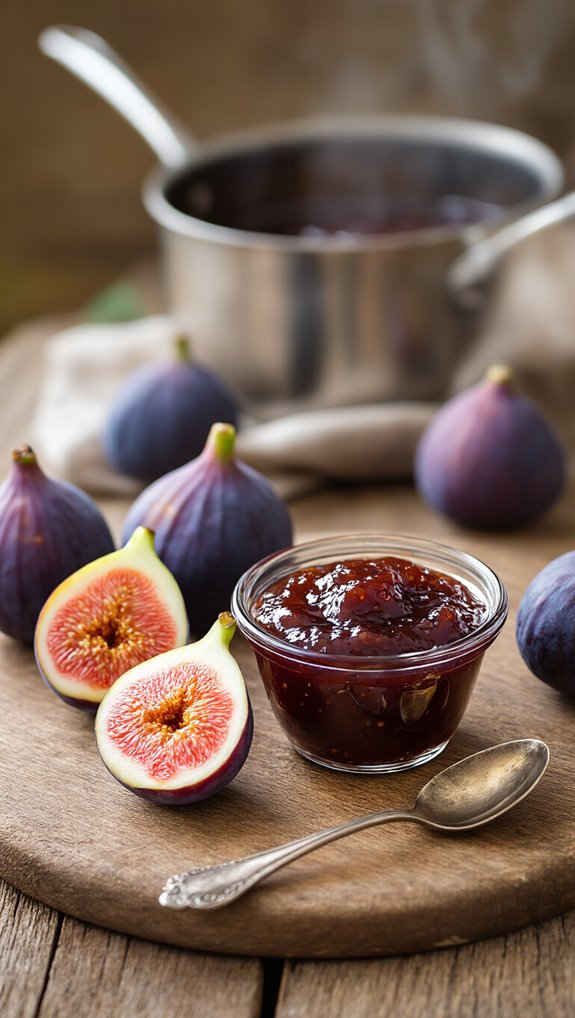
Now that your figs are prepped and ready, you’ll begin the actual jam-making process by combining them with sugar in a heavy-bottomed pot.
Add lemon juice and stir everything together, letting the mixture sit for 15 minutes to macerate.
Place your pot over medium-high heat and bring the mixture to a rolling boil. You’ll notice the fig texture breaking down as it cooks.
Here’s what to monitor during the cooking time:
- First 10 minutes: Stir frequently to prevent sticking while maintaining a steady boil
- Minutes 10-20: Reduce heat to medium and continue stirring as the jam thickens
- Final stage: Test for doneness using the plate method—a drop should wrinkle when pushed
The total cooking time typically ranges from 20-25 minutes.
You’re looking for a glossy, thick consistency that coats your spoon. Once achieved, remove from heat immediately to prevent overcooking.
Testing for the Perfect Jam Consistency
While your jam bubbles away on the stove, you’ll need reliable methods to determine when it’s reached the perfect consistency. The most dependable technique is the cold plate test. Before cooking, place several small plates in your freezer. When you think the jam’s ready, drop a teaspoon onto a frozen plate. Let it sit for thirty seconds, then push it with your finger. If it wrinkles and holds its shape, you’ve achieved proper texture assessment.
Watch for visual cues during cooking. The jam’s ready when bubbles become slower and heavier, and a wooden spoon dragged across the pot’s bottom leaves a momentary clear trail. Gel timing typically occurs around 220°F on a candy thermometer, though altitude affects this temperature.
Don’t overcook your jam. Once it passes these tests, remove it from heat immediately. It’ll continue thickening as it cools, so what seems slightly loose now will set perfectly later.
Flavor Variations and Add-Ins
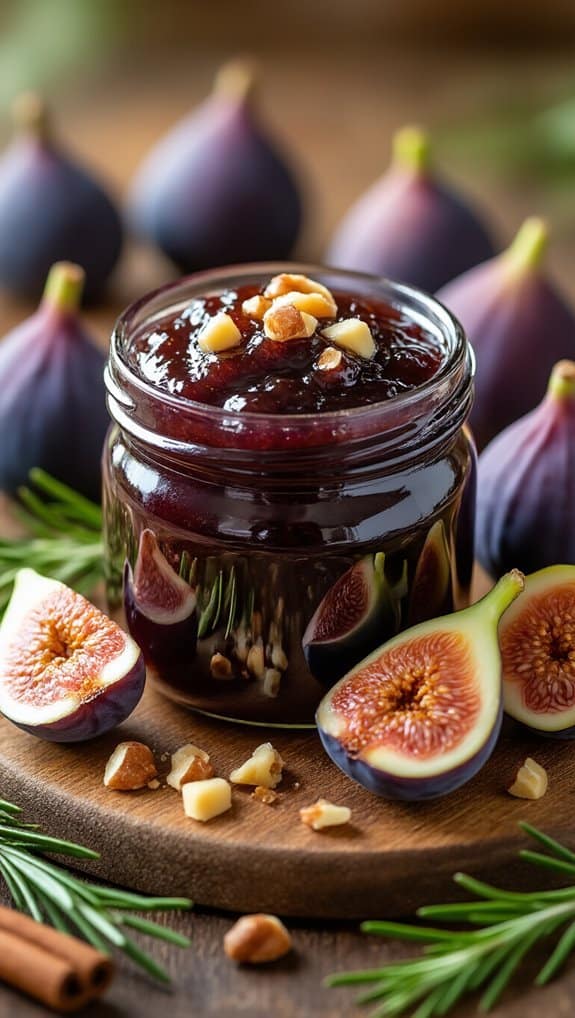
Your perfectly set fig jam serves as an excellent canvas for creative flavor combinations. Transform your basic recipe by incorporating complementary ingredients that enhance the figs’ natural sweetness and complexity.
Consider these sophisticated additions:
- Honey infusion – Replace half the sugar with honey, stirring it in during the final five minutes of cooking for floral depth
- Vanilla bean – Split one pod lengthwise and scrape seeds into the bubbling mixture, adding the empty pod for extra aroma
- Balsamic reduction – Drizzle two tablespoons into the jam’s last cooking stage for tangy richness
You’ll find a rosemary sprig creates an herbaceous note when steeped during cooling. Remove it after 10 minutes to prevent overpowering the delicate fig flavor.
For citrus brightness, add lemon zest while cooking. Cardamom pods or star anise offer warming spice notes. Start with small amounts—you can’t remove flavors once they’re incorporated.
Proper Canning and Storage Methods
Once you’ve achieved the perfect consistency and flavor, preserving your fig jam safely ensures you’ll enjoy it for months to come.
Start by sterilizing your airtight jars and lids in boiling water for ten minutes. Fill the hot jars with jam, leaving a quarter-inch headspace, then wipe the rims clean before securing the lids.
Process filled jars in a boiling water bath for ten minutes, adjusting for altitude if you’re above 1,000 feet. You’ll hear the satisfying “pop” as they seal during cooling. Test each seal by pressing the center – it shouldn’t flex.
Store properly sealed jars in a cool, dark pantry with good humidity control. They’ll keep for up to eighteen months. Once opened, refrigerate and use within three weeks. If you notice any mold, off-odors, or unsealed lids, don’t risk it – discard the jam immediately.
For short-term storage, skip canning and refrigerate fresh jam for up to one month.
Serving Suggestions and Pairings
Beyond spreading it on morning toast, fig jam transforms both sweet and savory dishes with its rich, honeyed complexity. You’ll discover countless ways to elevate your meals with this versatile preserve.
For savory pairings, fig jam’s natural sweetness balances bold flavors beautifully. Try these combinations:
- Glazed proteins – Brush it on roasted pork tenderloin or grilled chicken during the last few minutes of cooking
- Flatbread toppings – Spread it as a base for prosciutto and arugula pizzas
- Sandwich enhancer – Layer it in paninis with turkey and brie
As for cheese accompaniments, you can’t go wrong pairing fig jam with aged varieties. Serve it alongside sharp cheddar, creamy goat cheese, or tangy blue cheese on your charcuterie boards.
It’ll cut through rich, salty flavors while adding sophisticated depth.
Don’t forget dessert applications—swirl it into cheesecake, fill thumbprint cookies, or drizzle over vanilla ice cream for an instant upgrade.
Common Mistakes to Avoid
You’ll want to sidestep these common pitfalls when making fig jam to ensure perfect results.
Overcooking your figs will destroy their delicate flavor and create a bitter, caramelized taste, while using the wrong sugar ratios can prevent proper gelling or make your jam cloyingly sweet.
Don’t forget to perform a pectin test—skipping this crucial step means you won’t know if your jam will set properly until it’s too late.
Overcooking Your Figs
When you’re making fig jam, it’s tempting to cook the mixture for extended periods to achieve that perfect thick consistency, but overcooking will destroy the delicate flavor and texture that makes homemade fig jam special.
You’ll know you’ve gone too far when you detect these telltale signs:
- Dark discoloration appears around the edges, signaling caramelization has turned into burnt bitterness
- Texture collapse occurs, transforming your jam from spreadable to either rock-hard or oddly grainy
- Loss of fruit essence happens as the fresh fig taste disappears completely
Set your timer for 20-25 minutes max.
Test consistency by dropping jam onto a chilled plate—if it wrinkles when pushed, you’re done. Remember, your jam will thicken more as it cools, so don’t chase ultra-thick results on the stove.
Wrong Sugar Ratios
Measuring sugar incorrectly can ruin your fig jam before you’ve even turned on the heat. You’ll need a 2:1 ratio of figs to sugar for optimal consistency and preservation. Too much sugar creates candy-like crystallization, while too little produces runny jam that won’t set properly.
Don’t follow outdated recipes blindly. Historical uses of sugar in preserving varied wildly when it was scarce and expensive. Today’s market trends push for reduced-sugar jams, but you can’t simply slash amounts without adjusting pectin and acid levels. If you’re cutting sugar, you’ll need to add commercial pectin or increase lemon juice.
Always weigh your ingredients rather than using volume measurements. Sugar settles differently, and packed versus loose cups can throw off your ratios by 20%.
Skipping Pectin Test
Unless you test your figs’ natural pectin levels, you’re gambling with whether your jam will set.
Figs contain moderate pectin, but levels vary by ripeness and variety. You’ll avoid runny disasters by performing this simple test before cooking.
Here’s how to check pectin content:
- Mix one teaspoon of cooked fig juice with one tablespoon of rubbing alcohol
- Let it sit for one minute
- Check if it forms a solid gel clump
If the mixture stays liquid, you’ll need added pectin.
This isn’t just about texture—it addresses safety concerns too. Proper gel formation helps preserve your jam according to industry standards.
Low-pectin jams won’t achieve the right pH balance, potentially allowing bacterial growth.
Don’t skip this crucial step thinking you’ll save time. You’re actually preventing wasted ingredients and ensuring your jam meets preservation requirements.
Nutritional Information and Yield
Although homemade fig jam contains natural fruit sugars, you’ll find it’s a relatively wholesome preserve when enjoyed in moderation.
Your typical tablespoon serving contains about 50-60 calories, primarily from the figs’ natural sugars and any added sweetener.
The calorie breakdown shows roughly 95% carbohydrates, 4% dietary fiber, and 1% protein.
This recipe yields approximately 4-5 cups of jam, depending on your figs’ moisture content and cooking time.
You’ll get about 64-80 tablespoon servings from one batch.
Standard serving sizes range from one tablespoon for toast or yogurt toppings to two tablespoons for filling pastries or thumbprint cookies.
Store your jam in sterilized jars, and it’ll keep for up to one year in your pantry if properly sealed.
Once opened, you’ve got three to four weeks in the refrigerator.
For longer storage, freeze portions in freezer-safe containers for up to six months without losing quality or nutritional value.
Frequently Asked Questions
Can I Make Fig Jam Without Added Sugar or With Sugar Substitutes?
You can definitely make fig jam without added sugar or with sugar substitutes. For sugar free preservation, you’ll rely on the figs’ natural sweetness and pectin content. You can enhance sweetness using alternative sweeteners like stevia, erythritol, or monk fruit.
However, you’ll need to adjust cooking times and possibly add extra pectin since sugar helps with gel formation. Store your sugar-free jam in the refrigerator and use it within two weeks.
Why Did My Fig Jam Turn Out Too Dark or Brown?
Your fig jam turned dark or brown because you’ve likely overcooked it or used too high heat.
Extended cooking causes oxidation effects that darken the fruit’s natural pigments and caramelize sugars excessively.
High temperatures also trigger pectin breakdown, which not only affects texture but contributes to browning.
You’ll get better color by cooking at lower temperatures for shorter periods and adding lemon juice to slow oxidation.
Can I Use Frozen Figs Instead of Fresh Ones?
Yes, you can absolutely use frozen figs for your jam.
When you’re working with frozen texture, expect them to be softer and release more liquid once thawed. For best thawing tips, place them in a colander over a bowl overnight in your fridge.
Don’t discard the collected juice – you’ll add it to your pot.
The frozen figs will break down faster during cooking, so you’ll need to watch your timing carefully.
How Long Does Homemade Fig Jam Last Once Opened?
Once you’ve opened your homemade fig jam, you’ll get about 3-4 weeks of refrigeration lifespan when stored properly in the fridge.
You’ll notice flavor changes start occurring after the second week – the jam’s brightness fades slightly and it becomes less vibrant.
Keep it in an airtight container and always use clean utensils when scooping.
If you spot any mold, unusual smell, or significant texture changes, it’s time to toss it out.
Is It Safe to Reduce the Amount of Lemon Juice Called For?
You shouldn’t reduce the lemon juice in your fig jam recipe as it’s crucial for safety and texture.
The lemon juice provides the acid balance needed to prevent bacterial growth and activate the natural pectin activity that helps your jam set properly.
Without enough acid, you’ll risk spoilage and end up with runny jam that won’t gel.
If you’re concerned about tartness, stick to the recipe’s measurements for best results.
Conclusion
You’ve now mastered the art of making homemade fig jam that’ll rival any store-bought version. Whether you’re spreading it on morning toast, pairing it with cheese boards, or gifting jars to friends, this preserve captures summer’s sweetness year-round. Remember to follow proper canning procedures for safety, and don’t rush the cooking process—patience creates that perfect jammy consistency. Your pantry will thank you when you’re enjoying these preserved figs months from now.


No Comments