
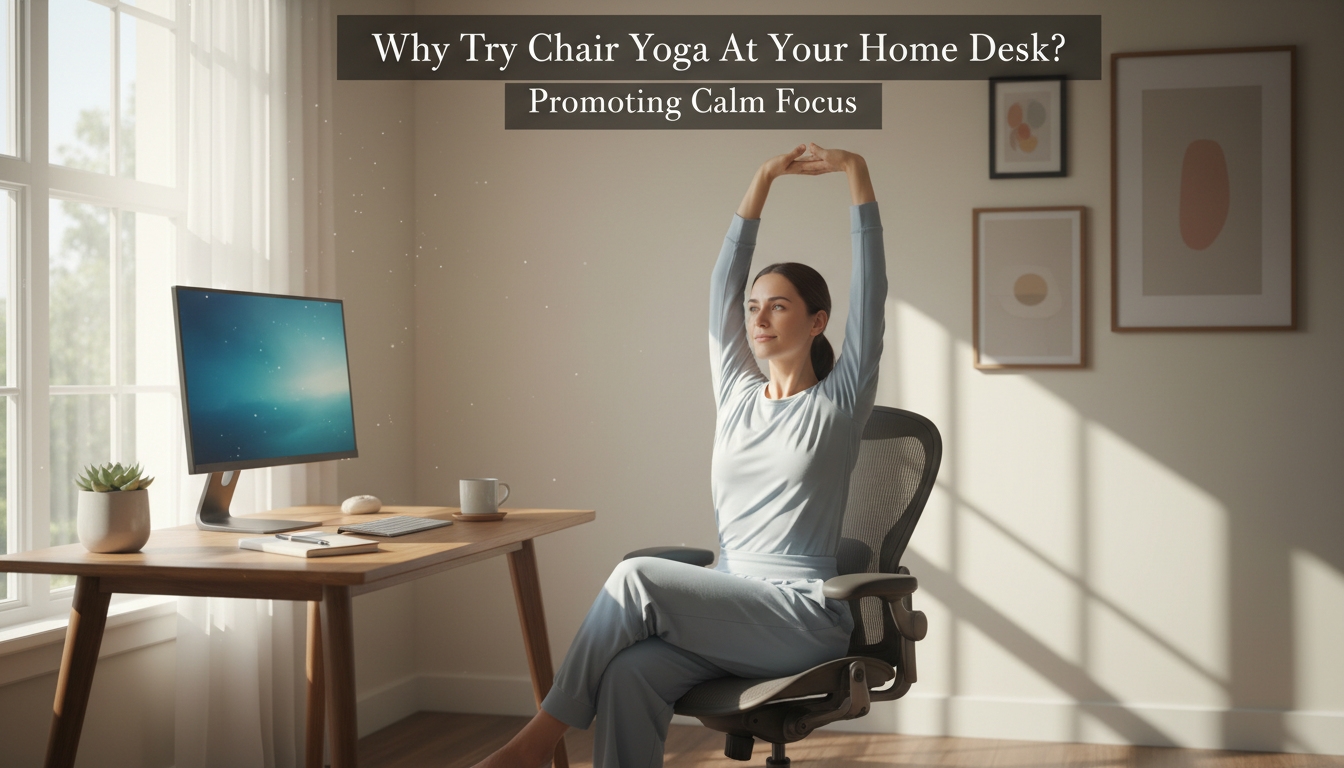
You’ll boost your energy, protect your posture, and keep your mind sharp by fitting simple, low‑impact chair‑yoga moves into your home‑desk routine. A seated format needs no extra equipment or a quiet room, yet it targets tight neck, upper back, and hip muscles while improving circulation to the brain. You can do quick poses like Cat‑Cow, Forward Fold, or Chair Twist between meetings without fatigue, and a safe, ergonomic setup makes it easy to stay consistent. Keep going to discover the full routine and avoid common mistakes.
Table of Contents
Why Chair‑Yoga Is the Perfect Desk Break
Ever feel the tension building in your shoulders after hours at the computer? You can break that cycle with chair‑yoga, a low‑impact routine that fits right into your workday. You stay seated, so you don’t waste time gathering equipment or finding a quiet room. Each pose targets tight muscles—neck, upper back, hips—while keeping your spine aligned, which reduces strain from prolonged sitting. You’ll notice quicker circulation, which delivers oxygen to your brain and sharpens focus. Because the movements are gentle, you can repeat them every hour without feeling exhausted. You also avoid the guilt of “stealing” time from tasks; the session lasts just a few minutes yet yields measurable relief. By integrating chair‑yoga, you turn a mundane break into a purposeful reset, boosting productivity and protecting your posture without leaving your desk.
How Desk‑Based Stretching Can Boost Your Energy & Focus
Why stay sluggish when a simple desk‑based stretch can revitalize you in seconds? You’re probably feeling that mid‑day dip, but a quick stretch can jump‑start circulation, oxygenate the brain, and sharpen concentration. Start by sitting tall, shoulders relaxed, then lift both arms overhead, interlacing fingers and stretching upward. Hold for a breath, then release, feeling tension melt away. Next, roll your shoulders forward and back, three times each, to loosen the upper back and improve posture. Finally, perform a seated spinal twist: place your right hand on the left knee, turn your torso left, and breathe deeply. Switch sides. These micro‑movements increase blood flow, release endorphins, and reset your nervous system, leaving you more alert and ready to tackle tasks. Incorporate them every hour, and you’ll notice sustained energy, clearer thinking, and reduced fatigue throughout the workday.
Set Up Your Desk for Safe, Comfortable Chair‑Yoga
How can you transform your workstation into a safe, comfortable space for chair‑yoga? Start by clearing the area around your chair; remove papers, mugs, and cords that could snag.
Choose a chair with a stable base, a straight back, and a seat height that lets your feet rest flat on the floor. Adjust the chair so your knees form a 90‑degree angle and your hips are level or slightly higher.
Place a non‑slip mat or a firm towel under the chair to prevent sliding on smooth floors.
Keep your monitor at eye level, about an arm’s length away, to avoid neck strain while you move. Ensure lighting is even and glare‑free, and have a small water bottle within reach for hydration.
Finally, set a timer or calendar reminder so you remember to pause and practice, turning your desk into a purposeful, ergonomic yoga zone.
Do These 5 Quick Chair‑Yoga Poses Between Meetings
Feeling stiff after a long sit‑down? You can reset your posture and boost circulation in just a few minutes. Between meetings, roll your shoulders, engage your core, and stretch those tight muscles without leaving your chair. These five quick poses keep you limber, focused, and ready for the next call.
- Seated Cat‑Cow – Inhale, arch your back, lift your chest; exhale, round your spine, tuck the chin. Feel the vertebrae glide.
- Desk Forward Fold – Hinge at the hips, let your torso drape over the desk, relax your neck. Stretch the hamstrings and lower back.
- Chair Twist – Place your right hand on the backrest, left hand on your right thigh, inhale, exhale, turn gently. Open the chest and improve spinal mobility.
- Seated Figure‑Four – Cross your right ankle over your left knee, lean forward slightly. Release hip tightness.
- Neck Release – Drop your ear to the shoulder, hold, switch sides. Ease tension in the neck and upper traps.
Avoid Common Chair‑Yoga Mistakes & Build a Daily 5‑Minute Routine
Ever notice how a few simple missteps can turn a quick chair‑yoga break into a source of strain? Start by checking your posture: sit tall, shoulders relaxed, and keep your spine neutral. Avoid slouching or leaning forward, which compresses the lower back. When you lift a leg, engage the core instead of letting the pelvis tilt; this protects the hips and knees. Don’t over‑extend your neck—keep your chin parallel to the floor and breathe evenly. Limit each pose to 30‑45 seconds; longer holds can fatigue muscles and reduce focus.
Now, build a 5‑minute routine: 1) Seated cat‑cow (1 minute) to mobilize the spine; 2) Chair twist (30 seconds each side) for thoracic rotation; 3) Forward fold (45 seconds) to stretch hamstrings; 4) Seated eagle arms (45 seconds) for shoulder release; 5) Ankle circles (30 seconds each ankle) to improve circulation. Finish with a deep breath, resetting your mind and body before the next meeting.
Frequently Asked Questions
Can I Do Chair Yoga if I Have a Back Injury?
Yes, you can try chair yoga with a back injury, but start gently, avoid painful stretches, keep movements small, and listen to your body. Consult a therapist first to ensure safety.
Do I Need Any Special Equipment for Desk Chair Yoga?
You don’t need special gear—just a sturdy chair, a flat surface, and comfortable clothing. A small towel or yoga block can help with support, but most moves work with what you already have.
How Often Should I Practice Chair Yoga for Noticeable Benefits?
Practice chair yoga three to five times weekly, aiming for 10‑15 minutes each session. Consistency builds flexibility and circulation, so you’ll notice smoother posture and reduced tension within a few weeks.
Is Chair Yoga Suitable for All Age Groups?
Yes, chair yoga works for every age group; you’ll find gentle stretches and seated poses that adapt to seniors, adults, and teens alike, letting each of you enjoy safe, effective movement.
Can Chair Yoga Replace My Regular Workout Routine?
You can’t fully replace a regular workout with chair yoga, but you can supplement it. It boosts flexibility, reduces stress, and improves circulation, so keep it alongside cardio and strength training for balanced fitness.
Conclusion
You’ve seen how a simple chair‑yoga break can revive your energy, sharpen focus, and protect your posture. By setting up a safe space, mastering five quick poses, and steering clear of common slip‑ups, you can weave a five‑minute routine into every workday. Consistency turns those brief moments into lasting vitality, so keep moving, stay mindful, and let your desk become a hub of well‑being.


Sorry, the comment form is closed at this time.