
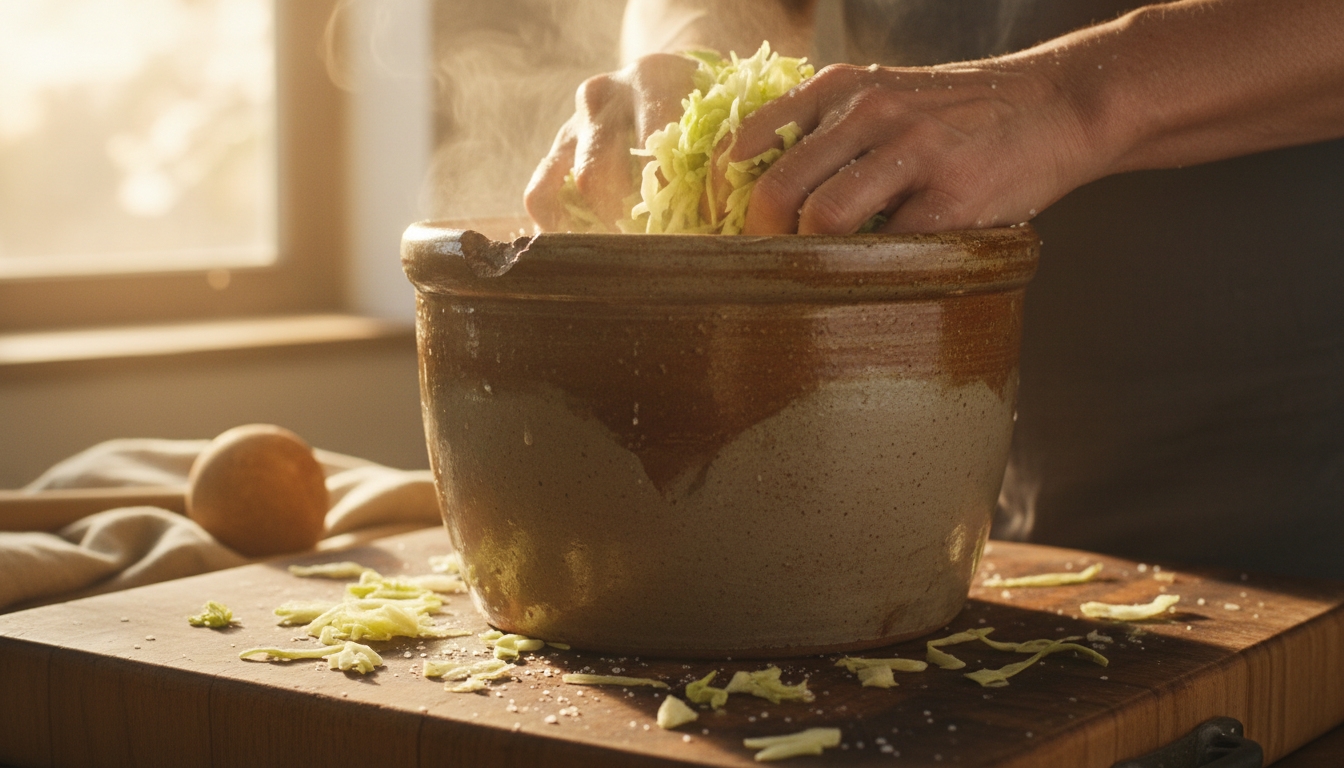
Pick a dense, organic green or white cabbage, shred it finely, and massage it with about one tablespoon of kosher or sea salt per kilogram until the leaves release a brine that keeps the kraut crisp. Pack the salted cabbage tightly into a clean jar, press it down, and add a weight so the brine fully covers the leaves. Seal loosely and ferment at 65‑70 °F for 2‑4 weeks, checking daily that the cabbage stays submerged. If you keep the jar sealed with a breathable cloth and maintain the temperature, you’ll end up with tangy, crunchy sauerkraut and discover extra tips for flavor boosters and troubleshooting.
Key Takeaways
- Use fresh, organic cabbage with tightly packed leaves; shred finely and mass with 18 g non‑iodized salt per kilogram.
- Massage cabbage for 5–10 minutes until brine pools, then pack tightly in a clean jar, ensuring at least 1 inch of liquid covers the cabbage.
- Add a clean weight (stone, fermentation disc, or brine‑filled bag) to keep cabbage submerged; seal loosely with a lid or breathable cloth.
- Ferment at 65–70 °F (18–21 °C) for 2–4 weeks, checking daily for submersion and removing any mold or promptly.
- For authentic flavor, incorporate ½ tsp caraway seeds, crushed juniper berries, and a bay leaf during the initial massage.
Select the Best Cabbage and Salt for Authentic German Sauerkraut
Which cabbage will give your sauerkraut that true German bite? You’ll want a dense, fresh green or white cabbage with tightly packed leaves; the tighter the leaf, the more juice it releases when salted. Choose an organic head for maximum natural sugars and avoid any pre‑cut, wilted packs. When you shred it finely, the fibers break down faster, letting the brine form quickly. For salt, non‑iodized sea salt or kosher salt is essential—iodine hinders the beneficial lactobacilli. Measure about 18 g (roughly one tablespoon) per kilogram of cabbage; this ratio draws out moisture while preserving crunch. If you’re experimenting with sauerkraut recipes, stick to this classic salt level to keep the flavor authentic and the fermentation steady. The right cabbage and proper salt set the foundation for every batch, ensuring a tangy, crisp bite that honors German tradition.
German Sauerkraut: Massage, Pack, and Ferment – Step‑by‑Step Guide
Ready to transform shredded cabbage into tangy German sauerkraut? First, sprinkle the salt over the cabbage and massage vigorously for 5‑10 minutes. You’ll feel the fibers soften and a salty brine pooling at the bottom. Transfer the mixture to a clean jar, pressing down firmly with a wooden tamper or your hand so the cabbage sits snugly under the liquid. Add a weight—clean stone, fermentation disc, or a zip‑lock bag filled with brine—to keep everything submerged. Seal the jar loosely with a lid or cloth, then store it at 65‑70 °F (18‑21 °C) for 2‑4 weeks, checking daily that the cabbage stays covered.
| Step | Action |
|---|---|
| Massage | Rub cabbage with salt until brine appears |
| Pack | Press tightly, add weight, keep submerged |
| Ferment | Store at room temperature, monitor weekly |
Taste after two weeks; if it’s bright enough, move it to the fridge to slow fermentation.
German Sauerkraut Troubleshooting: Mold, Over‑Sourness, and Texture Issues
After you’ve packed and weighted the cabbage, the next step is to watch for problems that can spoil your batch. If you spot white or gray fuzz on the surface, it’s mold; skim it off immediately and add a fresh weight to keep the cabbage submerged. A few hours of exposure can let mold spores proliferate, so keep the jar sealed with a breathable cloth and check daily.
Over‑sourness occurs when fermentation runs too long or the temperature is too high; taste the kraut after a week and, if it’s already sharp, transfer it to the fridge to halt further acid development. For texture, soggy or mushy kraut usually means the cabbage wasn’t packed tightly enough or the brine level dropped, allowing air pockets. Press the cabbage firmly, ensure at least one inch of brine covers it, and use a clean weight to maintain pressure. Adjusting these factors keeps your sauerkraut crisp, balanced, and mold‑free.
German Sauerkraut Flavor Boosters: Caraway, Juniper, and Bay Leaf
Looking to elevate your sauerkraut’s taste without complicating the process? Add a pinch of caraway seeds, a few juniper berries, or a single bay leaf during the initial massage. Caraway brings a warm, earthy note that pairs naturally with cabbage; sprinkle about ½ teaspoon per kilogram and let it dissolve into the brine.
Juniper imparts pine‑like brightness; crush 3–4 berries lightly and toss them in for a subtle resinous bite.
Bay leaf contributes a mellow, herbal depth; one dried leaf per jar is enough—remove it before serving.
These boosters don’t require extra steps; they simply sit in the fermenting jar, releasing flavor as the lactic acid develops.
Adjust quantities to taste, but start modest—over‑spicing can mask the classic tang.
After a few weeks, taste and, if needed, add a second leaf or a few more seeds for a stronger profile.
Enjoy a richer, more complex sauerkraut without extra hassle.
Frequently Asked Questions
Can I Use a Pressure Cooker to Speed up Sauerkraut Fermentation?
No, you can’t use a pressure cooker to speed up sauerkraut fermentation; the heat kills the beneficial bacteria. Stick to room‑temperature fermentation, keep the cabbage submerged, and let the microbes work naturally.
How Long Does Sauerkraut Stay Safe Refrigerated After Fermentation?
You can keep it refrigerated for about three to four months; just make sure it stays sealed, stays below 40 °F, and shows no off‑smells or mold before you eat it.
Is It Okay to Add Sugar or Honey During the Fermentation Process?
You can add a little sugar or honey, but keep it modest—about a teaspoon per kilogram of cabbage. The extra carbs will boost fermentation speed, yet too much may make the kraut overly sweet and disrupt the classic tang.
Can I Ferment Sauerkraut in a Plastic Container Instead of Glass?
You can use food‑grade plastic, but ensure it’s BPA‑free and airtight; glass is safer because it won’t leach chemicals, and you can see the fermentation progress more easily. Keep the cabbage fully submerged.
What Is the Ideal Temperature Range for Consistent Fermentation?
You should keep it between 65 and 72 °F (18‑22 °C). That range lets lactic‑acid bacteria work steadily, producing consistent tang without slowing down or risking spoilage. Stay within those limits for best results.
Conclusion
You’ve now seen how a simple mix of cabbage, non‑iodized salt, and a few classic spices can turn a humble vegetable into a tangy, probiotic treasure. By massaging, packing, and letting it ferment at a steady temperature, you’ll get crisp, authentic German sauerkraut that’s perfect with sausages, pork, or rye. Keep an eye on mold, adjust fermentation time for sourness, and experiment with caraway, juniper, or bay leaf to make it truly yours.


No Comments