
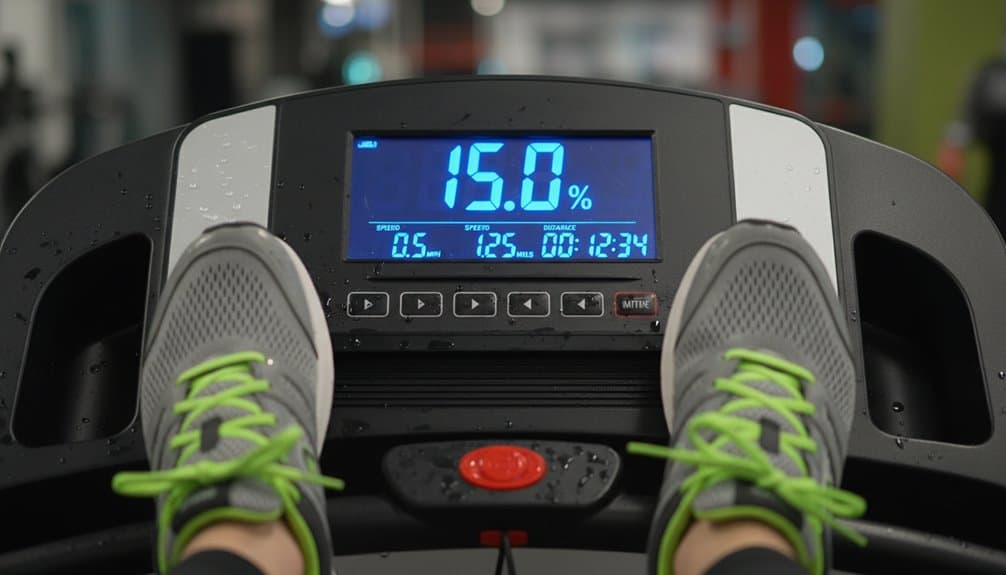
Walking Calorie Calculator Incline: Treadmill Settings That Double Burn Without Running
You can double your walking calorie burn without running by adjusting your treadmill’s incline settings. At a 10% grade, you’ll burn approximately 600 calories per hour compared to 314 on flat ground—that’s nearly twice the expenditure. Even a modest 5% incline increases your burn by 50%, while engaging your glutes, hamstrings, and calves more effectively. Start with just 2-3% incline and gradually work up to find your sweet spot for sustainable, high-calorie workouts.
Key Takeaways
- A 10% incline nearly doubles flat-surface calorie burn, reaching approximately 600 calories per hour for a 150-pound person walking at 3.5 mph
- The 5-7% incline range maximizes calorie burn while maintaining sustainable intensity, burning 30-50% more calories than flat walking
- Every 2% grade increase raises heart rate by 10-15 beats per minute, intensifying workout without running impact
- A modest 3% incline boosts calorie burn by 30%, while 5% incline increases expenditure by approximately 50% compared to flat walking
- Optimal treadmill settings combine 30-45 minute sessions at 5-7% incline with 3.0-3.5 mph speed for maximum calorie burn
Your First Incline Walking Workout: Start Here
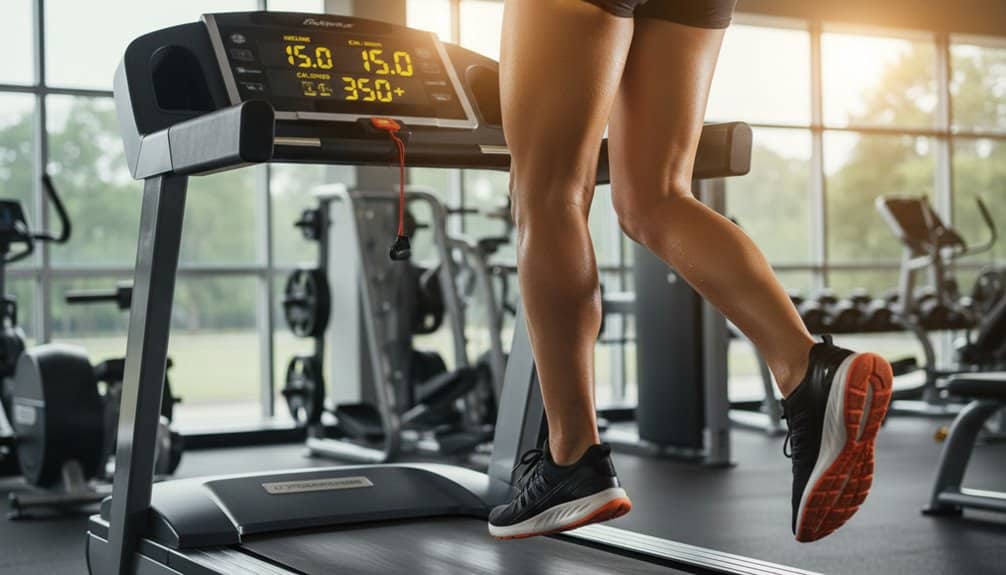
Step onto the treadmill and set it to a modest 2-3% incline for your first workout.
You’ll start with a 5-minute flat walk at 2.5-3.0 mph to cover warmup basics, allowing your muscles to prepare for the increased demand.
Once warm, maintain your incline setting and walk for 15-20 minutes at a comfortable pace where you can still hold a conversation.
Your footwear essentials matter more with incline walking.
You’ll need shoes with proper arch support and cushioning to handle the increased pressure on your forefoot.
Running or cross-training shoes work better than casual sneakers.
Keep your posture upright, avoiding the temptation to lean forward.
Swing your arms naturally and take shorter steps than you’d on flat ground.
After your main workout, reduce the incline to zero and cool down for 5 minutes.
Track how you feel—if this seems easy after two sessions, increase to 4-5% incline.
The 5-7% Sweet Spot for Maximum Calorie Burn
Why do fitness experts consistently recommend 5-7% incline for optimal calorie burning?
This sweet spot delivers the perfect balance between intensity and sustainability.
At this range, you’ll burn 30-50% more calories than flat walking while maintaining proper form and avoiding excessive joint stress.
Your body works harder against gravity without triggering the exhaustion that steeper grades cause.
You can sustain this incline for 30-45 minutes, maximizing total calorie expenditure.
Lower inclines don’t challenge your muscles enough, while anything above 8% often forces you to grip the handrails, reducing calorie efficiency.
At 5-7%, you’ll engage your glutes, hamstrings, and calves optimally.
Your heart rate stays in the fat-burning zone longer, and you won’t need recovery days between workouts.
This consistency matters more than occasional high-intensity sessions.
You’ll build endurance faster and see results within two weeks of regular training at this proven incline range.
How Many Calories Incline Walking Actually Burns
How much can you actually expect to burn during your incline walking sessions?
At a 5% incline, you’ll burn approximately 50% more calories than flat walking.
A 150-pound person walking at 3.5 mph burns about 314 calories per hour on flat ground, but that jumps to 471 calories at a 5% grade.
Your burn rate increases dramatically with steeper inclines.
At 10%, you’re looking at nearly double the flat-surface calories—around 600 per hour at the same pace.
Even a modest 3% incline boosts your calorie estimation by 30%.
These numbers aren’t just theoretical.
Your body works harder pumping blood uphill, engaging more muscle fibers, and maintaining balance.
You’ll notice your heart rate climbing 10-15 beats per minute for every 2% increase in grade.
That’s why incline walking delivers cardio benefits comparable to jogging while being gentler on your joints.
Track your sessions consistently, and you’ll see these elevated burn rates translate into real results.
30-Day Progressive Incline Walking Challenge
After understanding your calorie burn potential, you’re ready to maximize results with a structured progressive incline walking challenge.
This approach harnesses incline psychology by gradually building confidence while preventing burnout.
Start week one at 2% incline for 20 minutes.
Your daily progression adds 0.5% every three days, allowing your muscles to adapt without overwhelming your system.
By week two, you’ll reach 4-5% incline, doubling your baseline calorie burn.
Week three introduces interval training: alternate between your new baseline and 7% incline every five minutes.
This variation keeps you mentally engaged while accelerating metabolic improvements.
You’ll notice increased endurance and stronger glutes by day 15.
The final week pushes boundaries with 8-10% incline intervals.
You’re now burning calories equivalent to jogging without joint impact.
Track your progress using perceived exertion ratings rather than just numbers.
Complete the 28-day challenge, and you’ll have transformed both your fitness level and relationship with incline walking.
Frequently Asked Questions
Can I Hold the Treadmill Handrails While Walking at an Incline?
You can hold the handrails while walking at an incline, but it’ll reduce your calorie burn significantly.
For handrail safety, use a light touch only when you’re finding your balance.
Your grip stance should be relaxed, not weight-bearing.
You’ll engage more muscles and burn more calories by swinging your arms naturally.
If you must hold on, gradually reduce your dependence as you build confidence and stability at higher inclines.
Should I Wear Special Shoes for Incline Treadmill Walking?
Yes, you’ll benefit from wearing supportive athletic shoes designed for walking or cross-training.
Look for models with extra shoe cushioning in the heel and forefoot to absorb the increased impact from incline walking.
You’ll need solid ankle support since the steeper angle puts more stress on your ankles and Achilles tendons.
Don’t use worn-out shoes—replace them every 300-500 miles to maintain proper support and prevent injury during your incline workouts.
Is Incline Walking Safe for People With Knee Problems?
You’ll find incline walking generally safer for your knees than running since it’s a low impact exercise that reduces joint stress.
However, if you’ve got existing knee problems, start with gentle inclines around 2-3% and monitor how you feel.
The uphill angle can actually strengthen muscles around your knees, improving knee safety over time.
Always consult your doctor first, especially if you’re experiencing pain or have chronic conditions.
How Long Should I Wait After Eating Before Incline Walking?
You’ll want to wait 30-60 minutes after eating before incline walking for optimal digestive safety.
Light snacks need just 30 minutes, while full meals require the full hour.
Your postmeal timing depends on what you’ve consumed – heavy, fatty foods take longer to digest.
If you’re feeling bloated or uncomfortable, wait longer.
Starting too soon can cause cramping, nausea, or side stitches that’ll ruin your workout effectiveness.
Does Walking Backward on an Incline Burn More Calories?
Yes, you’ll burn more calories walking backward on an incline than forward.
The calorie comparison shows backward walking increases burn by 20-40% because your muscles work harder to maintain balance and coordination.
Your stride efficiency decreases significantly when moving in reverse, forcing your glutes, quads, and calves to engage more intensely.
You’re essentially turning a simple incline walk into a full lower-body workout that torches extra calories.
Conclusion
You’ve discovered how incline walking can transform your treadmill workouts without the joint stress of running. By maintaining that 5-7% sweet spot and following the 30-day challenge, you’ll double your calorie burn while building serious lower body strength. Start with your first incline session today—even just 20 minutes at moderate incline beats an hour of flat walking. Your body’s ready for this challenge, and the results will speak for themselves.


No Comments