
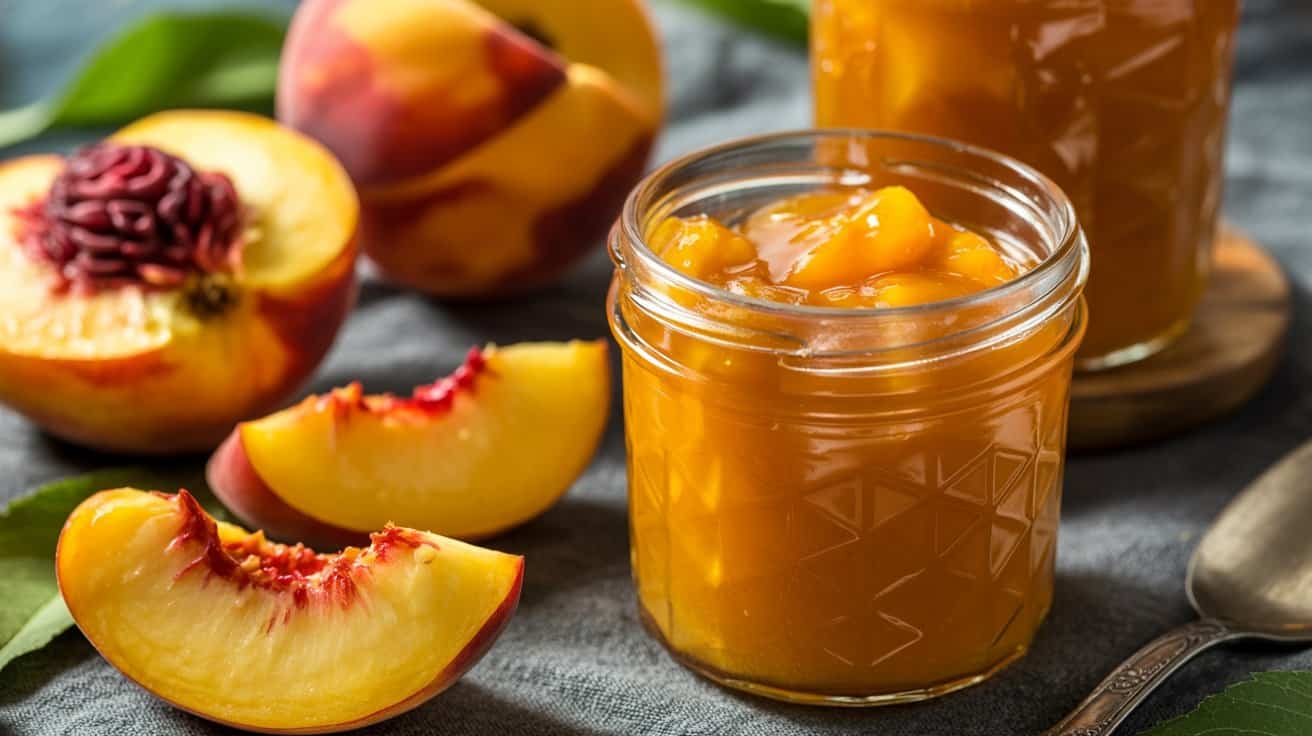
You’ll need four pounds of ripe peaches, equal parts sugar by weight, two tablespoons of lemon juice, and optional pectin for your homemade peach jam. Blanch and peel the peaches, then combine with sugar and lemon juice in a heavy-bottomed pot. Cook over medium-high heat until the mixture reaches 220°F and passes the wrinkle test on a cold plate. Process in sterilized jars for 10 minutes. Master these basics and you’ll discover endless flavor variations and serving possibilities.
Table of Contents
Key Takeaways
- Combine 4 pounds peeled peaches with equal weight sugar and 2 tablespoons lemon juice in a heavy-bottomed pot.
- Cook over medium-high heat, stirring frequently, until mixture reaches 220°F or passes the cold plate wrinkle test.
- Fill sterilized jars leaving 1/4-inch headspace, wipe rims, apply lids, and process in boiling water bath for 10 minutes.
- Use 75% ripe and 25% underripe peaches for optimal pectin and better gel set.
- Store sealed jars in cool, dark pantry for 12-18 months; refrigerate after opening and use within 3 weeks.
Essential Ingredients for Perfect Peach Jam
When you’re making peach jam from scratch, you’ll need just a handful of quality ingredients to create that perfect balance of sweetness and fruit flavor.
Fresh, ripe peaches form your foundation—select ones that yield slightly to pressure but aren’t mushy. You’ll need about four pounds for a standard batch.
Sugar ratios matter significantly in jam-making. Use equal parts sugar to prepared fruit by weight for optimal preservation and texture.
This 1:1 ratio ensures proper gelling while maintaining the peaches’ natural taste.
Fruit pectin is your setting agent. You can use commercial powdered or liquid pectin, following package directions for quantities.
Alternatively, add lemon juice for natural pectin—two tablespoons per pound of fruit works well.
Don’t forget fresh lemon juice regardless of pectin choice. It provides necessary acidity for safe canning and brightens the jam’s flavor.
A pinch of salt enhances sweetness, while optional additions like vanilla or ginger create unique variations.
Equipment and Tools You’ll Need
You’ll need the right equipment to transform those fresh peaches into delicious jam.
Start by gathering proper canning jars with new lids, selecting a large, heavy-bottomed pot for even cooking, and assembling essential utensils like a wooden spoon, ladle, and jar lifter.
Having these tools ready before you begin will make your jam-making process smooth and successful.
Essential Canning Jars
Before diving into the jam-making process, you’re going to need the right canning jars to safely preserve your peach jam. Choose glass mason jars specifically designed for canning—they’ll withstand the high temperatures of water bath processing. Half-pint jars work perfectly for jam, holding about one cup each.
You’ll want jars with new lids and bands that seal properly. While vintage jars might look charming on your shelf, don’t use them for canning since they may have chips or cracks that prevent proper sealing. Inspect each jar for damage before filling.
After your jam’s ready, you can add decorative labels to identify flavors and dates. Standard canning jars come in regular or wide-mouth varieties—either works fine for jam. Buy a few extra jars since recipes often yield more than expected.
Large Pot Selection
Since you’re making jam that requires even heat distribution and plenty of room for bubbling fruit, selecting the right pot makes all the difference. You’ll need a vessel that’s at least 8 quarts to prevent sticky overflow when your peaches reach a rolling boil.
A heavy-bottomed stock pot works perfectly because it prevents scorching and maintains steady temperatures throughout cooking. If you’ve got an enamel cauldron, that’s even better—the non-reactive surface won’t affect your jam’s flavor or color.
Whatever you choose, ensure it’s twice the volume of your ingredients since jam expands dramatically while cooking.
Skip thin aluminum pots that create hot spots and burn easily. You’re investing time in homemade jam, so don’t let the wrong pot ruin your batch.
Helpful Kitchen Utensils
Beyond the pot, gathering the right tools streamlines your jam-making process and prevents frustration mid-recipe.
You’ll need several essential utensils within arm’s reach before starting.
Your must-have tools include:
- Silicone spatulas – They won’t melt and scrape bowls clean
- Wooden spoon – Ideal for stirring hot jam without conducting heat
- Ladle – Makes filling jars mess-free
- Citrus zesters – Perfect for adding lemon zest
- Candy thermometer – Ensures proper gel temperature
Don’t forget a wide-mouth funnel for jar filling and a magnetic lid lifter for safe handling.
Keep clean dish towels nearby for wiping jar rims.
A potato masher helps break down larger peach chunks if you prefer smoother jam.
Having everything ready means you won’t scramble for tools while your jam bubbles away.
Selecting and Preparing Your Peaches
You’ll need perfectly ripe peaches that yield slightly to gentle pressure and smell sweet at the stem end.
Once you’ve selected your fruit, blanch them in boiling water for 30-60 seconds to make peeling effortless.
After removing the skins, cut the peaches into uniform chunks, discarding any bruised spots to ensure your jam’s quality.
Choosing Ripe Peaches
Most successful jam makers know that perfectly ripe peaches make all the difference between mediocre and exceptional preserves.
You’ll want to master stone selection by gently pressing near the stem—ripe peaches yield slightly without feeling mushy.
Your aroma assessment should detect a sweet, fragrant scent at the stem end.
Here’s what you’re looking for:
- Deep golden or orange undertones beneath any red blush
- Firm texture that gives slightly when pressed
- No green coloring around the stem
- Sweet peachy fragrance that’s noticeable from arm’s length
- Heavy weight for the fruit’s size
Don’t rely on color alone—some varieties stay pale even when ripe.
If you’ve bought underripe peaches, leave them on your counter for one to two days until they’re ready.
Peeling and Cutting Techniques
With your perfectly ripe peaches ready, the next step involves removing the skin and cutting the fruit into uniform pieces for even cooking. You’ll want to blanch the peaches first—drop them in boiling water for 30-60 seconds, then transfer to ice water. The skins will slip right off.
For stubborn peaches, try skin scoring by making a shallow X on the bottom before blanching. This technique ensures easy peeling even with firmer fruit.
When dealing with clingstone handling, you’ll need extra patience since the flesh clings tightly to the pit. Cut around the peach’s natural seam, twist the halves apart, then carefully carve out the pit with a paring knife. Slice each half into quarters or eighths, maintaining consistent sizes for your jam’s texture.
Step-by-Step Jam Making Instructions
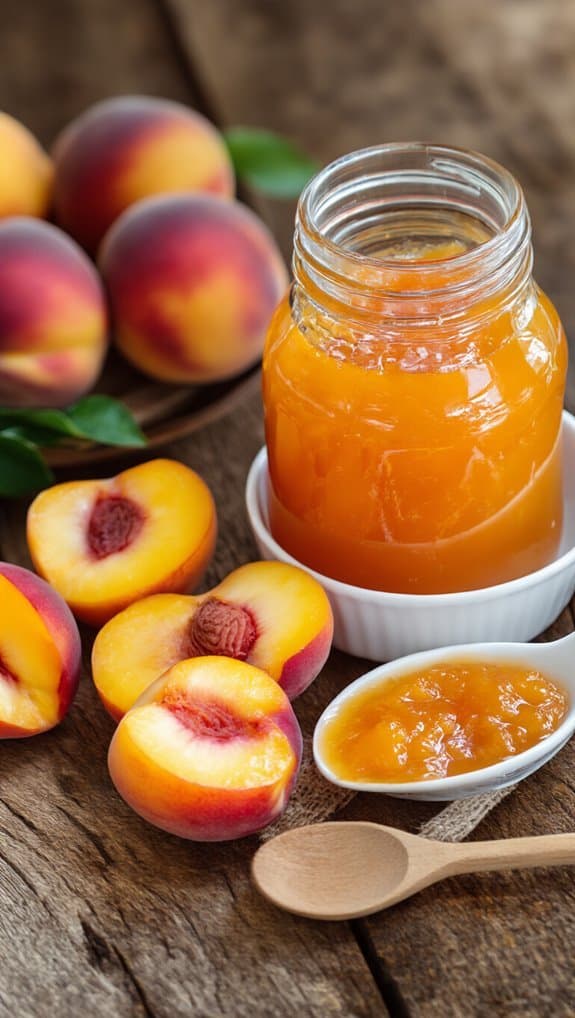
Once you’ve gathered your ingredients and sterilized your jars, you’re ready to transform fresh peaches into golden jam.
Begin by combining your prepared peaches with sugar and lemon juice in a heavy-bottomed pot. Heat the mixture over medium-high heat, stirring constantly until the sugar dissolves completely.
Here’s what you’ll notice during cooking:
- Foam forms on the surface—skim it off
- The mixture darkens from pale gold to amber
- Bubbles become larger and slower
- A spoon dragged across leaves a clear trail
- Temperature reaches 220°F on a candy thermometer
Perform a sensory evaluation by dropping jam onto a frozen plate—it should wrinkle when pushed.
This small batch technique ensures perfect consistency without overcooking.
For batch scaling, multiply ingredients proportionally but cook times remain similar.
Consider seasonal pairing opportunities like adding vanilla or ginger.
Once set, ladle hot jam into jars, leaving ¼-inch headspace, then process in boiling water.
Testing for Proper Jam Consistency
You’ll need to test your peach jam to ensure it’s reached the perfect consistency before jarring.
The cold plate test, temperature reading method, and wrinkle test technique are three reliable ways to check if your jam will set properly.
Master these simple tests and you’ll never end up with runny jam or an overly stiff spread again.
Cold Plate Test
Before adding pectin or finishing your jam, you need to test whether it’s reached the proper consistency using the cold plate test. Place several small plates in your freezer before you start cooking.
When you think your jam’s ready, drop a teaspoon onto a cold plate and return it to the freezer for one minute.
After chilling, run your finger through the jam. Here’s what you’re checking for:
- The jam wrinkles when pushed
- It holds its shape without running
- Your finger leaves a clear trail
- The texture feels thick, not watery
- It clings to the plate when tilted
This texture assessment ensures you’ll achieve perfect spreadable consistency. If it’s too runny, continue cooking and test again every few minutes.
Temperature Reading Method
While the cold plate test relies on visual and tactile cues, the temperature reading method offers scientific precision for determining when your peach jam’s ready. You’ll need a reliable candy thermometer or digital surface probe to monitor the temperature accurately. Insert it into your bubbling jam without touching the pot’s bottom.
| Temperature | Consistency | Sugar Content |
|---|---|---|
| 217°F | Soft set | 65% |
| 220°F | Firm set | 67% |
| 222°F | Very firm | 69% |
Watch for 220°F (104°C) at sea level—that’s your target for perfect jam consistency. Remember to adjust for altitude: subtract 2°F for every 1,000 feet above sea level. Some cooks prefer using an oven thermometer as backup verification. This method removes guesswork and ensures you’ll achieve consistent results every batch.
Wrinkle Test Technique
The wrinkle test stands as one of the oldest and most reliable methods for checking jam consistency. You’ll need a frozen plate to perform this simple technique that reveals whether your peach jam has reached the perfect gel point.
Here’s how you’ll execute the wrinkle test:
- Chill several plates in your freezer before starting
- Drop a small spoonful onto the frozen surface
- Push the jam with your fingertip after 30 seconds
- Watch for wrinkles forming ahead of your finger
- Check if the jam holds its shape without running
The skin elasticity that develops indicates proper pectin activation. Time indicators vary, but you’ll typically see results within one minute.
When the surface wrinkles and shows fruit firmness rather than liquid movement, you’ve achieved the ideal set. Remove your pot from heat immediately to prevent overcooking.
Canning and Processing Your Peach Jam
Once your peach jam reaches the perfect consistency and passes the gel test, you’ll need to work quickly to get it into jars while it’s still hot. Proper jar sterilization ensures your jam stays fresh and safe. Wash jars in hot, soapy water, then keep them hot in boiling water until you’re ready to fill them.
Ladle jam into prepared jars, leaving proper headspace measurement—typically ¼ inch from the rim. This space allows for expansion during processing. Wipe jar rims clean, apply lids, and screw on bands until fingertip-tight.
| Processing Step | Time Required |
|---|---|
| Fill jars | 5 minutes |
| Remove air bubbles | 1 minute |
| Apply lids | 2 minutes |
| Water bath | 10 minutes |
| Cool completely | 12-24 hours |
Process filled jars in a boiling water bath canner for 10 minutes (adjust for altitude). After processing, let jars rest undisturbed for 24 hours. You’ll hear the satisfying “pop” as they seal.
Storage Tips and Shelf Life
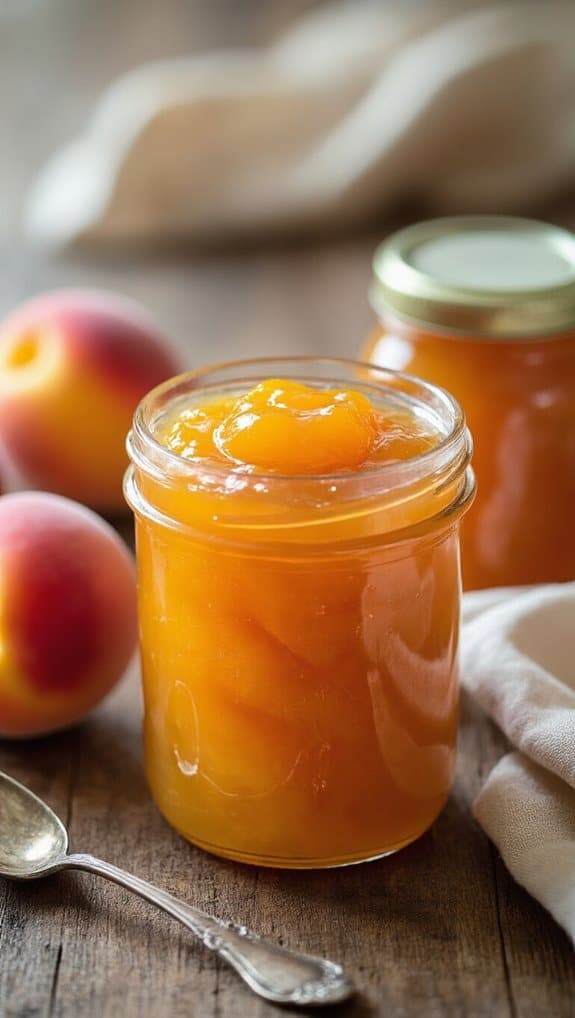
After your jars have cooled and sealed properly, you’ll want to store them in the right conditions to maximize their shelf life. Keep sealed jars in a cool, dark pantry where temperature control maintains 50-70°F. You’ll get 12-18 months of peak quality from properly canned jam.
Create a labeling system with the production date and contents on each jar. This helps with pantry rotation—always use older jars first. Once you’ve opened a jar, refrigerate it and consume within three weeks.
Consider these storage best practices:
- Store jars in single layers to prevent breakage
- Check seals monthly by pressing jar centers
- Keep away from direct sunlight and heat sources
- Never store near chemicals or strong odors
- Use vacuum sealing for freezer storage if preferred
If you notice unsealed lids, mold, off-odors, or bubbling, don’t risk it—discard the jam immediately. Proper storage ensures you’ll enjoy summer’s sweetness year-round.
Common Mistakes to Avoid
Even experienced jam makers can stumble over preventable errors that ruin an entire batch of peach jam. You’ll save time and ingredients by recognizing these pitfalls before starting.
Don’t fall for pectin myths claiming you need commercial pectin for every batch. Peaches contain natural pectin, especially when slightly underripe. You’re better off combining ripe and underripe fruit than overdoing artificial thickeners.
| Mistake | Consequence | Solution |
|---|---|---|
| Overcooking jam | Dark color, bitter taste | Remove at 220°F |
| Using overripe fruit only | Runny consistency | Mix 75% ripe, 25% underripe |
| Skipping lemon juice | Won’t set properly | Add 2 tablespoons per batch |
| Inadequate stirring | Scorched bottom | Stir every 2-3 minutes |
Seasonal marketing pushes “perfect” peaches, but you don’t need picture-perfect fruit for jam. Slightly blemished peaches work fine—just remove damaged portions. You’ll achieve better results by focusing on proper technique rather than pristine appearance.
Creative Variations and Flavor Additions
Transform your basic peach jam into a gourmet creation by experimenting with complementary flavors and unexpected ingredients. You’ll discover that peaches pair beautifully with both sweet and savory additions, creating unique preserves that’ll impress anyone who tastes them.
Try these exciting combinations to elevate your jam:
- Vanilla bourbon – Add 2 tablespoons bourbon and 1 teaspoon vanilla extract
- Ginger cardamom – Mix in 1 tablespoon fresh ginger and ½ teaspoon ground cardamom
- Lavender honey – Incorporate 2 teaspoons dried lavender for herbal infusions
- Jalapeño lime – Create spicy variations with 2 minced jalapeños and lime zest
- Amaretto almond – Stir in 3 tablespoons amaretto and chopped almonds
Don’t be afraid to adjust quantities based on your taste preferences. Start with smaller amounts and increase gradually.
For herbal infusions, steep herbs in the hot jam briefly, then strain if you prefer a smoother texture. When making spicy variations, remove pepper seeds for milder heat or keep them for extra kick.
Serving Suggestions and Recipe Ideas
How can you make the most of your homemade peach jam beyond simple toast? You’ll discover endless possibilities once you start experimenting.
Swirl it into Greek yogurt for a quick breakfast parfait, layering with granola and fresh berries. Brush the jam onto grilled peaches for an elegant dessert—the caramelized fruit pairs beautifully with vanilla ice cream.
Transform your baking by using peach jam as a cake filling or thumbprint cookie center. You can glaze roasted chicken or pork tenderloin with it, adding balsamic vinegar for a savory-sweet sauce. Create impressive appetizers by spreading jam on crostini topped with goat cheese and prosciutto.
For beverages, stir a spoonful into iced tea or blend it into smoothies. You’ll love mixing it with cream cheese for a quick fruit dip or warming it slightly to drizzle over pancakes and waffles. Your homemade peach jam becomes a versatile ingredient that elevates both sweet and savory dishes.
Frequently Asked Questions
Can I Make Peach Jam Without Added Pectin?
Yes, you’ll successfully make peach jam without added pectin using natural gelling methods.
You’ll need to cook peaches longer to concentrate their natural pectin, especially when using low sugar recipes. Add lemon juice for acidity and natural pectin boost.
You’ll achieve better gel and flavor enhancement techniques by including underripe peaches.
Though it takes more time, you’ll create delicious jam perfect for long term storage without commercial pectin.
Is Peach Jam Safe for Diabetics to Eat?
You’ll need to be cautious with peach jam if you’re diabetic since it’s high in sugar and can spike your blood sugar levels quickly.
Traditional recipes contain significant amounts of added sugar beyond the fruit’s natural sugars.
If you choose to eat it, practice strict portion control – limit yourself to a teaspoon rather than a tablespoon.
Consider sugar-free versions made with artificial sweeteners or simply opt for fresh peaches instead.
What’s the Difference Between Peach Jam and Peach Preserves?
You’ll find the main difference lies in texture differences and how the fruit pieces are prepared. Peach jam has a smooth, uniform consistency since you’ve crushed or pureed the fruit completely.
Peach preserves contain larger fruit pieces or chunks suspended in a softer gel, giving you distinct bits of peach when you spread it. Both use similar ingredients, but preserves let you experience more of the fruit’s original texture.
Can I Use Frozen Peaches to Make Jam?
Yes, you can definitely use frozen peaches to make jam!
When frozen thawing occurs, the peaches will release more juice, which actually helps the jam-making process. While texture changes happen during freezing—the fruit becomes softer—this won’t affect your final jam since you’ll be cooking and mashing the peaches anyway.
Just thaw them completely first, drain excess liquid if needed, and proceed with your regular jam recipe.
Why Did My Peach Jam Turn Brown After Cooking?
Your peach jam turned brown due to enzymatic browning, which happens when peaches’ natural enzymes react with oxygen during cooking.
You didn’t add enough acid for oxidation prevention. Next time, you’ll want to add lemon juice immediately after cutting the peaches and maintain proper acidity levels throughout cooking.
The browning doesn’t affect safety, but it changes the jam’s appearance and can slightly alter the fresh peach flavor you’re expecting.
Conclusion
You’ve mastered the art of making homemade peach jam! With these techniques, you’ll create golden jars of summer sweetness every time. Don’t forget to label your jars with dates and experiment with those flavor variations. Whether you’re spreading it on morning toast or gifting it to friends, your peach jam will bring sunshine to any table. Now grab those ripe peaches and start preserving – you’re ready to become everyone’s favorite jam maker!


No Comments