
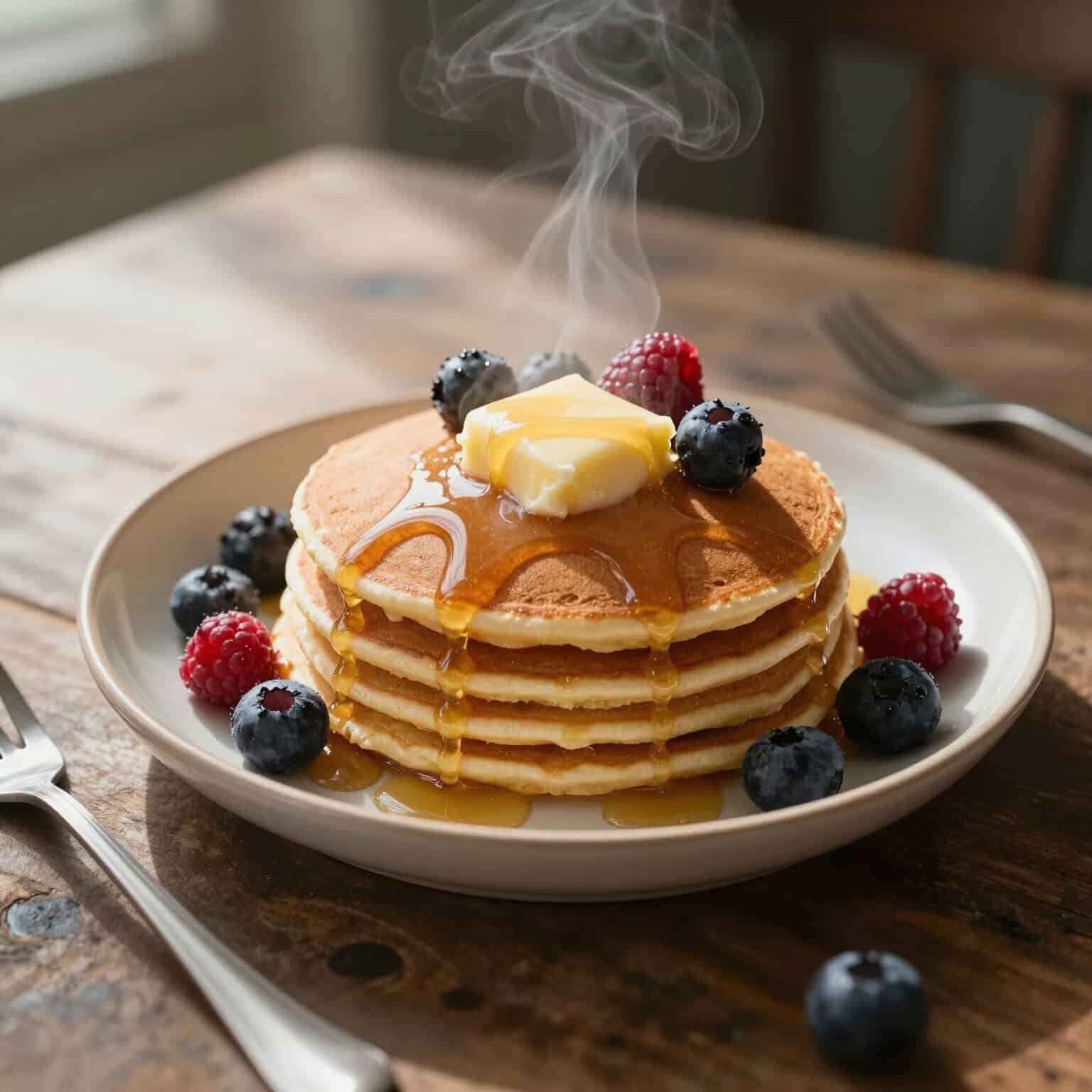
You’ll love classic fluffy buttermilk pancakes that take only 10 minutes from mix to plate—whisk 2 cups flour, 2 tsp baking powder, 1 tsp baking soda, ½ tsp salt, and 2 tbsp sugar, then fold in 2 cups room‑temp buttermilk, 2 eggs, and a splash of vanilla; let the batter rest ten minutes, cook ¼‑cup portions on a buttered skillet until bubbles form, flip, and finish a minute more. For extra lift, separate eggs, whip whites to soft peaks, and fold them in, or melt butter into the wet mix for richer flavor. Swap buttermilk with milk plus lemon juice, keep the leavening ratio at 2 tsp powder and ½ tsp soda per 2 cups flour, and store leftovers on a rack, layered parchment, before refrigerate or freeze. If you keep going, you’ll discover a blueberry pancake cake twist, reheating tricks, and serving ideas that make every morning feel cozy.
Table of Contents
Master Classic Fluffy Buttermilk Pancakes in 10 Minutes
A quick, fool‑proof way to get fluffy, buttery pancakes in just ten minutes starts with a simple dry mix: 2 cups all‑purpose flour, 2 tsp baking powder, 1 tsp baking soda, ½ tsp salt, and 2 tbsp sugar. Whisk those together, then add 2 cups buttermilk, 2 large eggs, and a teaspoon of vanilla if you like. Stir gently—just until the wet disappears; a few lumps are fine. Let the batter rest ten minutes; this relaxes gluten and lets the leaveners work.
Heat a non‑stick skillet over medium, melt a dab of butter, and pour ¼‑cup circles. When bubbles form and the edges look set, flip and cook another minute. Serve immediately with maple syrup or fresh fruit. This method yields thick, tender pancakes in under fifteen minutes, beating any box mix with minimal effort.
Boost Fluffiness With Proven Buttermilk Techniques
After mastering the 10‑minute pancake base, you can crank up the fluff factor by tweaking a few buttermilk tricks. First, keep your buttermilk and eggs at room temperature; the warmer liquids react faster with baking powder and soda, creating more lift. Gently fold the wet mix into the dry—don’t stir vigorously—so you preserve the tiny air bubbles that give pancakes their airy crumb. Let the batter rest ten minutes; this relaxes gluten and lets the acid in the buttermilk fully activate the leaveners. If you want extra cloud‑like texture, separate the eggs, whip the whites to soft peaks, then fold them in just before cooking. Finally, melt butter, cool it slightly, and stir it into the wet side; the fat adds richness without weighing the batter down. These small adjustments consistently produce taller, softer pancakes that stay tender on the plate.
Whip Up a Buttermilk Blueberry Pancake Cake for Weekend Brunch
Ready to turn your weekend brunch into a show‑stopping feast? Grab ½ cup unsalted butter, zest one lemon, and 1 cup sugar minus a tablespoon. Cream the butter with zest and sugar until light, then whisk in one egg and a teaspoon of vanilla. In a separate bowl combine 2 cups flour, 2 teaspoons baking powder, 1 teaspoon salt, and 2 cups fresh blueberries, reserving a quarter cup of flour for later. Fold the dry mix into the butter mixture, then gently stir in ½ cup buttermilk and the remaining flour. The batter should stay a bit lumpy—don’t over‑mix. Pour into a greased 9‑inch pan, smooth the top, and bake at 350°F for 25‑30 minutes, until a toothpick comes out clean. Let it cool slightly, then dust with powdered sugar or drizzle maple syrup. Serve warm, and watch the blueberry specks melt into a buttery, tangy masterpiece.
Which Buttermilk Substitute & Leavening Works Best for Fluffy Pancakes?
If you loved the bright burst of blueberries in the cake, you’ll want the same light, airy texture in classic pancakes, and that starts with the right buttermilk substitute and leavening combo. The easiest swap is 1 cup milk plus 1 tablespoon lemon juice or white vinegar; let it sit five minutes to thicken and sour. This mimics buttermilk’s acidity, which activates baking soda for instant lift.
Pair it with 2 teaspoons baking powder and ½ teaspoon baking soda for every 2 cups flour. The powder provides a steady rise, while the soda reacts with the acidic substitute for extra fluff.
Use room‑temperature eggs and whisk the wet side just until combined—overmixing destroys air bubbles. Let the batter rest ten minutes; the gluten relaxes and the leaveners fully awaken. Cook on medium heat, watching for bubbles before flipping, and you’ll get tall, pillow‑soft pancakes every time.
How to Re‑heat, Store, and Serve Fluffy Pancakes for Next‑Day Breakfast
Wondering how to keep your fluffy pancakes as fresh as when they first hit the skillet? First, let them cool completely on a wire rack, then layer them between parchment squares in an airtight container. Store in the fridge for up to 48 hours; for longer keeping, freeze the stacked stack in a zip‑top bag, squeezing out excess air.
When you’re ready to serve, re‑heat a single pancake in a hot skillet—about 30 seconds per side—until the edges crisp and the center steams. For multiple pancakes, spread them on a baking sheet and warm at 350 °F for 8–10 minutes, covering loosely with foil to retain moisture. Microwave works too: stack 2–3 pancakes, cover with a damp paper towel, and heat for 45 seconds, then flip for an even finish.
Serve immediately with a drizzle of maple syrup, a pat of butter, or a dollop of whipped cream. If you like extra texture, add fresh berries or a sprinkle of toasted nuts just before plating. Enjoy your next‑day breakfast without sacrificing the original fluff.
Frequently Asked Questions
Can I Add Protein Powder Without Ruining Fluffiness?
Yes, you can add protein powder; just use a light, unflavored whey or plant blend, replace up to a quarter of the flour, and whisk gently to keep air pockets intact for fluffy results.
What’s the Best Pan Material for Evenly Cooked Pancakes?
You’ll get the most even heat with a heavy‑bottomed, non‑stick stainless steel or cast‑iron skillet; preheat it, add a thin oil layer, and keep the temperature medium‑low for consistently fluffy pancakes.
Do Gluten‑Free Flours Work With the Same Buttermilk Ratio?
Yes, you can keep the same buttermilk ratio, but gluten‑free flours absorb more liquid, so you might need a splash extra buttermilk or water. Mix gently, let the batter rest, and watch it rise.
How Long Can Cooked Pancakes Stay Refrigerated Before Quality Declines?
You can keep cooked pancakes in the fridge for up to three days; store them in an airtight container, and reheat gently. After that, they’ll lose fluffiness, moisture, and flavor, so enjoy them promptly.
Is It Safe to Freeze Pancakes With Fresh Berries Inside?
Yes, you can freeze berry‑filled pancakes safely. Layer them on a tray, freeze solid, then bag them. Thaw in the fridge or microwave, and the berries stay tasty without soggy texture.
Conclusion
Now you’ve got the ultimate guide to fluffy, cozy mornings—master the classic pancakes, boost fluffiness with buttermilk tricks, whip up a blueberry cake, and know the best substitutes and leavening. Store and re‑heat them right, and each bite will feel like a fresh start. Enjoy the airy texture, sweet aroma, and effortless breakfast perfection every day.


Sorry, the comment form is closed at this time.