
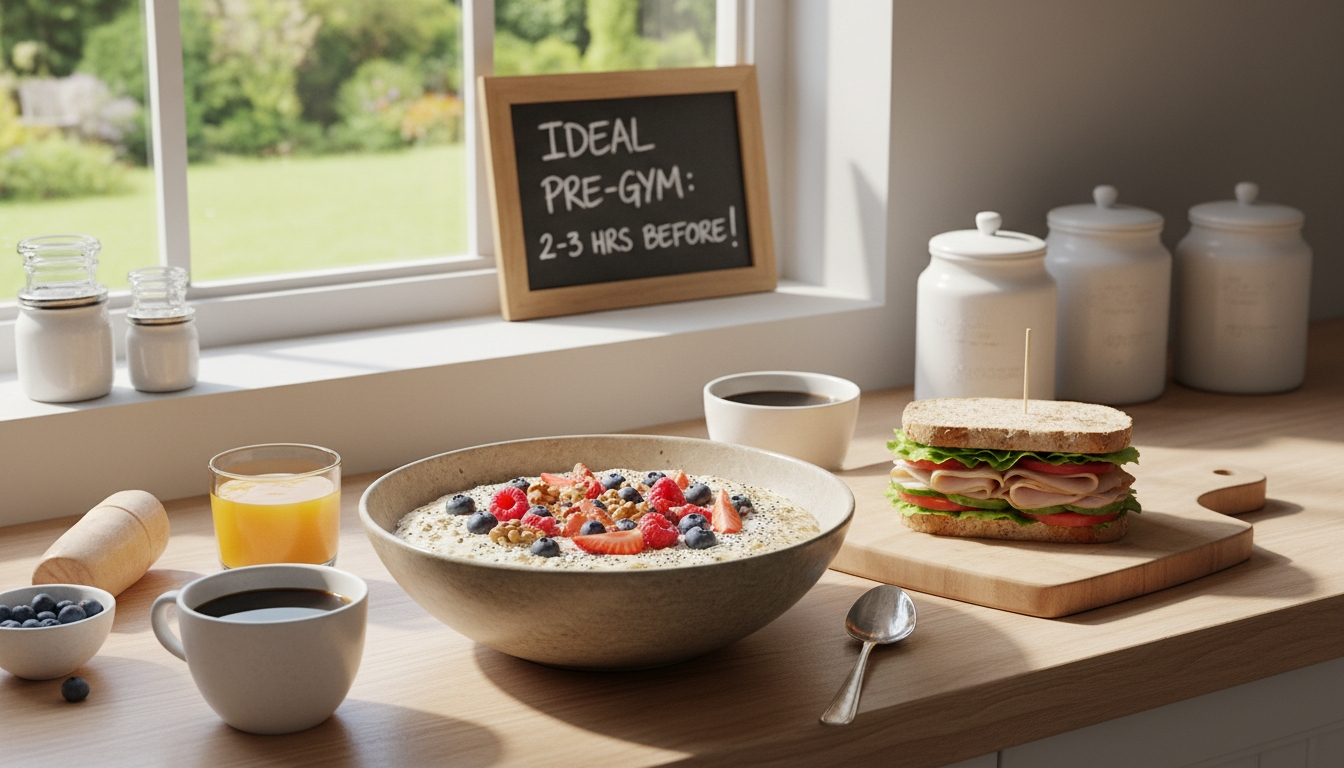
Eat your pre‑workout meal about 60–90 minutes before you hit the gym so your body has time to digest and turn the food into usable energy. If you’re short on time, a light snack like a banana with a spoonful of nut butter 15 30 minutes prior works well, but a more substantial bowl of oatmeal and berries 90 minutes ahead gives steadier fuel. Adjust the timing based on how fast you digest, and sip water throughout the interval; the next sections will show you the best macros, snack ideas, and hydration tricks.
Table of Contents
When Should You Eat for Pre‑Workout Nutrition?
If you want maximum energy and minimal stomach discomfort, aim to eat your pre‑workout meal about 60–90 minutes before hitting the gym. This window lets your body digest carbohydrates, absorb protein, and start converting nutrients into usable fuel without leaving you feeling heavy. A light snack—like a banana with a spoonful of nut butter—works well if you’re short on time, while a modest bowl of oatmeal with berries suits those who can plan ahead. Adjust timing based on personal digestion speed; some people tolerate a full 90‑minute gap, whereas others feel best after just 45 minutes. Hydration matters too, so sip water throughout the interval. Avoid large, fatty, or high‑fiber foods right before exercising, as they slow gastric emptying and can cause cramping. By syncing your meal with this 60–90‑minute frame, you’ll enter the gym feeling alert, energized, and ready to push harder.
Best Macro Ratio for Pre‑Workout Nutrition
What macro balance should you reach before a workout? Aim for a 3‑2‑1 split: 3 parts carbs, 2 parts protein, 1 part fat. Carbohydrates fuel your muscles, so prioritize easily digestible sources like oats, fruit, or whole‑grain toast. Protein preserves lean tissue and kick post‑exercise recovery; a 20‑30 gram serving of Greek yogurt, whey, or lean meat works well. Keep fat low—just enough to slow digestion slightly and sustain energy, but not so much that it causes gastrointestinal discomfort. If you train in the morning, you might lean a bit heavier on carbs (4‑3‑1) to compensate for overnight glycogen depletion. For afternoon or evening sessions, a tighter 3‑2‑1 ratio helps maintain steady blood sugar without feeling sluggish. Adjust the exact gram amounts based on your body weight (roughly 1 g carbs per kg, 0.3 g protein per kg, and 0.1 g fat per kg) and personal tolerance. This balanced macro profile maximizes performance while minimizing stomach upset.
Fast‑Acting Pre‑Workout Snack Ideas
You need a quick energy boost that won’t sit heavy in your stomach, so reach for easy‑digestible carbs like a banana or a handful of pretzels.
These snacks fire up your glycogen stores within minutes, giving you the power you crave for the first few reps.
Keep the portion small and the timing tight—about 15–30 minutes before you hit the gym.
Quick Energy Boosts
Looking for a quick surge of energy before you hit the gym? Grab a handful of dried fruit and nuts for a fast‑acting carb‑protein combo, or sip a small banana‑smoothie blended with water and a dash of honey. A single rice cake spread with almond butter delivers instant glucose without weighing you down.
If you prefer something savory, try a slice of turkey wrapped around a few grapes; the protein steadies the sugar spike.
A quick spoonful of plain Greek yogurt topped with a drizzle of maple syrup supplies both lactose and protein for rapid absorption.
Keep portions modest—about 150‑200 calories—so you feel energized, not sluggish, during your workout.
Easy Digestible Carbs
Ever need a quick, easy source of carbs that won’t sit heavy in your stomach? You can fuel your muscles without feeling sluggish by choosing fast‑acting, low‑fiber options that digest in 30‑45 minutes. These snacks spike blood glucose, giving you the energy boost you crave while keeping your gut calm. Pair them with a little protein for sustained performance, and you’ll hit the gym feeling light and ready to crush your workout.
- A banana with a spoonful of almond butter
- Rice cakes topped with honey or jam
- Dried fruit mix (dates, apricots, raisins)
- Plain Greek yogurt blended with a drizzle of maple syrup
- A small smoothie made with oat milk, a scoop of whey, and a handful of berries
How to Time Nutrition for Cardio vs. Strength Sessions?
When planning a workout, timing your nutrients matters more than the type of exercise you choose. For cardio, aim for a light, carb‑focused snack 30–45 minutes before you start. A banana, a slice of toast with jam, or a small smoothie supplies quick glucose, keeping your heart rate steady without weighing you down. If you prefer a longer jog, you can push the snack back to 60 minutes, allowing digestion to settle.
Strength sessions need a bit more protein and sustained energy. Eat a balanced meal of complex carbs and lean protein 90–120 minutes before lifting—think oatmeal with whey, chicken rice rice, or Greek yogurt with berries. This window lets amino acids enter the bloodstream, supporting muscle repair while carbs fuel intense reps. If you’re short on time, a protein‑rich shake 30 minutes pre‑lift can still boost synthesis, but keep it modest to avoid stomach discomfort. Adjust timing based on personal tolerance and workout length.
Foods to Avoid for Pre‑Workout Nutrition
You should skip heavy‑fat meals before you train, because they slow digestion and leave you sluggish. High‑sugar snacks cause a rapid spike and crash in energy, compromising performance. Large‑portion carbs can make you feel heavy and hinder your workout intensity.
Heavy‑Fat Meals
Why risk sluggish performance by loading up on heavy‑fat meals before a workout? Fat slows gastric emptying, leaving you feeling heavy, nauseous, and low on energy. Your muscles crave quick carbs and protein, not a greasy banquet that competes for blood flow. When you eat a burger, fried chicken, or a creamy pasta dish too close to training, digestion diverts oxygen away from your muscles, reducing strength and endurance. You’ll also experience spikes in insulin that can cause a crash mid‑set, making it harder to maintain intensity. To keep your workout sharp, steer clear of these culprits at least two to three hours before hitting the gym.
- Fried foods (e.g., french fries, onion rings)
- Fatty cuts of meat (e.g., ribeye, pork belly)
- Creamy sauces and dressings (e.g., alfredo, ranch)
- Full‑fat dairy (e.g., cheese, whole‑milk yogurt)
- Pastries and baked goods with high butter content (e.g., croissants, donuts)
High‑Sugar Snacks
Ever wonder why a sugary snack can sabotage your gym session? You’ll feel a quick energy spike, then a crash that leaves you sluggish and unfocused. Simple carbs—candy bars, soda, fruit juices, pastries, and flavored yogurts—raise blood glucose fast, prompting insulin to dump it into cells. When insulin peaks, glucose drops, draining your muscles of fuel just as you start lifting or sprinting. The sudden dip can cause light‑headedness, tremors, and reduced endurance.
Moreover, high‑sugar foods often lack protein and healthy fats, so they don’t sustain you through longer workouts. Stick to low‑glycemic options—like a banana with nut butter or Greek yogurt with berries—to keep energy steady and performance optimal.
Large‑Portion Carbs
Feeling sluggish before a workout? Large‑portion carbs can crash your energy and leave you heavy‑legged. When you ingest a bowl of pasta or a stack of pancakes 30‑60 minutes before training, your body diverts blood to digest the massive starch load. That slows oxygen delivery to muscles, spikes insulin, and often results in a post‑meal dip that feels like a fog. To keep performance sharp, choose smaller, easily digestible carbs and time them earlier.
- 1–2 cups cooked rice or quinoa, 2 hours pre‑gym
- A small banana or apple, 45 minutes before
- 1 slice whole‑grain toast with a thin spread, 60 minutes prior
- ½ cup oatmeal with berries, 90 minutes ahead
- A handful of pretzels, 30 minutes before
These portions avoid the sluggishness that big carb loads cause.
Hydration Tips for Pre‑Workout Nutrition
When you hit the gym, proper hydration is just as crucial as the nutrients you eat. Aim to drink 16–20 oz of water 2–3 hours before your session, then sip another 8–10 oz 30 minutes prior. This timing lets your body absorb fluids without feeling heavy. If you sweat heavily or train in heat, add a pinch of sea salt or a sports drink containing electrolytes to replace sodium and potassium losses. Avoid gulping large amounts right before lifting; instead, take small sips every 10–15 minutes during warm‑up and the first half of your workout. Monitor urine color—pale straw indicates good hydration, while dark yellow signals a need for more fluid. For longer, high‑intensity classes, consider a pre‑workout shake blended with coconut water, which supplies both water and electrolytes. Remember, consistent hydration throughout the day supports performance and recovery, not just the minutes surrounding your workout.
Sample Meal Plans for Common Training Goals
Hydration sets the stage, but the next step is matching your meals to your training goal. Your body needs the right fuel to power strength sessions, endurance rides, or hypertrophy work, and timing those nutrients can make the difference between a plateau and a breakthrough.
Below are five concise meal plans that align with common objectives; each balances carbs, protein, and fats to optimize performance and recovery.
- Strength (powerlifting): 45 g whey protein, 30 g oats, 1 tbsp almond butter, banana; eat 90 min pre‑workout.
- Endurance (running/cycling): 60 g cooked quinoa, 150 g grilled chicken, mixed berries, drizzle of olive oil; consume 2 h before.
- Hypertrophy (muscle gain): 40 g Greek yogurt, 40 g granola, 20 g mixed nuts, honey; snack 60 min prior.
- Body‑re ( (fat loss): 30 g cottage cheese, sliced cucumber, 1 hard‑boiled egg, black coffee; intake 45 min before.
- High‑Intensity Interval Training (HIIT): 1 slice whole‑grain toast, 2 tbsp peanut butter, 1 small apple; eat 30 min pre‑session.
Choose the plan that matches your goal, adjust portions to your caloric needs, and stick to the timing for consistent results.
Frequently Asked Questions
Can I Train on an Empty Stomach Without Losing Performance?
You can train on an empty stomach, but expect reduced energy, slower endurance, and possible strength drops; if you feel light‑headed or fatigued, consider a small pre‑workout snack.
How Does Caffeine Timing Affect Pre‑Workout Energy Levels?
You feel the strongest boost when you sip caffeine 30‑45 minutes before training; that window lets blood levels peak, sharpening focus and stamina without causing a crash during your workout.
Should I Adjust Pre‑Workout Meals for Intermittent Fasting?
You should tweak your pre‑workout meals during intermittent fasting—eat a small, protein‑rich snack 30‑60 minutes before training, then keep the rest of your eating window after the workout to stay in ketosis.
Do Pre‑Workout Nutrition Needs Differ for Morning vs. Evening Workouts?
You’ll need slightly more carbs and a bit of protein in the morning, while evening sessions can rely on lighter carbs and steady‑release protein; timing shifts to match digestion speed and energy demands.
Can I Replace Solid Meals With Liquid Pre‑Workout Options?
You can swap solid meals for liquid pre‑workouts, but ensure the shake supplies carbs, protein, and electrolytes; keep it light, drink it 30‑60 minutes beforehand, and monitor how your body reacts.
Conclusion
By timing your meals right, you’ll fuel performance and recovery without feeling sluggish. Aim for a balanced snack 30‑60 minutes before you train, focusing on carbs, moderate protein, and low‑fat carbs. Adjust timing for cardio versus strength, stay hydrated, and skip heavy, high‑fiber foods that can upset your stomach. With these simple guidelines, you’ll hit the gym ready to crush your goals each session.


Sorry, the comment form is closed at this time.