
Start with the basics: shoulder‑width squats, proper push‑ups, steady planks, reverse lunges, and glute bridges. Do 8–12 reps per move, focusing on form, and hit three to four sessions a week with at least 48 hours between workouts. Keep each session under 20 minutes by using 4‑minute supersets—45 seconds work, 15 seconds rest—plus a quick warm‑up and cool‑down. If you stick with this plan, you’ll discover more ways to progress and stay injury‑free.
Table of Contents
Bodyweight Exercises for Beginners: Master These Moves at Home
Where to begin? You’ll start with the basics: a solid squat, a steady push‑up, and a controlled plank.
For squats, stand shoulder‑width apart, keep your chest up, and lower until thighs are parallel to the floor—then push through your heels to stand.
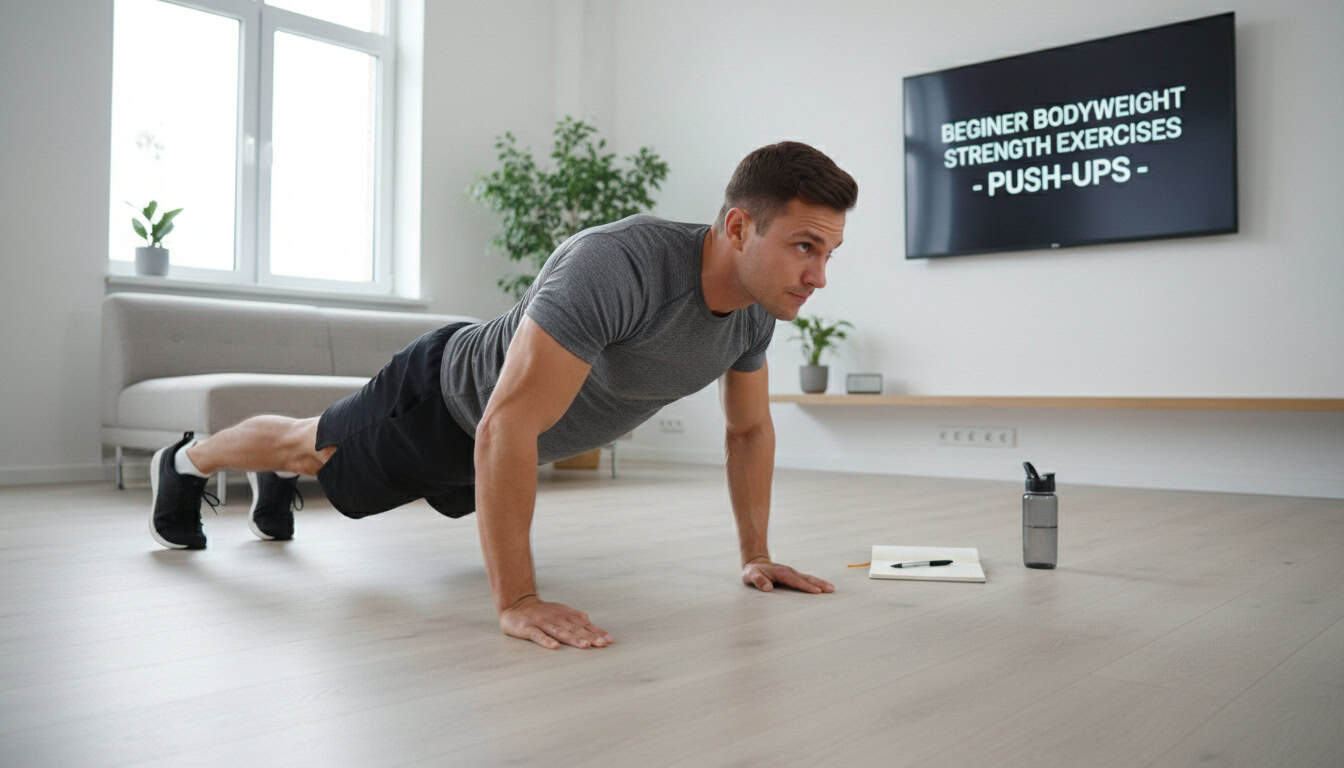
Push‑ups begin on your hands and toes, hands under shoulders, body in a straight line; lower until elbows reach a 90‑degree angle and press back up.
Planks engage your core: forearms on the ground, elbows under shoulders, hips level, and hold without sagging.
Add a reverse lunge for lower‑body balance—step back, drop the knee, and return to start.
Finish with a glute bridge: lie on your back, feet flat, lift hips until shoulders‑to‑knees form a straight line, then lower slowly.
Perform each move for 8‑12 reps, focus on form, and you’ll build a solid foundation for stronger, safer progress.
How Often to Train and Safely Progress Bodyweight Exercises?
Now that you’ve nailed the basic squat, push‑up, plank, reverse lunge, and glute bridge, the next step is figuring out how often to train and when to add difficulty. Aim for three to four sessions weekly, giving each muscle group at least 48 hours to recover. Consistency beats intensity for beginners, so schedule workouts on non‑consecutive days and keep a simple log. When you can comfortably complete the prescribed reps with good form, it’s time to progress.
- Add a set – one extra round of each exercise boosts volume without overwhelming you.
- Increase reps – raise the count by 2‑3 per set to challenge endurance.
- Introduce a variation – switch to a harder version (e.g., elevated push‑up) to stimulate new growth.
Listen to your body: soreness is normal, sharp pain isn’t. Adjust rest days if fatigue builds, and stay patient—steady, incremental upgrades will keep you safe and motivated.
Bodyweight Exercise Routine: 20‑Minute No‑Equipment Daily Plan
Looking for a quick, effective way to stay fit at home? Try this 20‑minute, no‑equipment routine that hits every major muscle group and boosts endurance.
Warm up for two minutes with marching in place, arm circles, and hip swings.
Then cycle through four supersets, each lasting four minutes: 1) 45 seconds push‑ups, 15 seconds rest, 45 seconds body‑weight squats, 15 seconds rest; repeat twice.
2) 45 seconds plank shoulder taps, 15 seconds rest, 45 seconds alternating forward lunges, 15 seconds rest; repeat twice.
3) 45 seconds bicycle crunches, 15 seconds rest, 45 seconds glute bridges, 15 seconds rest; repeat twice.
4) 45 seconds mountain climbers, 15 seconds rest, 45 seconds triceps dips using a chair, 15 seconds rest; repeat twice.
Finish with a two‑minute cool‑down: gentle stretching for hamstrings, chest, and shoulders.
Keep transitions swift, breathe steadily, and aim to complete the circuit daily for consistent strength gains.
Frequently Asked Questions
Can Beginners Use Resistance Bands With Bodyweight Exercises?
Yes, you can pair resistance bands with bodyweight moves to boost intensity and support joints. They add extra load, help you control range, and make squats, push‑ups, and lunges easier yet more challenging.
How Long Should Rest Periods Be Between Sets?
You should rest 60‑90 seconds between sets, giving muscles time to recover while keeping intensity high. For beginners, aim toward the shorter end; as you progress, extend to ninety seconds if needed.
What’s the Best Time of Day to Train for Strength Gains?
You’ll see the biggest strength gains when you train in the late afternoon or early evening, because your body temperature, hormone levels, and reaction speed peak then, boosting performance and recovery.
Should I Track My Workouts in a Journal or App?
You should track your workouts in an app; it automates totals, shows progress graphs, and syncs across devices, making it easier to stay consistent and spot patterns than a handwritten journal ever could.
How Do I Prevent Shoulder Injuries While Doing Push‑Ups?
Keep your elbows tucked, shoulder blades retracted, and core engaged; avoid flaring arms, pause at the bottom, and warm up with band pull‑aparts or scapular push‑ups. Progress gradually, listening to any pain.
Conclusion
You’ve got the basics down, and now it’s time to put them into action. Stick to a regular schedule, listen to your body, and gradually increase intensity as you get stronger. Consistency will build confidence and muscle, turning those simple moves into solid strength. Keep challenging yourself, stay safe, and watch your fitness level rise—right from the comfort of your own home.


Sorry, the comment form is closed at this time.