
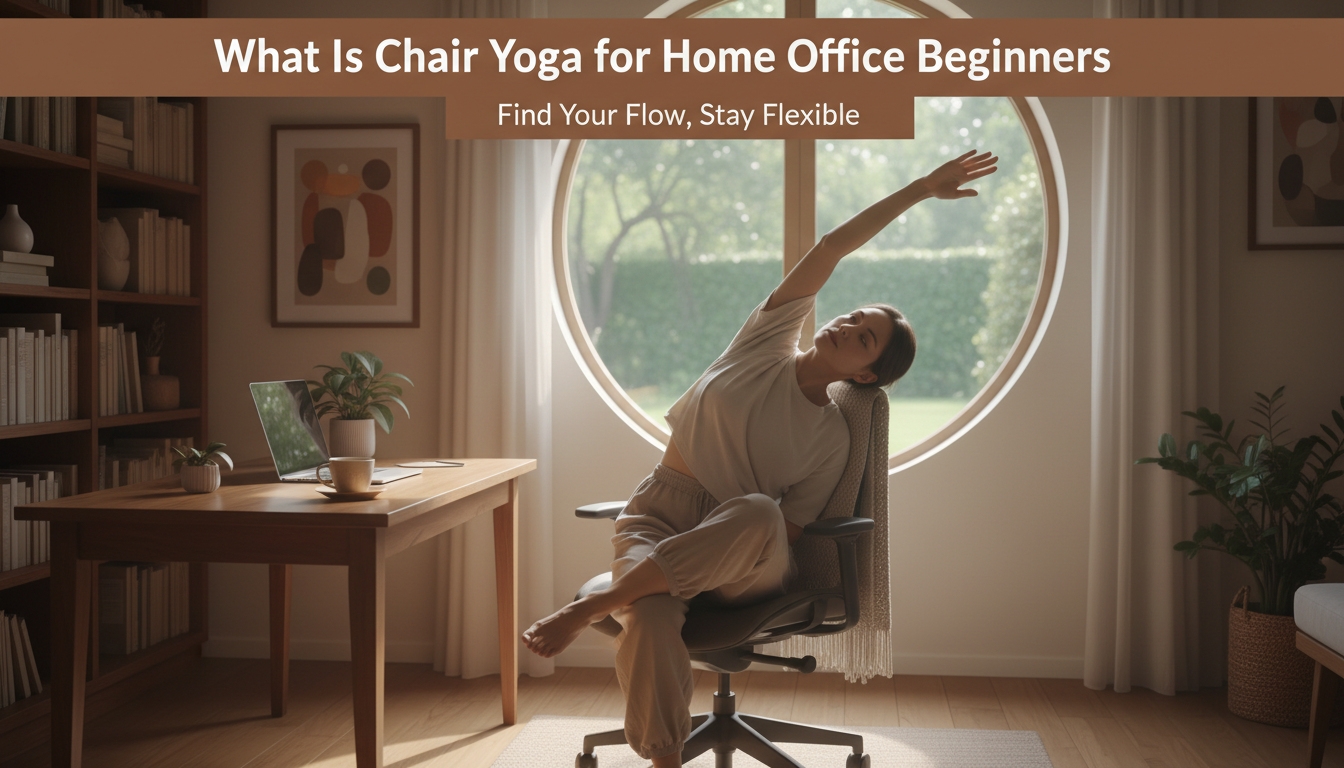
What Is Chair Yoga for Home Office Beginners?
Chair yoga is a series of seated poses that stretch the muscles you strain while you sit at a desk, boosting blood flow, easing tension, and improving posture. You’ll engage your core, open your chest, and mobilize hips without leaving your chair, which lowers stress hormones and sharpens focus. The moves are low‑impact, quick, and fit into coffee breaks or meeting pauses, making them perfect for home‑office beginners. Keep going and you’ll discover how to set up an ergonomic space, master essential stretches, and build a 10‑minute daily routine.
Table of Contents
What Is Chair Yoga and Why Does It Work for Home‑Office Workers?
Why not try a quick stretch without leaving your desk? Chair yoga is a series of seated poses that target the muscles most strained by prolonged sitting. You engage your core, open your chest, and mobilize hips while staying grounded on a chair. The movements boost blood flow, release tension, and improve posture, all of which counteract the slouch and stiffness that come from hours at a computer.
Because you’re not standing or using a mat, you can slip a session into a meeting break or a coffee pause without disrupting workflow. The practice also activates the parasympathetic nervous system, lowering stress hormones and sharpening focus. By consistently incorporating these micro‑exercises, you’ll notice less fatigue, clearer thinking, and a more energetic workday.
The simplicity and accessibility of chair yoga make it a perfect, low‑impact solution for home‑office workers seeking healthier, more productive habits.
Setting Up an Ergonomic Chair‑Yoga Space at Your Desk
Pick a chair that supports your back and lets you sit tall, then arrange your desk so you can roll your shoulders and hips without hitting anything. Keep a small cushion or rolled towel nearby for extra lumbar support, and place a sturdy yoga block or resistance band within arm’s reach. With these simple tweaks you’ll create a functional, ergonomic space that encourages smooth, effective chair‑yoga practice.
Choose a Supportive Chair
Ever wonder how a chair can become your yoga ally? Pick a chair that supports your spine, offers adjustable height, and has a stable base. A seat that tilts slightly forward encourages a natural lumbar curve, while a padded but firm cushion prevents pressure points. Ensure the backrest follows the natural S‑shape of your spine and can be locked at a 90‑degree angle for seated forward bends. Armrests should be removable or low enough to let your shoulders relax during side stretches. Test the chair’s mobility—smooth casters let you glide into poses without strain. Finally, verify the chair’s weight capacity exceeds your body weight, guaranteeing safety as you transition between work and gentle movement.
Optimize Desk Layout
How can you transform a cramped workstation into a fluid, ergonomic yoga zone? First, clear the surface of any non‑essential items; a tidy desk gives you room to stretch without tripping over paperwork.
Next, position your chair so the backrest aligns with your spine’s natural curve and the seat is at hip height, allowing you to sit and stand smoothly.
Finally, arrange your monitor at eye level and keep the keyboard and mouse within easy reach to maintain neutral wrist positions.
- Remove clutter and keep only a laptop, mouse, and a small plant.
- Align chair and monitor for straight‑line sight.
- Keep tools within arm’s length for effortless transitions.
Add Simple Props
When you add a few inexpensive props, your desk instantly becomes a versatile yoga hub. A small yoga block supports your hips during seated twists, while a rolled towel cushions the lower back for forward folds. Keep a resistance band at hand for gentle arm stretches and to activate shoulders between meetings. A lightweight cushion can raise your seat height, aligning your spine and reducing slouching. Place a desk‑size foam roller nearby for quick myofascial release on tight forearms or neck muscles. Even a simple eye mask helps you relax during brief meditation pauses. Arrange these items within arm’s reach, so you transition smoothly from typing to a restorative pose without breaking workflow.
5 Simple Seated Stretches to Relieve Neck & Shoulder Tension
Feeling the knot in your neck or the heaviness in your shoulders after hours at a desk? You can melt that tension without leaving your chair. Start by sitting tall, feet flat, and breathing deeply. Then move through these three simple stretches, holding each for 20‑30 seconds while you inhale, then exhale as you release.
- Neck Tilt – Drop your right ear toward your right shoulder, gently guide with your hand, then switch sides.
- Shoulder Rolls – Lift both shoulders toward your ears, roll them back and down in a circular motion, repeat forward.
- Chest Opener – Interlace fingers behind your back, straighten arms, and lift your chest while squeezing shoulder blades together.
These moves target the upper trapezius, levator scapulae, and cervical muscles that tighten from screen time. Perform them three times a day, especially after long meetings, and you’ll notice improved posture, reduced aches, and a clearer mind ready for the next task.
4 Gentle Standing Moves You Can Do Without Leaving the Office
Ever notice how a few minutes of standing can reset your body and mind without stepping out of the office? You can start with a simple calf stretch: place your hands on the desk, shift weight onto one foot, and gently roll the opposite heel down while keeping the toes lifted. Hold for ten seconds, then switch sides.
Next, try a hamstring flex: hinge at the hips, keep your back straight, and lower your torso toward the desk until you feel a mild pull behind the thighs. Repeat three times per leg.
For shoulder mobility, roll your shoulders forward in small circles, then reverse the direction. A quick side‑bend works wonders—raise one arm overhead, lean gently to the opposite side, and breathe into the stretch.
Finish with a standing march: lift knees high, engage your core, and swing opposite arms. This routine reactivates circulation, eases tension, and boosts focus without leaving your workspace.
Chair Yoga Breathing Techniques to Boost Focus in Long Meetings
Ever wonder how a few mindful breaths can keep you sharp through marathon meetings? You can turn your chair into a focus hub by mastering simple breathing patterns that calm the nervous system and sustain attention. Start by sitting tall, shoulders relaxed, and feet flat. Inhale slowly through the nose for a count of four, then exhale gently through the mouth for six. This 4‑6 rhythm steadies your heart rate and clears mental fog.
When a discussion drags, shift to a box‑breathing cycle: inhale four, hold four, exhale four, hold four. It resets your brain’s alertness without breaking the flow.
Key techniques to try:
- 4‑6 breathing – lengthen exhale to release tension.
- Box breathing – balance inhale and exhale for steadier focus.
- Diaphragmatic breathing – engage belly, not chest, for deeper oxygenation.
Practice these during agenda reviews or while listening, and you’ll notice sharper concentration, reduced fatigue, and a calmer presence throughout long meetings.
Common Beginner Mistakes and How to Fix Them
You might be overstretching straight away, which can strain your muscles before you’ve warmed up.
If you forget to sync your breath with each movement, you lose the calming effect that keeps you steady.
And without a sturdy chair that supports your spine, even simple poses can become uncomfortable.
Overstretching Without Warm‑Up
When you jump straight into a deep forward fold without a brief warm‑up, your muscles and joints can be caught off‑guard, leading to strain or injury. In chair yoga, the same risk appears when you try to reach too far or hold a pose too long right away. Your body needs a gentle transition to increase blood flow and lubricate joints. Skipping that step often results in tight hamstrings, sore shoulders, or even a minor sprain. To keep your practice safe and effective, follow these quick steps before any deep stretch:
- Perform 30 seconds of seated cat‑cow to mobilize the spine.
- Roll your shoulders forward and back five times.
- Do a slow, seated side‑bend for ten breaths each side.
These warm‑up moves prime your muscles, protect you from overstretching, and improve overall flexibility.
Ignoring Breath Alignment
Why ignore the breath? You might think a quick stretch is enough, but without synchronized breathing you lose the core benefit of chair yoga. When you hold your breath or inhale shallowly, muscles tense, balance wavers, and tension builds. Instead, pair each movement with a deliberate inhale and exhale: inhale to lengthen, exhale to deepen the pose. Start by placing a hand on your belly, feeling the rise and fall. If you notice a pause, reset your rhythm before continuing. Practice a simple three‑count breath—inhale for three counts, exhale for three—while you lift, twist, or stretch. This alignment steadies your mind, enhances flexibility, and prevents strain, turning a brief office break into a restorative session.
Skipping Proper Chair Support
Ever notice how a wobbling chair can turn a simple stretch into a shaky ordeal? When you skip proper chair support, you risk misalignment, reduced balance, and lingering discomfort. A stable base lets you focus on breath and movement instead of wobbling.
Here’s how to fix it:
- Choose a chair with a flat, sturdy seat and four legs that don’t wobble.
- Adjust the height so your feet rest flat on the floor, knees at 90°.
- Use a small cushion or lumbar roll if the backrest lacks support.
Chair Yoga 10‑Minute Daily Routine for Consistent Energy
A quick 10‑minute chair yoga routine can boost your energy and focus without leaving your desk. Start seated tall, feet flat, and inhale deeply. On the exhale, lift your arms overhead, then lower them as you twist gently to the right, placing your left hand on the chair back and right hand on your knee. Hold three breaths, then repeat to the left.
Next, perform seated cat‑cow: inhale, arch your back, look up; exhale, round your spine, tuck chin. Flow for five breaths each.
Move into seated forward fold—inhale, lengthen the spine, exhale, hinge at hips, reaching toward your toes. Hold three breaths, then roll up slowly.
Finish with seated leg lifts: straighten one leg, hold two breaths, lower, and switch sides. Conclude by closing your eyes, breathing naturally for thirty seconds, and feeling a steady surge of consistent energy throughout your workday.
Frequently Asked Questions
Can I Do Chair Yoga if I Have a Back Injury?
Yes, you can try chair yoga, but listen to your body and avoid moves that strain your back. Start with gentle stretches, keep movements slow, and stop if pain worsens; consult a therapist first.
Do I Need Any Special Equipment for Chair Yoga at My Desk?
You don’t need special gear—just a sturdy chair without arms, a flat surface, and maybe a towel for grip. If space allows, a small mat or cushion can add comfort, but it isn’t required.
How Often Should I Practice Chair Yoga for Noticeable Benefits?
You should practice chair yoga at least three times a week, 10‑15 minutes per session, to see noticeable benefits. Consistency builds flexibility and reduces tension, while short, frequent breaks keep you energized throughout the workday.
Can Chair Yoga Improve My Posture While Typing?
Yes, chair yoga strengthens your core and back muscles, aligning your spine as you type. Regular stretches open chest and shoulders, reducing slouching and fatigue, so you’ll notice better posture within weeks.
Is It Safe to Combine Chair Yoga With My Regular Workout Routine?
Yes, you can safely blend chair yoga with your regular workouts; just start gently, listen to your body, and adjust intensity so the two complement each other without overloading muscles.
Conclusion
Give yourself a few minutes each day, and you’ll feel the difference. Chair yoga keeps you limber, eases tension, and sharpens focus—all without leaving your desk. Stick to the stretches, breathing, and standing moves, and the routine will become a natural boost for energy and productivity. Start now, and watch your workday transform.


Sorry, the comment form is closed at this time.