
What Is the Safest Way to Start Compound Lifts?
Pick the lift that matches your goal—squat, deadlift, or bench for raw strength; overhead press and row for balanced hypertrophy; clean‑and‑press or kettlebell swing for functional fitness. Start with light, full‑range loads, perfect your stance and grip, and warm up with dynamic stretches and activation drills. Use a spotter, safety pins, and supportive gear, and add only 2.5‑5 lb to upper‑body lifts and 5‑10 lb to lower‑body lifts each week. Record the first and last reps to spot fatigue, and prioritize sleep, hydration, and post‑workout protein. Keep going and you’ll discover the full progression plan.
Pick the Best Compound Lift for Your Goal
Which compound lift aligns with your goal? First, clarify whether you want strength, hypertrophy, or functional fitness. If raw strength is your aim, prioritize the squat, deadlift, or bench press, because they recruit the most muscle fibers and allow progressive overload. For balanced muscle growth, the overhead press and row complement the big three, hitting the shoulders and upper back while still loading core stabilizers. If you’re after functional movement and total‑body coordination, the clean and press or kettlebell swing offers explosive power and cardio benefits. Match the lift to your training history—beginners often start with the goblet squat or dumbbell deadlift to build technique before loading a barbell. Consider equipment access and any joint limitations; a machine chest press can substitute the bench if shoulder pain is an issue. Choose the lift that directly serves your primary objective, then progress methodically.
Master the Stance and Grip for Every Compound Lift
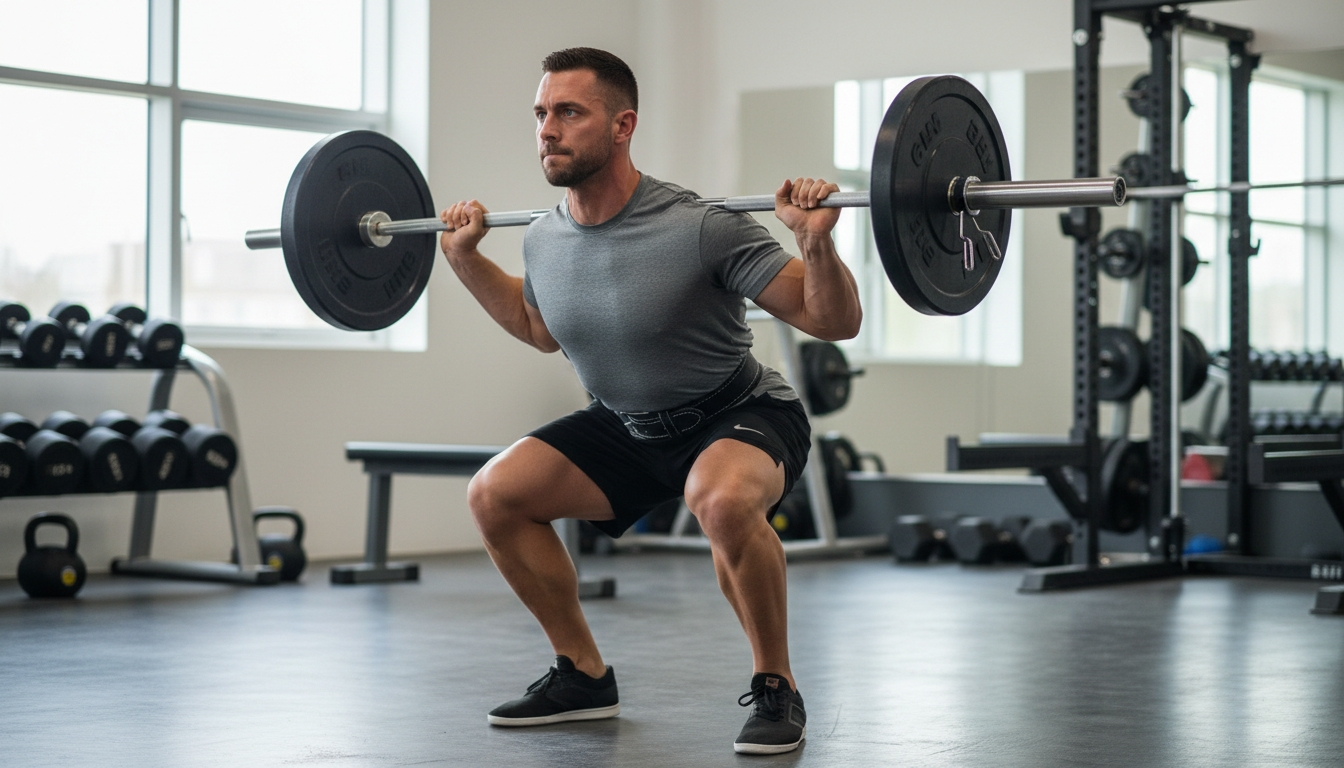
Where do you place your feet and how do you grip the bar? For squats, set your feet shoulder‑width apart, toes slightly turned out, and plant weight evenly across the whole foot. Grip the bar just outside your shoulders, elbows tucked, and keep wrists neutral.
In deadlifts, stand with feet hip‑width, shins close to the bar, and hinge at the hips. Use a double‑overhand grip for lighter loads; switch to mixed or hook grip as weight increases.
Bench press demands a slightly wider grip—hands just outside the forearm line—to maximize chest activation while keeping elbows at a 45‑degree angle.
Overhead presses require a grip just wider than shoulder width, elbows under the bar, and a stable, braced core.
Adjust stance and grip for each lift, then double‑check alignment before you load the bar. Consistent placement builds confidence, reduces injury risk, and sets the foundation for progressive strength.
Learn Light‑Load Full‑Range Technique for Compound Lifts
You’ll start by moving through the full range of motion with a light weight, so you can feel each joint’s path. Keep the load light enough to maintain perfect form, and focus on a controlled tempo throughout the rep. This approach builds solid technique before you add heavier plates.
Master Full‑Range Form
Ever wondered how a light‑load, full‑range approach can transform your compound lifts? Mastering full‑range form means you’ll move through every joint angle, from the deepest squat to the lockout press, without compromising technique. Start each rep by setting up a stable base: feet shoulder‑width, spine neutral, shoulders retracted. As you descend, keep the torso upright and let the hips hinge naturally, feeling the stretch in the glutes and hamstrings. On the way up, drive through the heels, extend the hips first, then the knees, maintaining a tight core. For bench presses, lower the bar to the mid‑chest, pause briefly, then press straight up, keeping elbows at a 45‑degree angle. Consistently practicing this full‑range motion builds muscle memory, improves joint health, and prepares you for heavier loads later.
Prioritize Light Loads
Why start with light loads? Because they let you cement the movement pattern without overloading joints or muscles. Begin each compound lift—squat, deadlift, bench press, overhead press—using a weight that feels like a warm‑up set, roughly 40‑50 % of your estimated max. Focus on full‑range motion, keeping the bar path smooth and your spine neutral. Perform 2–3 sets of 8–12 reps, pausing only to reset posture. This approach trains proprioception, reinforces proper timing, and highlights any mobility gaps before you add stress. As you progress, increase the load incrementally, never sacrificing the clean, full‑range technique you’ve built. Light loads lay the foundation for safe, effective strength gains.
Emphasize Controlled Tempo
After cementing the movement pattern with light loads, shift your focus to tempo. Controlling the speed of each phase—eccentric, pause, concentric—forces you to stay aware of joint angles, tension, and balance, reducing the chance of sloppy form. You’ll also feel the muscle working longer, which builds endurance before you add weight. Use a metronome or count in your head to keep the rhythm consistent, and adjust the tempo as you progress.
- 2‑0‑2 – two seconds down, no pause, two seconds up.
- 3‑1‑3 – three seconds down, one‑second hold at the bottom, three seconds up.
- 4‑0‑1 – four seconds eccentric, no pause, explosive concentric.
These tempos teach you to move deliberately, protect connective tissue, and lay a solid foundation for heavier lifts.
Build a Warm‑Up Routine That Preps Your Compound Lifts
Start with dynamic stretches to boost mobility and get your joints moving through the full range they’ll need for squats, deadlifts, and presses.
Follow that with activation exercises like banded pull‑aparts or glute bridges to fire up the stabilizing muscles.
This combo primed your body, reduces injury risk, and sets the stage for stronger, safer lifts.
Dynamic Stretching for Mobility
Ever wondered how to prime your joints and muscles for heavy squats, deadlifts, and presses without wasting time? Dynamic stretching spikes mobility, raises temperature, and activates the nervous system in a single flow. Instead of holding static positions, you move through controlled ranges, teaching your body to handle the stress of compound lifts.
- Leg swings – front‑to‑back and side‑to‑side, 12‑15 reps per leg, keep the torso stable and hinge at the hip.
- Arm circles – small to large circles, forward and backward, 20 seconds each direction, engage the shoulder girdle.
- World’s greatest stretch – step forward, rotate torso, reach opposite arm overhead, hold 5 seconds, repeat 4‑5 times per side.
These moves improve joint lubrication, reinforce movement patterns, and shave seconds off your warm‑up while delivering maximal readiness for the bar.
Activation Exercises for Stability
Wondering how to lock in core stability and joint control before you load the bar? Start with activation drills that fire the posterior chain, glutes, and deep core. Perform a 30‑second glute bridge, then a 20‑second bird‑dog, followed by 15‑second plank variations. Keep the tempo brisk but controlled; the goal is to awaken muscles, not fatigue them. Pair each move with a cue—“squeeze your glutes” or “brace your ribs”—to reinforce neuromuscular patterns. When you transition to the main lift, you’ll feel tighter hips, a sturdier spine, and smoother bar path, reducing injury risk and boosting performance.
| Exercise | Primary Activation |
|---|---|
| Glute Bridge | Glutes & Hamstrings |
| Bird‑Dog | Core & Lower Back |
| Side Plank | Obliques & Hip Stabilizers |
| Band‑Pull Apart | Upper‑Back & Scapular Control |
Select a Spotter and Safety Gear for Compound Lifts
Where do you find the right spotter and gear for heavy lifts? You need someone who’s experienced, attentive, and ready to intervene the the bar starts to wobble. Choose a spotter who knows proper hand placement, can communicate clearly, and respects your limits. Pair that with reliable safety gear—belt, wrist wraps, and a sturdy squat rack with safety pins—to protect you if you can’t finish a rep.
- Spotter selection – look for a training partner or gym employee who’s lifted the same movement, can stay focused, and knows how to catch the bar without pulling it off balance.
- Safety equipment – invest in a high‑quality powerlifting belt, supportive shoes, and a reliable set of collars; check them before every session.
- Rack setup – adjust safety pins or J‑hooks just below your lowest possible bar height, test them with an empty bar, and ensure they’re locked in place before loading weight.
With a trustworthy spotter and proper gear, you’ll reduce injury risk and lift with confidence.
How Much Weight Should You Add Each Week?
A solid spotter and reliable safety gear give you confidence to push harder, but the next question is how quickly you should increase the load. Progress should be incremental, allowing your nervous system and muscles to adapt without compromising form. A common rule of thumb is to add 2.5–5 lb (≈1–2 kg) per week for upper‑body lifts and 5–10 lb (≈2–5 kg) for lower‑body movements, provided you can complete all sets with proper technique. If you miss a rep or feel excessive fatigue, pause or reduce the jump. Tracking the load each session helps you spot plateaus early and adjust accordingly.
| Lift Type | Weekly Load Increase |
|---|---|
| Bench Press | 2.5 lb (1 kg) |
| Overhead Press | 2.5 lb (1 kg) |
| Barbell Row | 2.5 lb (1 kg) |
| Squat | 5 lb (2 kg) |
| Deadlift | 10 lb (5 kg) |
Stick to these modest steps, listen to your body, and you’ll build strength safely and consistently.
Track Form and Fatigue With Simple Video Checks
How can you be sure your technique stays solid as fatigue sets in? Grab your phone, set it on a stable surface, and record a short clip of each lift. Watching yourself in real time reveals subtle breakdowns—rounded back, uneven bar path, or rushed tempo—that you might miss while feeling the burn. Compare the footage to a baseline video taken when you were fresh; the contrast makes deviations obvious. Use these visual cues to adjust load or rest before form deteriorates further.
- Record the first rep of every set to capture the cleanest form.
- Review the last rep to spot fatigue‑induced errors.
- Annotate the video with timestamps for any irregularities, then plan corrective drills.
Recovery Strategies Specifically for Compound Lifts
Even after a solid warm‑up, the massive muscle groups recruited in squats, deadlifts, and bench presses demand focused recovery to keep strength gains steady and injury risk low. First, prioritize sleep; aim for 7‑9 hours of uninterrupted rest, because growth hormone spikes during deep sleep and repairs micro‑tears. Hydration matters too—drink at least 3 L of water daily to flush metabolites and support nutrient transport. Post‑workout nutrition should combine protein (0.4‑0.5 g per kg body weight) with fast‑acting carbs within 30 minutes to replenish glycogen and jump‑start protein synthesis. Light active recovery—foam‑rolling, dynamic stretching, or a brisk walk—helps circulation and reduces stiffness without taxing the nervous system. On heavy days, schedule a full rest day or a low‑intensity session to let the central nervous system recover. Finally, track soreness and adjust volume; if joint pain persists, dial back load or add an extra recovery day to prevent chronic injury.
Frequently Asked Questions
How Many Compound Lifts Should a Beginner Perform per Workout?
You should aim for three to four compound lifts per workout, focusing on major movements like squat, deadlift, bench press, and overhead press, while keeping rest periods short and form strict.
Should I Prioritize Free Weights Over Machines for Safety?
You should prioritize free weights for safety because they force you to engage stabilizers, improve balance, and develop functional strength; machines can mask weaknesses, but proper form and gradual load keep you injury‑free.
How Long Should Rest Periods Be Between Sets of Heavy Compounds?
You should rest two to three minutes between heavy compound sets; that gives your nervous system and muscles enough recovery to maintain strength and form, while keeping the workout efficient and safe.
Can I Combine Compound Lifts With Cardio in the Same Session?
Yes, you can pair compound lifts with cardio in one session, but keep the cardio light to moderate, limit it to 10‑20 minutes, and prioritize proper form and recovery to avoid excessive fatigue.
What Are the Signs of Overtraining Specific to Compound Movements?
You’ll notice persistent joint pain, sudden strength drops, excessive fatigue, poor form, and trouble sleeping. If your lifts feel unusually heavy, your heart rate stays elevated, or you’re irritable, you’re likely overtraining.
Conclusion
By mastering the right lift, perfecting your stance and grip, and progressing with light‑load, full‑range work, you set a solid foundation. Warm up properly, use a spotter and safety gear, and add weight gradually—usually 2‑5 % each week. Keep an eye on form with video checks, and prioritize recovery with sleep, nutrition, and mobility work. Stick to these habits, and you’ll lift safely while getting stronger.


No Comments