

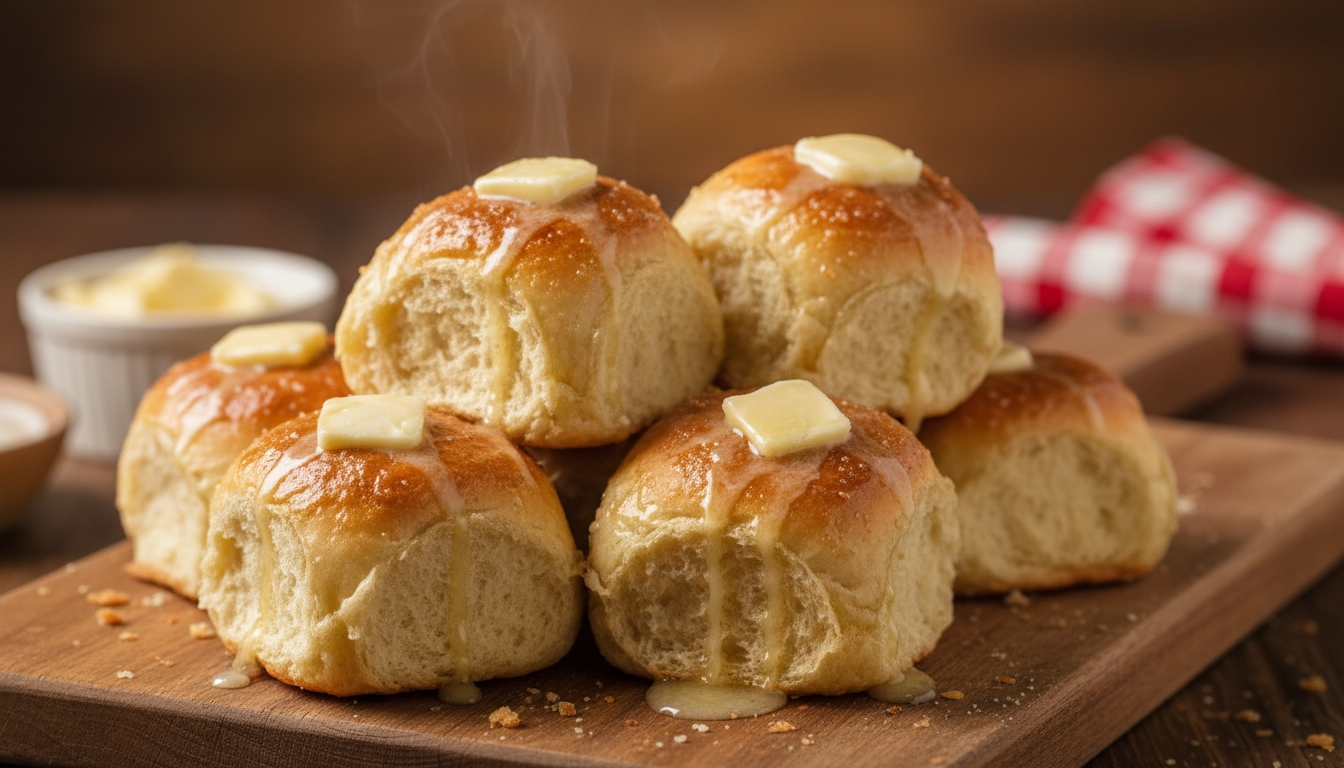
Texas Roadhouse Rolls at Home: The Buttery Copycat That Actually Tastes Restaurant-Perfect
You’ll nail Texas Roadhouse’s buttery, fluffy rolls at home by mixing all‑purpose flour, instant yeast, melted butter, whole‑milk, a pinch of salt and a touch of sugar, then kneading until smooth and letting the dough rest for a quick autolyse. Shape loose rolls, proof them in a humid spot until doubled, bake until the crust gets a glossy, slightly crisp edge, and finish with a warm butter‑cream glaze. Keep the glaze warm for a second brush, and you’ll get that restaurant‑perfect bite—plus more tricks ahead.
Key Takeaways
- Use a precise gram‑scale recipe with all‑purpose flour, instant yeast, melted butter, whole‑milk, and a pinch of salt for authentic texture.
- Dissolve yeast in warm milk, autolyse 15 minutes, then knead 8‑10 minutes until smooth and elastic for a light, fluffy crumb.
- Shape rolls loosely, proof in a humid environment until doubled, then bake with a steam‑baked finish for a glossy, slightly crisp edge.
- Brush hot rolls with melted butter (or garlic, herb, or cinnamon butter) immediately after baking to lock in moisture and add restaurant‑level flavor.
- Apply a warm butter‑cream glaze, sea‑salted and brushed twice, to achieve the signature buttery sheen and soft‑on‑the‑tongue mouthfeel.
Why Texas Roadhouse Rolls Are Irresistible (Copycat Overview)
Why are Texas Roadhouse rolls so addictive? You bite into a soft, golden‑brown cushion that melts on your tongue, then notice a subtle, buttery sheen that lingers. The crust gives just enough give, while the interior stays airy, thanks to a well‑timed proof and a splash of milk that creates a tender crumb. You feel the faint sweet‑savory balance from a pinch of sugar and a dash of salt, which sparks your palate without overwhelming it. The roll’s steam‑baked finish adds a glossy, slightly crisp edge that invites you to pull another piece apart. You also appreciate the faint aroma of melted butter that rises as you warm it, triggering comfort memories of a bustling restaurant. All these elements combine into a sensory loop: soft texture, rich flavor, and inviting scent, making each bite feel like a small celebration you can’t resist.
Essential Ingredients for a Texas Roadhouse Roll Copycat
Ever wondered which components turn a simple dough into a Texas Roadhouse‑style roll? First, grab all‑purpose flour—its protein balance yields a tender yet sturdy crumb. Add instant yeast for a quick, reliable rise, and a pinch of sugar to feed the yeast and coax a subtle sweetness. Incorporate melted butter, not just for flavor but for that glossy, buttery finish. Use whole‑milk for richness; its fat content deepens flavor and softens the interior. Salt is essential—without it, the roll tastes flat, and it also regulates yeast activity. Finally, a splash of warm water (or milk) brings the mixture together, creating a pliable dough that traps air pockets for that airy, fluffy texture. Measure each ingredient precisely, then combine; the result will be a roll that mirrors the restaurant’s buttery, melt‑in‑your‑mouth quality.
Step‑by‑Step: Mix & Shape the Dough
You’ll start by measuring each ingredient to the gram so the dough stays balanced. Then you’ll knead the mix until it’s elastic and smooth, which should take about 8–10 minutes. Finally, let the dough rest for a short rise so it becomes light and fluffy before shaping.
Gather Ingredients Precisely
Ready to nail the dough? First, pull out a digital scale and weigh each component; accuracy matters more than eyeballing. Measure 4 cups (480 g) of all‑purpose flour, 2 tsp (10 g) of fine sea salt, and 1 tsp (5 g) of instant yeast. Toss the flour and salt together in a bowl, then create a well for the liquids. Melt ½ cup (115 g) unsalted butter, let it cool to lukewarm, and mix in 1 ¼ cups (300 ml) warm milk with a splash of water if needed. Add 2 large eggs, beating lightly. Pour the butter‑milk‑egg mixture into the flour well, stirring until a shaggy mass forms. Finally, fold in 1 tbsp (15 ml) honey for a subtle sweetness. This precise gathering sets the foundation for perfectly tender, buttery rolls.
Knead Until Elastic
A firm, glossy dough forms after a few minutes of focused kneading, and that’s when the gluten begins to develop its elasticity. You’ll start by turning the mixed batter onto a lightly floured surface, then push it forward with the heel of your hand. Fold the dough back toward you, rotate 90°, and repeat. Keep the rhythm steady; after about five minutes you should feel resistance giving way to a smooth, springy texture. If the dough sticks, dust the surface lightly—don’t over‑flour, or you’ll hinder gluten formation. Test elasticity by pressing a fingertip; the indentation should bounce back quickly. Once the dough passes this test, shape it into a ball, cover, and let it rest before the next step.
Rest For Fluffiness
Wondering how to turn that elastic dough into a light, airy crust? Let it rest. After shaping the rolls, cover them loosely with a damp towel or plastic wrap. The dough needs 30‑45 minutes at room temperature; this pause lets the gluten relax and the yeast finish its rise, creating interior pockets that puff up during baking. If you’re short on time, a quick 15‑minute proof in a warm spot works, but the longer rest yields a fluffier crumb. Keep the environment draft‑free to avoid a skin forming. When the surface looks slightly puffy and springs back gently under a fingertip, it’s ready for the oven. This resting step is the secret to achieving that signature Texas Roadhouse softness.
Get the Soft, Fluffy Texture of Texas Roadhouse Rolls
Craving that melt‑in‑your‑mouth softness of Texas Roadhouse rolls? Start by using warm milk and butter in your dough; the fat coats the flour proteins, limiting gluten development and keeping the crumb tender.
Mix a small amount of instant yeast with sugar to give the dough a quick, steady rise without over‑proofing.
Knead just until the mixture is smooth—about 30 seconds—then let it rest for 15 minutes; this autolyse step hydrates the flour and encourages a light, airy crumb.
Shape the rolls loosely; a tight ball squeezes out air and creates a dense texture.
Proof them in a humid environment, covered with a damp towel, until they double in size—roughly 45 minutes.
Bake at 375°F on a pre‑heated stone, steam the oven with a tray of hot water, and remove the rolls the moment they turn golden.
The result is a cloud‑like interior that melts on the tongue.
Butter‑Glaze Secrets for Texas Roadhouse Rolls
Ever wonder how a simple butter glaze can turn ordinary rolls into a glossy, buttery masterpiece? You’ll master it in three steps. First, melt unsalted butter over low heat, then whisk in a splash of heavy cream and a pinch of sea salt until the mixture emulsifies. The cream adds silk, while the salt enhances flavor without overwhelming the dough.
Second, brush the hot glaze onto the rolls immediately after they exit the oven; the steam locks in moisture and creates that signature shine. Finally, repeat the brush once more a minute later for a deeper gloss and a buttery crust that cracks just enough to reveal a soft interior.
Keep the glaze warm but not bubbling—over‑cooking will separate the fat and ruin the sheen. By controlling temperature and timing, you’ll achieve the restaurant‑perfect, melt‑in‑your‑mouth finish every time.
Fix Common Texas Roadhouse Roll Mistakes Quickly
If your rolls turn out dense, you’re probably over‑proofing them, so shorten the rise time and watch the dough double in size.
Too little salt means the flavor falls flat, so add a pinch more to the dough before shaping.
Adjust these two steps and you’ll rescue the texture and taste in no time.
Over‑Proofing Leads to Dense Rolls
Why does your dough feel sticky and then turn into a heavy, compact roll after baking? You probably let it proof too long. Over‑proofing lets the yeast exhaust its food supply, causing the gluten network to break down. When the dough finally hits the oven, it can’t expand properly, so it collapses into a dense, gummy interior.
To fix this, watch the rise closely: the dough should double in size and feel airy, not slick. Set a timer for the first rise, then gently deflate and shape. If you notice the surface tensioning, before, proof again,’re a cooler spot.
Keep the second rise short—about 30‑45 minutes—so the rolls retain that fluffy, buttery texture.
Undersalted Dough Reduces Flavor
Over‑proofing can make your rolls dense, but even a perfectly risen loaf will fall flat on taste if the dough lacks enough salt. When you skim on salt, the yeast still ferments, yet the flavor profile stays muted, and the buttery richness you crave never shines. Salt amplifies the natural sweetness of the flour and balances the richness of butter, so undersalted dough feels bland and one‑dimensional.
To fix this, measure salt precisely—about 2 % of the flour weight works well for Texas Roadhouse‑style rolls. Dissolve it in the liquid before mixing, ensuring even distribution.
Taste a tiny piece of raw dough; it should be mildly savory, not flat. Adjust, then proceed, and your rolls will burst with authentic, restaurant‑level flavor.
Three Easy Texas Roadhouse Roll Variations: Garlic, Herb, Cinnamon
You can easily transform a basic Texas Roadhouse roll into three distinct flavors—garlic, herb, and cinnamon—by adding a simple mix of ingredients right before baking. For garlic, melt butter, stir in minced garlic and a pinch of salt, then brush the rolls before they enter the oven; the heat releases a fragrant, buttery crust.
For herb, combine softened butter with chopped fresh rosemary, thyme, and a dash of black pepper, spreading it over each roll for an earthy, aromatic finish.
For cinnamon, whisk melted butter with ground cinnamon, brown sugar, and a splash of vanilla, then drizzle over the dough; the sugar caramelizes, creating a sweet, spiced glaze.
After brushing, let the rolls rest briefly, then bake at 375°F for 12‑15 minutes until golden.
Serve warm, and you’ll have three instantly upgraded rolls that capture the restaurant’s signature taste while adding your own twist.
Frequently Asked Questions
Can I Freeze the Dough Before Shaping?
Yes, you can freeze the dough before shaping. Wrap it tightly, label it, and store for up to two months. Thaw in the fridge overnight, then shape and bake as usual.
How Long Do the Rolls Stay Fresh After Baking?
You’ll keep them fresh for three to four days at room temperature if you store the rolls in an airtight container; refrigerate them for up to a week, and they’ll stay tasty longer.
Can I Use a Stand Mixer Instead of Hand‑Mixing?
Yes, you can use a stand mixer; just set it to low speed, combine the dough until smooth, then let it rise as usual. The mixer saves time and still yields fluffy, buttery rolls.
Do I Need a Special Pan for the Butter‑Glaze?
You don’t need a special pan; a regular baking sheet or shallow roasting pan works fine. Just make sure it’s large enough for the rolls and can hold the butter‑glaze without spilling.
What’s the Best Flour for a Lighter Roll?
Use all‑purpose flour with a little cake flour folded in—about 20 % cake flour. The lower protein content lightens the dough, giving you airy, buttery rolls that stay tender and fluffy.
Conclusion
You’ve mastered the buttery, fluffy roll that rivals any Texas Roadhouse. With just a few simple steps, the right ingredients, and a quick butter‑glaze, you can serve restaurant‑perfect rolls anytime. Forget the mistakes—your dough will stay soft, your glaze will stay glossy, and you’ll have room for tasty variations. Enjoy the warm, indulgent bite that makes every meal feel like a celebration.


Table of Contents








No Comments