
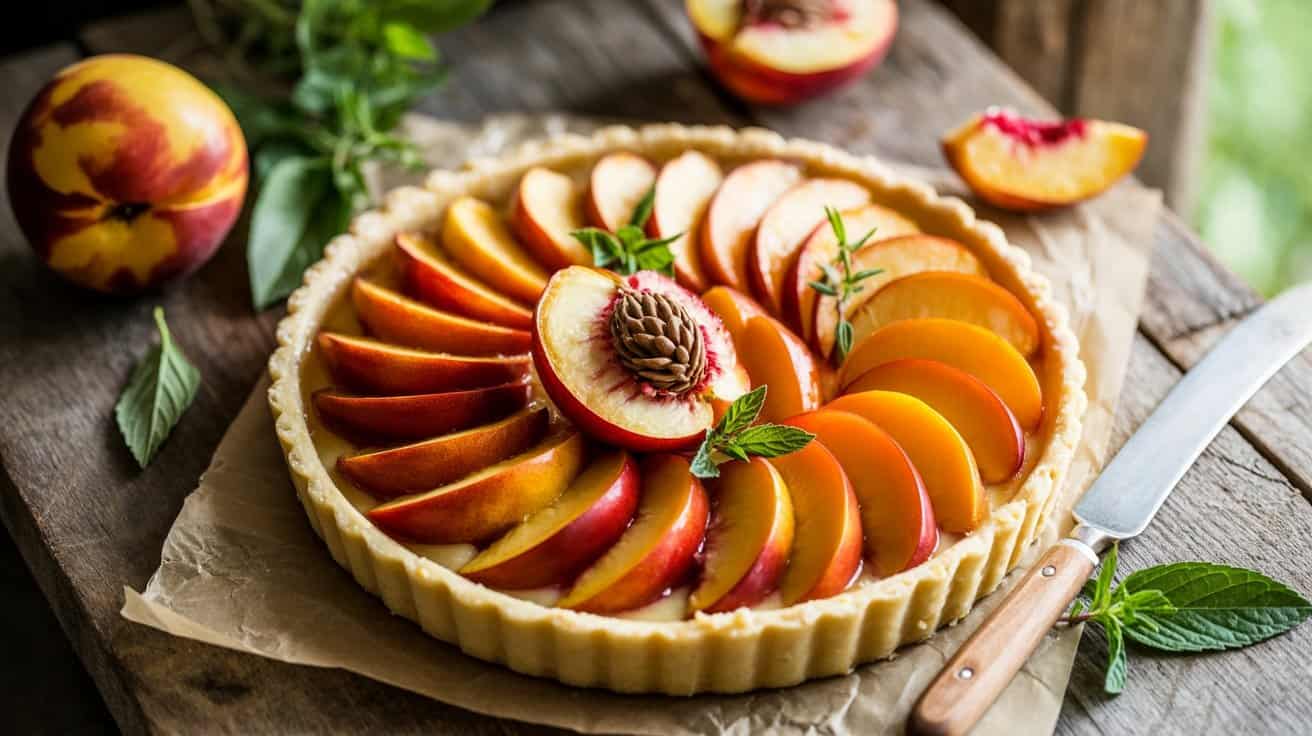
You’ll love these nine nectarine recipes that showcase summer’s sweetest stone fruit. Start with a classic cobbler featuring buttery biscuit topping, or grill halved nectarines for an elegant burrata salad with basil. Try a rustic galette drizzled with honey and thyme, fresh salsa that pairs perfectly with grilled fish, or an aromatic upside-down cake infused with cardamom. Don’t miss the no-churn vanilla ice cream, prosciutto flatbread, spiced jam, and smoothie bowls that await.
Table of Contents
Key Takeaways
- Bake nectarine cobblers at 375°F for 35-40 minutes with biscuit topping, or make rustic galettes with honey and thyme.
- Grill halved nectarines cut-side down for 2-3 minutes, then pair with burrata, basil, and balsamic for elegant salads.
- Create savory dishes like bourbon-glazed pork chops with roasted nectarines or flatbreads topped with ricotta and prosciutto.
- Make fresh nectarine salsa with jalapeño, cilantro, and lime juice to serve with grilled meats or chips.
- Prepare no-churn nectarine ice cream by folding whipped cream into pureed fruit with sweetened condensed milk.
Classic Nectarine Cobbler With Buttery Biscuit Topping
Transform fresh nectarines into a golden, bubbling cobbler that’ll have everyone asking for seconds. You’ll need six ripe nectarines, sliced and tossed with sugar, cornstarch, and a hint of vanilla. The magic happens when you top this mixture with buttery biscuit dough that bakes into fluffy, golden crowns.
For the topping, you’ll combine flour, sugar, baking powder, and salt before cutting in cold butter. Add buttermilk to form a shaggy dough, then drop spoonfuls over your fruit. The biscuit variations are endless—try adding lemon zest, almond extract, or even cornmeal for extra texture.
Your cobbler needs 35-40 minutes at 375°F until the topping’s golden and fruit bubbles around the edges. The nectarines’ natural sweetness intensifies during baking, creating perfect stone fruit pairings with the rich, tender biscuits. Serve it warm with vanilla ice cream melting into every crevice. You’ve just created the ultimate summer dessert.
Grilled Nectarine and Burrata Salad With Basil
You’ll want firm-yet-ripe nectarines that give slightly when pressed, as they’ll hold their shape better on the grill while developing those gorgeous char marks. Master the grilling technique by brushing the cut fruit with oil and placing them cut-side down over medium-high heat for just 2-3 minutes until caramelized.
When you’re ready to assemble, arrange the warm grilled nectarines with torn burrata, fresh basil leaves, and a drizzle of good olive oil for a stunning presentation that balances sweet, smoky, and creamy flavors.
Selecting Perfect Nectarines
When you’re making grilled nectarine and burrata salad, choosing the right fruit makes all the difference between a good dish and an exceptional one. You’ll want nectarines with perfect stone ripeness—fruit that yields slightly to pressure but maintains structure for grilling. Check the stem end for a sweet aroma and look for vibrant coloring without green patches.
| Ripeness Stage | Best Use |
|---|---|
| Rock hard | Wait 2-3 days |
| Firm with slight give | Perfect for grilling |
| Soft throughout | Eat fresh today |
| Bruised/mushy | Avoid purchasing |
| Green-tinged | Under-ripe |
Don’t confuse softness with ripeness; you need firm sweetness that won’t fall apart on the grill. Test by gently pressing near the stem—it should indent slightly then spring back. Skip nectarines with wrinkled skin or sticky spots.
Grilling Technique Tips
Those perfectly selected nectarines are ready for their transformation on the grill, where high heat caramelizes their natural sugars and creates those beautiful char marks that make this salad spectacular.
You’ll want to master charcoal control by creating two heat zones—pile coals on one side for direct grilling, leaving the other side empty for indirect searing.
Cut your nectarines in half and remove the pits.
Brush the cut sides with olive oil to prevent sticking.
Place them cut-side down over direct heat for 2-3 minutes until you’ve achieved deep caramelization.
Then move them to the cooler side for indirect searing, allowing the fruit to soften without burning.
You’re looking for tender flesh that holds its shape while developing smoky complexity that’ll complement the creamy burrata perfectly.
Assembly and Presentation
After your nectarines have cooled slightly from the grill, arrange them cut-side up on a large serving platter, creating a foundation that showcases their caramelized surfaces. You’ll achieve ideal plating symmetry by alternating the fruit pieces in a circular pattern or neat rows.
Tear the burrata into rustic chunks and nestle them between the nectarines. This creates striking color contrast—golden fruit against creamy white cheese.
Build texture layering by scattering fresh basil leaves across the arrangement, then drizzle quality olive oil and aged balsamic reduction over everything.
For edible garnishes, add toasted pine nuts or pistachios for crunch. You can also incorporate microgreens or edible flowers if they’re available.
Season with flaky sea salt and cracked black pepper just before serving to maintain optimal freshness.
Rustic Nectarine Galette With Honey and Thyme
If you’re looking for an elegant dessert that celebrates the natural sweetness of stone fruit, this rustic nectarine galette delivers stunning results with minimal effort. You’ll love how the free-form pastry embraces juicy nectarine slices while honey and thyme create sophisticated seasonal pairings.
Start by arranging your sliced nectarines in overlapping circles on rolled pastry dough. Drizzle with honey, sprinkle fresh thyme leaves, and fold the edges up casually. The beauty lies in its imperfection.
| Component | Amount | Purpose |
|---|---|---|
| Nectarines | 4-5 medium | Sweet, juicy base |
| Honey | 3 tablespoons | Natural sweetener |
| Fresh thyme | 2 teaspoons | Aromatic contrast |
Experiment with herb variations like rosemary or lavender for different flavor profiles. You can substitute peaches when nectarines aren’t available. Bake at 400°F until the crust turns golden and fruit bubbles. Serve warm with vanilla ice cream for the ultimate summer dessert experience.
Fresh Nectarine Salsa for Fish and Chicken
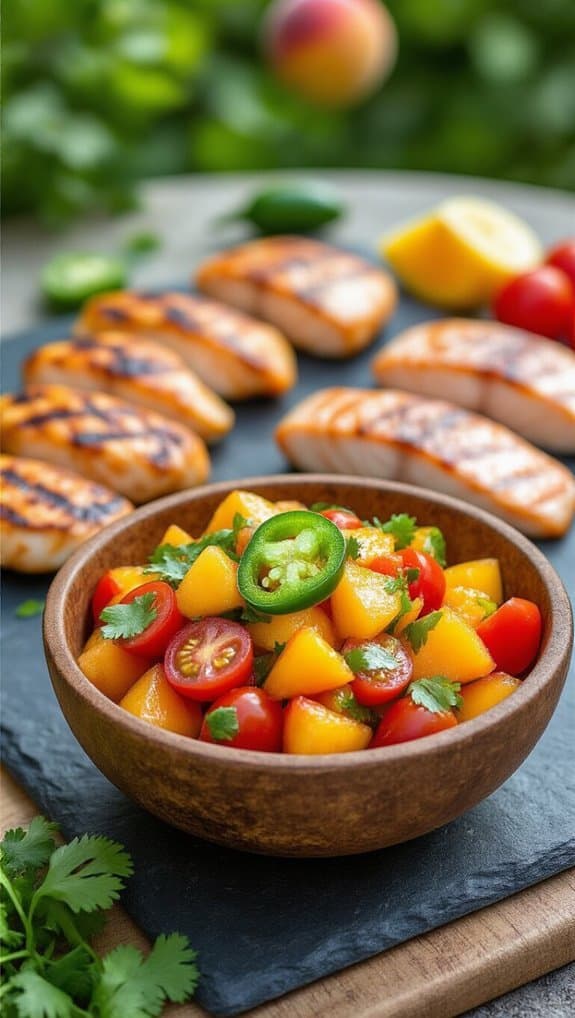
You’ll discover that diced nectarines pair beautifully with red onion, jalapeño, cilantro, and lime juice to create a vibrant salsa that complements grilled fish and chicken.
Serve this fresh salsa immediately after preparing it for the best texture and flavor, spooning it generously over your protein just before plating.
While you can refrigerate leftovers in an airtight container for up to two days, the nectarines will soften and release their juices, so it’s best enjoyed fresh.
Key Ingredient Combinations
When crafting fresh nectarine salsa for fish and chicken, you’re working with a fruit that brings natural sweetness and acidity to balance savory proteins. This stone fruit creates exceptional flavor pairing opportunities when you combine it with jalapeños, red onion, and cilantro. The heat from peppers cuts through the fruit’s sweetness while herbs add brightness.
You’ll achieve perfect texture contrast by dicing nectarines into uniform pieces alongside crunchy bell peppers and soft avocado chunks. Add lime juice to prevent browning and enhance the citrus notes. For grilled fish, incorporate mint leaves; with chicken, try basil instead.
Don’t overlook your salsa’s potential beyond the plate—blend leftover portions into seasonal cocktails with tequila or rum for a refreshing twist that showcases the nectarine’s versatility.
Serving and Storage Tips
After preparing your nectarine salsa, serve it at room temperature for the best flavor release—cold temperatures mute the fruit’s natural sweetness and aromatic compounds.
Let refrigerated salsa sit on your counter for 15-20 minutes before serving alongside grilled fish or chicken. You’ll notice how room temperature serving enhances the cilantro’s brightness and the jalapeño’s heat.
Store leftover salsa in glass containers for up to three days in your refrigerator. The acids from lime juice will prevent browning, but the texture will soften over time.
For longer storage, try airtight freezing in portion-sized containers. Freeze for up to two months, though expect a softer consistency upon thawing. Don’t refreeze thawed salsa—use it immediately for cooked applications like stir-fries or glazes.
Nectarine Upside-Down Cake With Cardamom
Transform your typical dessert routine by flipping the script with this aromatic nectarine upside-down cake infused with cardamom. You’ll create a stunning presentation while the fruit’s natural sugars caramelize into a glossy topping that’ll impress any guest.
Start by arranging sliced nectarines in overlapping circles on buttered parchment in your cake pan. The cardamom pairing works brilliantly here—sprinkle ground cardamom directly over the fruit before adding your batter. You can experiment with batter variations too: substitute almond flour for half the all-purpose flour, or add Greek yogurt for extra moisture.
Pour the batter gently over your arranged nectarines, ensuring you don’t disturb their pattern. Bake at 350°F for 35-40 minutes until golden. Once cooled for ten minutes, flip it onto your serving plate.
The caramelized nectarines will glisten on top, releasing their cardamom-scented aroma. Serve it warm with whipped cream or vanilla ice cream for the ultimate summer dessert experience.
Bourbon-Glazed Pork Chops With Roasted Nectarines
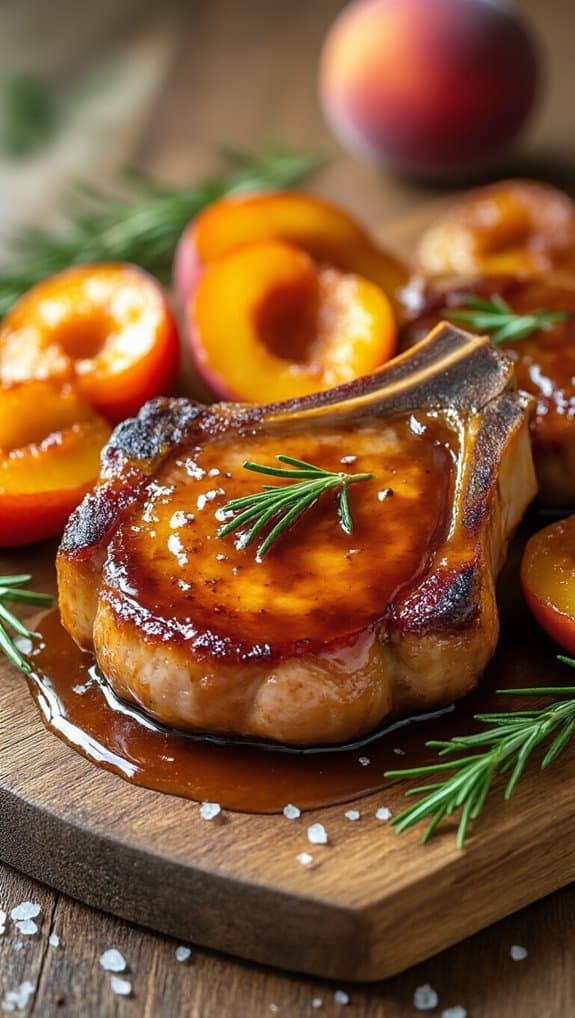
Elevate your weeknight dinner with this sophisticated pairing of bourbon-glazed pork chops and caramelized roasted nectarines. You’ll transform simple ingredients into a restaurant-quality meal that’s surprisingly easy to execute.
Start by seasoning thick-cut pork chops with salt, pepper, and smoked paprika. Sear them in a hot skillet until they develop a golden crust, then transfer to a 400°F oven. While they’re cooking, halve your nectarines and place them cut-side down in the same pan. You’ll get beautifully charred nectarines with intensified sweetness.
For the bourbon reduction, combine bourbon, brown sugar, butter, and a splash of apple cider vinegar in a saucepan. Let it simmer until it thickens into a glossy sauce that coats the back of a spoon. Drizzle this over your perfectly cooked chops and nestle the roasted fruit alongside.
The combination of savory meat, boozy glaze, and sweet-tart fruit creates an unforgettable flavor profile.
No-Churn Nectarine Ice Cream With Vanilla Bean
When summer nectarines reach peak ripeness, you’ll want to capture their flavor in this creamy no-churn ice cream that requires no special equipment.
Check ripeness indicators before starting: your nectarines should yield slightly to pressure, smell fragrant at the stem end, and display vibrant orange-red coloring.
You’ll need four ripe nectarines, peeled and diced, plus one vanilla bean pod.
Puree the fruit until smooth, then strain to remove any fibrous bits.
Whip two cups of heavy cream until stiff peaks form.
In another bowl, combine one can of sweetened condensed milk with the nectarine puree and vanilla bean seeds you’ve scraped from the pod.
Fold the whipped cream into the nectarine mixture gently to maintain airiness.
Pour into a freezer-safe container and freeze for six hours.
For dietary restrictions, you can experiment with coconut cream as milk alternatives, though texture will vary.
The result delivers intense fruit flavor without an ice cream maker.
Nectarine and Prosciutto Flatbread With Arugula
Sweet nectarines meet savory prosciutto on this elegant flatbread that balances fruit, salt, and peppery greens.
You’ll love how the nectarines caramelize slightly when baked, creating jammy pockets of sweetness that complement the crispy prosciutto.
This combination works especially well with heritage varieties of nectarines, which offer complex flavor profiles ranging from honey-sweet to slightly tart.
Transform your flatbread with these key elements:
- Brush the dough with olive oil and minced garlic
- Layer thin nectarine slices over creamy ricotta
- Drape prosciutto strips between fruit pieces
- Finish with fresh arugula and balsamic glaze
You’ll find this dish perfect for pairing wines—try a crisp Vermentino or light Pinot Noir that won’t overpower the delicate fruit.
Bake at 450°F for 12-15 minutes until the edges turn golden and the prosciutto crisps.
The peppery arugula adds freshness when tossed on top right after baking, wilting slightly from the residual heat.
Spiced Nectarine Jam for Canning and Preserving
Capture summer’s fleeting nectarine harvest in gleaming jars of spiced jam that’ll brighten your pantry shelves through winter. You’ll need ripe nectarines, sugar, lemon juice, and warming spices like cinnamon, cardamom, and ginger to create this preserve.
Start with proper jar sterilization—boil clean jars for 10 minutes while you prepare the fruit. Dice four pounds of nectarines and combine them with three cups of sugar and fresh lemon juice. For pectin alternatives, you can use apple cores tied in cheesecloth or chia seeds, though commercial pectin ensures consistent results.
Cook the mixture over medium-high heat, stirring frequently until it reaches 220°F on a candy thermometer. Add your chosen spices during the last five minutes. Pour hot jam into sterilized jars, leaving quarter-inch headspace. Process in a boiling water bath for 10 minutes. You’ll hear the satisfying pop of sealing lids as they cool.
Nectarine Smoothie Bowl With Coconut and Granola
You’ll want to select nectarines that yield slightly to pressure but aren’t mushy, ensuring your smoothie bowl has the perfect balance of sweetness and texture.
Start with frozen nectarine chunks as your base, then blend them with a splash of coconut milk until you achieve a thick, creamy consistency that won’t turn watery under your toppings.
Layer on toasted coconut flakes, crunchy granola, and fresh nectarine slices, or experiment with chia seeds, sliced almonds, and a drizzle of honey for endless flavor combinations.
Choosing Perfect Nectarines
When you’re making a nectarine smoothie bowl, selecting ripe fruit makes all the difference between a mediocre breakfast and an exceptional one. You’ll want nectarines that yield slightly to gentle pressure but aren’t mushy. Check your seasonality chart—peak season runs from May through September, ensuring the sweetest flavor.
Follow this firmness guide for optimal ripeness:
- Rock hard: Leave at room temperature for 2-3 days
- Slightly firm: Perfect for slicing into bowls tomorrow
- Gentle give: Ready to blend today
- Very soft: Use immediately or discard
Don’t rely on color alone; even green-tinged nectarines can be perfectly ripe. Smell the stem end—you’ll detect a sweet, fragrant aroma when they’re ready. Store ripe ones in your refrigerator’s crisper drawer for up to five days.
Topping Combinations
| Topping Category | Options | Texture Pairing Benefits |
|---|---|---|
| Nuts & Seeds | Almonds, pepitas | Savory crunch balances sweetness |
| Fresh Fruits | Berries, stone fruit slices | Juicy bursts complement creamy base |
| Granola & Cereals | Coconut granola, puffed quinoa | Adds satisfying crunch and fiber |
Don’t overwhelm your bowl—choose three to four toppings maximum. Sprinkle coconut flakes for tropical notes, then add granola for heartiness. You’re building layers that work together, not competing for attention. The key’s finding balance between creamy, crunchy, and chewy elements while maintaining the nectarine’s starring role.
Frequently Asked Questions
How Do I Tell When a Nectarine Is Perfectly Ripe for Cooking?
You’ll know a nectarine’s perfectly ripe for cooking when it yields slightly to gentle pressure, especially near the stem.
Check the skin texture – it should feel smooth and taut, not wrinkled or overly soft.
Use the fragrance test by smelling near the stem end; you’ll detect a sweet, fruity aroma when it’s ready.
The fruit’s color should be vibrant with no green undertones, and it shouldn’t feel rock-hard or mushy.
Can I Substitute Peaches for Nectarines in These Recipes?
Yes, you can substitute peaches for nectarines in most recipes due to their excellent peach swapability. They’re closely related stone fruits with similar sweetness and flavor profiles.
The main texture differences you’ll notice are that peaches have fuzzy skin and slightly softer flesh when ripe. You’ll want to peel peaches for smoother desserts, while nectarines don’t require peeling. Adjust sugar slightly since peaches can be sweeter than nectarines.
Should Nectarines Be Peeled Before Using Them in Recipes?
You don’t need to peel nectarines before using them in recipes. Their thin, smooth skin texture is completely edible and adds nutritional value, including fiber and antioxidants.
Unlike fuzzy peaches, nectarine skins won’t affect recipe aesthetics negatively – they’ll maintain their vibrant color when baked or cooked. If you’re making smooth purees or prefer skinless fruit, you can blanch them briefly in boiling water for easy peeling.
How Long Do Cut Nectarines Last in the Refrigerator?
You’ll find cut nectarines maintain their fridge freshness for 3-5 days when stored properly in an airtight container.
The storage duration depends on the fruit’s initial ripeness and how you’ve prepared them.
You can extend their life by adding a bit of lemon juice to prevent browning.
If you notice any soft spots, discoloration, or off-odors developing, it’s time to toss them out and prepare fresh ones.
What’s the Best Way to Prevent Nectarines From Browning After Cutting?
You’ll prevent browning best by dipping cut nectarines in acidulated water – simply mix one tablespoon of lemon juice per cup of cold water.
Soak the pieces for 3-5 minutes, then drain thoroughly.
For storage, use airtight packing to minimize oxygen exposure, which causes oxidation.
You can also brush cuts with lemon or lime juice directly.
Store in glass containers rather than plastic, and they’ll maintain their fresh appearance longer.
Conclusion
You’ve discovered how versatile nectarines can be beyond simple snacking. Whether you’re grilling them for elegant salads, baking them into comforting cobblers, or blending them into refreshing smoothies, these stone fruits elevate any dish. Don’t let peak season pass without trying these recipes. Stock up on nectarines at your farmers market or grocery store, and you’ll have endless options for breakfast, dinner, and dessert all summer long.


No Comments