

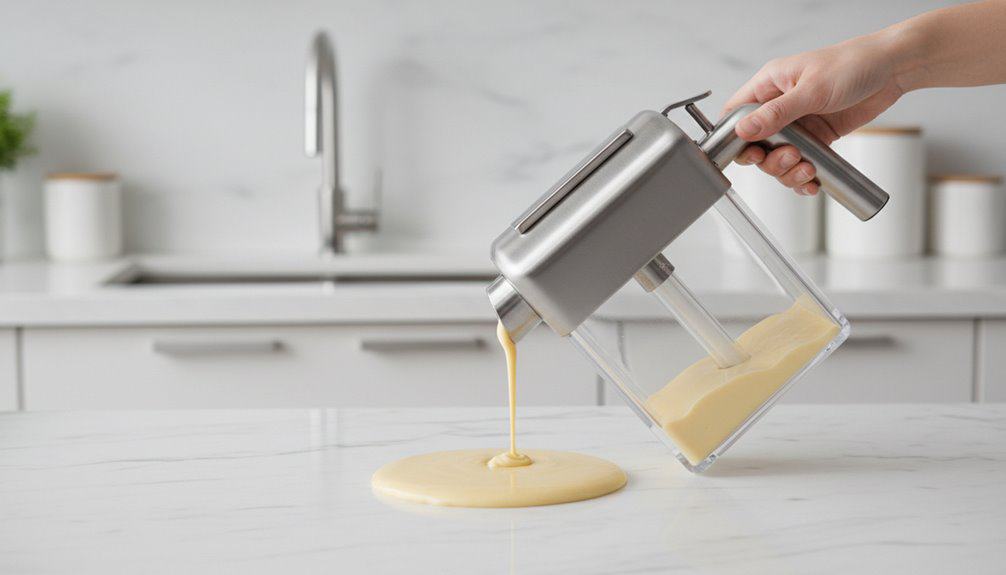
This Genius Pizzelle Batter Dispenser Eliminates Messy Kitchen Disasters Forever
You’ll transform your pizzelle-making experience with a precision batter dispenser that delivers exact 1-2 teaspoon portions while preventing spillage around iron edges. The controlled squeeze technique takes just two seconds per portion, cutting cleanup time by 75% since there’s no burnt residue accumulating in grooves. Whether you choose stainless steel for durability or silicone for non-drip convenience, you’ll discover this versatile tool’s benefits extend far beyond pizzelles.
Key Takeaways
- Controlled portioning prevents batter spillage around pizzelle maker edges, eliminating burnt residue buildup and frequent cleanup needs
- Precise dispensing delivers exact 1-2 teaspoon portions, preventing overflow on non-cooking surfaces and reducing mess
- Stainless steel and silicone models feature non-drip designs that keep work surfaces clean throughout baking sessions
- Proper squeeze technique with consistent grip pressure ensures even pours in two seconds without jerking or spilling
- Four-cup capacity allows multiple batches without refilling while maintaining consistently clean working conditions
How a Pizzelle Dispenser Eliminates Batter Mess
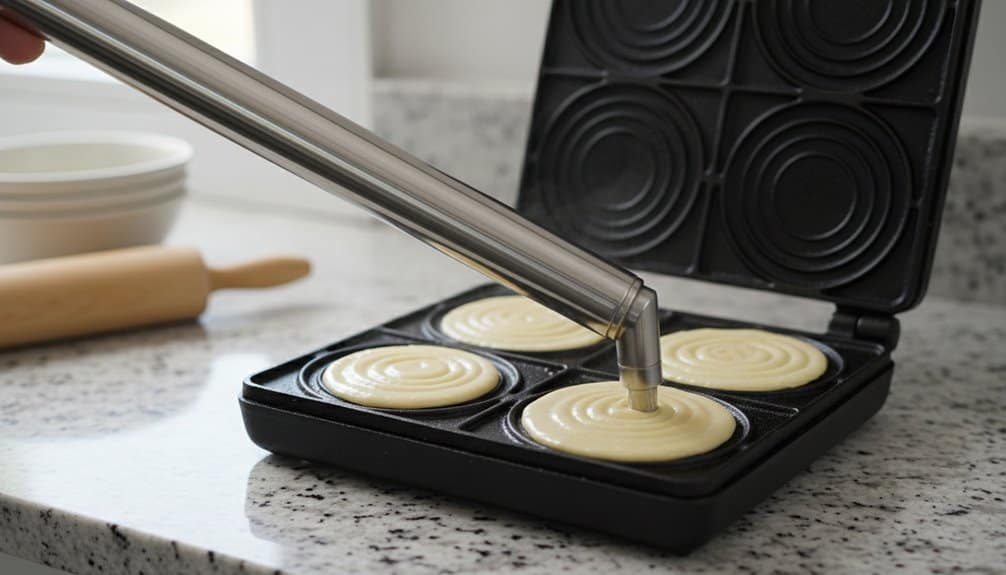
Ever wondered why your pizzelle-making sessions turn into a sticky battlefield? Your traditional pouring methods can’t handle the batter viscosity properly, causing spillage around your pizzelle maker’s edges. When you use a dispenser with precise portion control, you’ll eliminate the overflow that creates those messy, uneven shapes.
You’ll drop exactly 1-2 teaspoons of batter slightly off-center on the form, letting it spread evenly when the top closes. A stainless steel scoop (#30 or #40) ensures consistent batter portions for uniform pizzelle every time. This controlled dispensing means you won’t deal with excess batter seeping out and sticking to non-cooking surfaces. Your cleanup frequency drops dramatically since you’re not constantly scraping burnt residue from iron edges.
The dispenser’s measured approach prevents batter from accumulating in hard-to-reach grooves within the pizzelle design. You’ll spend less time with soft-bristled brushes removing dried-on particles. Instead of battling sticky surfaces after each batch, you’ll maintain clean working conditions throughout production, making your entire pizzelle-making process efficient and enjoyable.
Master the Squeeze Handle for Perfect Portions
When you’re gripping your pizzelle dispenser’s squeeze handle, the right technique makes all the difference between perfect portions and uneven cookies. You’ll want to position your thumb on top and wrap your fingers underneath for optimal control. This grip gives you the leverage needed for consistent pressure application.
The mastery mechanics involve squeezing smoothly rather than jerking the handle. You’re aiming for a steady, controlled motion that releases batter evenly. Practice your squeeze timing – about two seconds per portion typically yields the ideal amount for standard-sized pizzelles. A quality dispenser can hold four cups of batter, allowing you to create multiple batches without constant refilling.
Your portion precision improves when you maintain the same grip pressure throughout each squeeze. Don’t vary your force mid-pour, as this creates irregular batter flow. Keep the dispenser perpendicular to your iron’s surface and squeeze from the same height each time. You’ll quickly develop muscle memory that makes consistent portioning second nature, eliminating those frustrating too-thick or too-thin cookies.
Stainless Steel vs. Silicone Pizzelle Dispensers
Your choice between stainless steel and silicone pizzelle dispensers boils down to durability versus specialized features. Stainless steel models resist cracking better than plastic alternatives and handle thicker batters without strain. They’re fully dishwasher-safe and rust-proof, ensuring years of reliable performance despite the higher upfront cost.
Silicone spouts offer distinct advantages for pizzelle making:
- Heat resistance – They withstand direct contact with hot griddles
- Safety features – Pressure release caps prevent dangerous buildup
- Clean dispensing – Non-drip design eliminates messy countertops
You’ll find silicone components are top-rack dishwasher compatible and reduce batter adhesion issues. The smooth surfaces minimize residue buildup, making cleanup take under 30 seconds. While stainless steel provides precise portion control and long-term value, silicone enhancements enable lump-free dispensing and hot-surface compatibility. Many models feature removable valves that simplify the cleaning process after each baking session. Both materials outperform manual pouring methods, reducing spills and ensuring uniform results. Your investment in either option yields mess-free baking sessions that justify the premium over budget plastic models.
Beyond Pizzelles: Pancakes, Cupcakes, and Crepes
Why limit your batter dispenser to just pizzelles? You’ll achieve perfect pancakes portions with ±0.8g consistency using calibrated squeeze dispensers, compared to ±5.2g variance with traditional methods. The Norpro 1013 handles 4 cups and produces uniform rounds, cutting cleanup time from 90 to 45 seconds.
For cupcakes, you’re ensuring even baking through equal filling. The OXO Precision Batter Dispenser and Martha Stewart’s squeezable bottle both offer 4-cup capacity with precise portion control markings. You’ll eliminate guesswork and achieve professional results.
Crepes control becomes effortless with thin-batter specific features. You’ll need a ¼-inch spout and should dispense from 4 inches height to avoid pooling. The Williams Sonoma Dual Tip provides fine control for spreadable coverage, while the Norpro works well for standard crepe batters.
These versatile tools reduce waste to negligible levels and eliminate extra measuring cups. You’re investing in one tool that transforms multiple breakfast and dessert preparations.
Frequently Asked Questions
Can I Use Thick Brownie or Cookie Dough in the Dispenser?
You can’t use thick brownie or cookie dough in pizzelle dispensers since they’re designed for thin batters that crisp quickly. These dense doughs won’t flow properly through the dispenser, creating overflow issues and messy kitchen cleanup.
Your discussion ideas about using thicker batters won’t work because pizzelle makers need specific batter consistency – approximately 2 teaspoons of thin mixture that spreads evenly and cooks in 21-23 seconds for proper texture.
How Long Does the Batter Stay Fresh Inside the Dispenser?
Your pizzelle batter stays fresh in the dispenser when you keep it refrigerated between batches during short-term use. While there’s no specific freshness duration stated for dispenser-stored batter, you’ll maintain quality by following these storage tips: refrigerate the dispenser between uses, stir periodically, and use within a reasonable timeframe similar to other refrigerated batters. The dispenser’s design helps preserve consistency throughout your baking session without reported spoilage issues.
Will the Dispenser Work With Gluten-Free or Alternative Flour Batters?
Yes, the dispenser will work with gluten-free and alternative flour batters. You’ll need to adjust your batter consistency to match traditional waffle batter thickness – thinner than pancake batter. Add water if it’s too thick, and include xanthan gum (1/4 teaspoon) for proper structure. Users report success with Bob’s Red Mill 1-to-1, Robin Hood GF flour, and gluten-free Bisquick. Test portion sizes through trial batches for perfect results.
What’s the Warranty Period for Pizzelle Batter Dispensers?
You’ll find warranty specifics vary by manufacturer rather than for dispensers themselves. Most pizzelle makers include 1-year warranties, though Cuisinart offers 3-year coverage on new units. Since batter dispensers are typically separate accessories, they’re usually covered under standard kitchenware warranties of 30-90 days. For maintenance tips, check if your dispenser’s warranty covers normal wear versus defects. Always verify coverage details with the specific dispenser manufacturer before purchasing.
Can I Refrigerate the Dispenser With Leftover Batter Inside?
You shouldn’t refrigerate the dispenser with leftover batter inside. Instead, transfer any remaining batter to an airtight container for proper batter storage in your refrigerator. This prevents bacterial growth and maintains freshness. For dispenser cleaning, empty it completely first, then wash with warm soapy water. Don’t submerge electrical components if you’re using an electric model. Always clean thoroughly between uses to prevent residue buildup and ensure food safety.
Conclusion
You’ve discovered how a pizzelle batter dispenser transforms your baking experience from chaotic to controlled. Whether you’re perfecting your squeeze technique, choosing between stainless steel or silicone, or exploring beyond traditional pizzelles, you’ll never go back to messy spoons and dripping bowls. Your kitchen stays cleaner, your portions stay consistent, and your treats turn out professional every time. Don’t let another baking session end in frustration—grab your dispenser and start creating perfect pizzelles today.


Table of Contents
Related posts:
 Top 6 International Thanksgiving Inspiration Recipes, Tips, and Nutrition Insights
 10 Refreshing Vegan Summer Side Dishes That Will Impress Your Guests
 16 Flavor-Packed Tasty Mediterranean Diet Recipes You Need to Try for a Healthier Lifestyle!
 Delicious Father’s Day Lunch Ideas: Celebrate Dad with These Mouthwatering Recipes!





No Comments