
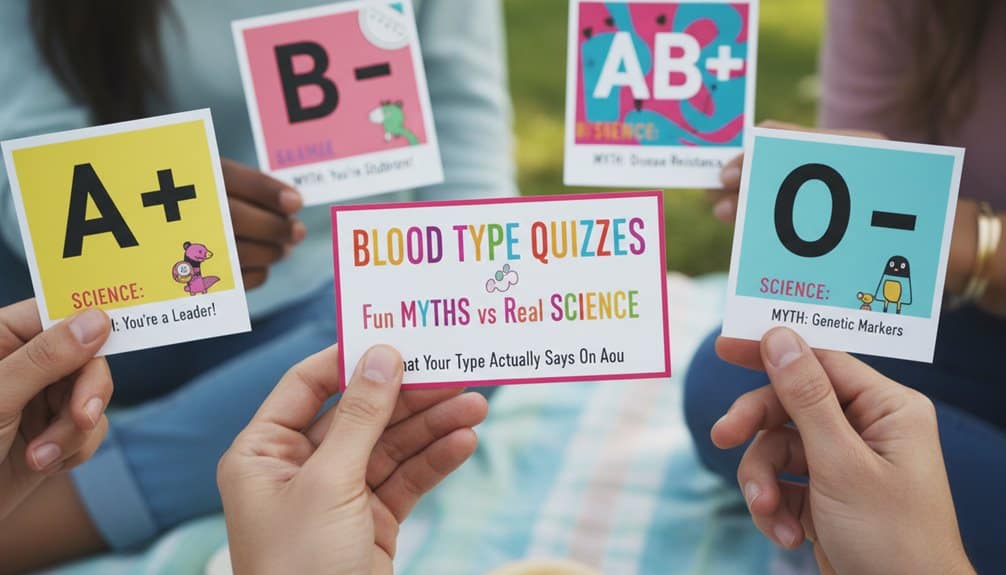
Blood Type Quizzes: Fun Myths vs Real Science – What Your Type Actually Says About You
Your blood type can’t predict if you’re organized (Type A) or a creative rebel (Type B)—scientists have found zero evidence linking blood types to personality traits. While these quizzes are hugely popular in Japan and South Korea, where companies even organize teams by blood type, they’re essentially horoscopes with medical terminology. Your blood type does matter for real health risks like heart disease, stroke susceptibility, and medication responses—factors that actually impact your life beyond fun stereotypes.
Table of Contents
Key Takeaways
- Blood type personality quizzes have zero scientific backing—personality develops from genetics and environment, not blood cell proteins.
- In Japan and South Korea, blood type stereotypes (A=organized, O=leader) function like horoscopes for dating and social interactions.
- Your blood type genuinely affects disease risk: Type A faces higher stomach cancer risk, Type O resists malaria better.
- Blood type determines medical compatibility for transfusions and pregnancy, but doesn’t dictate optimal diet choices despite popular claims.
- Personality descriptions in blood type quizzes use vague, universally applicable statements that seem accurate to everyone, like astrology.
Can Your Blood Type Really Predict Your Personality?
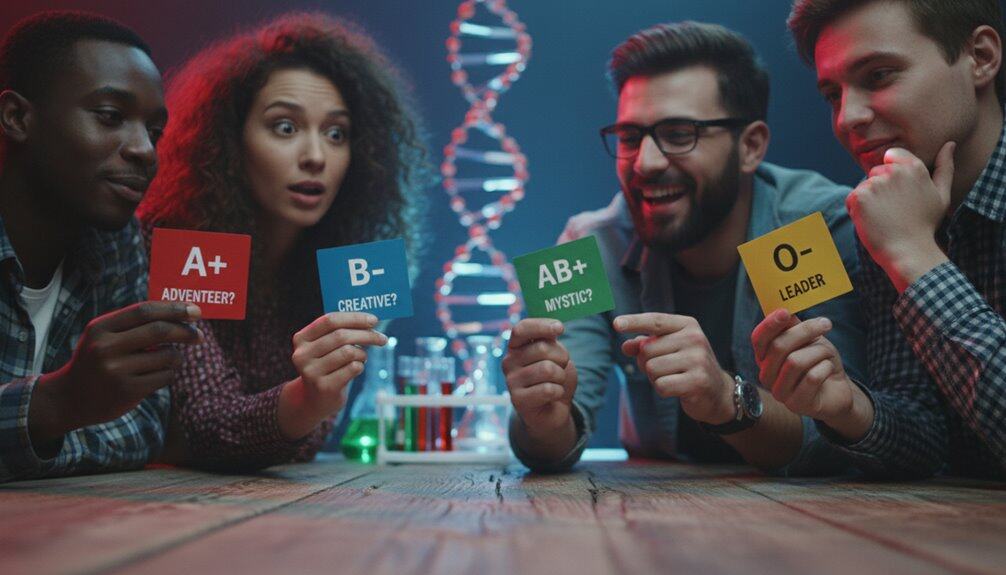
Have you ever wondered why blood type personality tests are so popular, especially in countries like Japan and South Korea? You’re not alone. Millions believe their blood type determines whether they’re natural leaders, creative dreamers, or reliable friends. These personality myths have shaped dating preferences, job interviews, and social interactions across Asia for decades.
Here’s the genetic reality: your blood type can’t predict your personality.
Scientists have found zero evidence linking ABO blood types to character traits.
Your blood type is determined by specific antigens on red blood cells—molecules that have nothing to do with brain chemistry or behavior patterns.
While it’s fun to read that Type As are organized perfectionists or Type Os are confident go-getters, these descriptions work like horoscopes.
They’re vague enough that you’ll find something relatable regardless of your actual blood type.
Your personality develops through complex interactions of genetics, environment, upbringing, and personal experiences—not the proteins on your blood cells.
Why Japan Treats Blood Types Like Zodiac Signs
When you walk into a Japanese bookstore, you’ll find entire sections dedicated to blood type personality guides—outselling many bestsellers in other countries.
This phenomenon, called “ketsueki-gata,” permeates Japanese society.
You’ll encounter blood type questions on dating apps, job applications, and casual conversations.
Companies even organize teams based on employees’ blood types.
The cultural beliefs mirror astrology parallels remarkably.
Just as you might check your horoscope, Japanese people consult blood type forecasts for daily guidance.
Type A individuals are supposedly organized perfectionists, B types are creative but selfish, O types are confident leaders, and AB types are mysterious geniuses.
These stereotypes influence everything from marketing strategies to romantic compatibility.
The practice gained traction in 1927 when psychologist Takeji Furukawa published his theories linking blood types to temperament.
Despite lacking scientific evidence, it’s become Japan’s alternative to Western zodiac signs—a social shorthand for understanding personality that you can’t escape in modern Japanese culture.
The Real Medical Impact of Your Blood Type
While cultural myths about blood types persist, your actual blood type does carry significant medical implications that can affect your health outcomes and treatment options.
Your blood type influences your risk for certain diseases—you’re more likely to develop heart disease if you have type A, B, or AB, while type O carriers face higher risks of bleeding disorders.
These genetic markers determine more than transfusion compatibility.
They affect how your body responds to infections, with type O individuals showing greater resistance to severe malaria but increased vulnerability to cholera.
Your blood type also impacts medication effectiveness and surgical clinical outcomes.
If you’re type O, you’ll typically need larger doses of certain blood thinners.
During pregnancy, blood type incompatibility between you and your baby can cause serious complications requiring medical intervention.
Understanding these real connections helps you make informed health decisions beyond personality quizzes.
How Blood Type Affects Disease Risk and Diet Response
Why might your blood type influence both your disease susceptibility and how your body processes different foods?
Your blood type acts as one of many genetic markers that can indicate certain health predispositions.
Research shows you’re at higher risk for specific conditions based on your type—Type O individuals face increased stomach ulcer risk, while Type A carriers show elevated chances of developing stomach cancer.
Type AB people demonstrate higher stroke susceptibility.
Regarding diet, the scientific evidence remains limited.
While popular blood type diets claim you’ll thrive on diet tailoring based on your type, peer-reviewed studies don’t support these assertions.
Some research suggests Type A individuals might process vegetarian diets more efficiently, but the effects are minimal compared to other factors like overall genetics, lifestyle, and gut microbiome composition.
Your blood type does matter medically, but it’s not the dietary blueprint some claim it to be.
Frequently Asked Questions
How Accurate Are Online Blood Type Personality Tests and Quizzes?
You’ll find online blood type personality tests aren’t scientifically accurate at all.
They lack data reliability since there’s no proven connection between blood types and personality traits.
The method validity of these quizzes doesn’t hold up under scientific scrutiny – they’re based on pseudoscience rather than peer-reviewed research.
While they’re entertaining, you shouldn’t take the results seriously or use them for making important decisions about yourself or others.
Can Two People With Incompatible Blood Types Safely Have Children Together?
Yes, you can safely have children with someone regardless of blood type differences.
Genetic compatibility between partners doesn’t depend on blood types matching.
While Rh incompatibility (positive/negative) requires medical monitoring during pregnancy, it’s easily managed with modern medicine.
Your fertility outcomes aren’t affected by blood type combinations.
Doctors routinely handle these situations with preventive treatments like RhoGAM injections, ensuring healthy pregnancies and babies for couples with any blood type pairing.
How Do I Find Out My Blood Type Without Visiting a Doctor?
You can discover your blood type through home sampling kits available at pharmacies or online.
These tests require you to prick your finger and place blood drops on a testing card.
You’ll get results in minutes.
While convenient, privacy concerns exist since some companies store your data.
You can also check previous medical records, donate blood for free testing, or ask if your parents know your type from birth records.
Do Blood Types Change Over Time or Remain Constant Throughout Life?
Your blood type maintains lifelong constancy from birth to death—it’s determined by your genes and won’t change naturally.
You’ll always have the same ABO and Rh factor you’re born with.
However, potential variation exists in extremely rare medical situations.
You might temporarily test differently after a bone marrow transplant from a donor with different blood type, or with certain cancers affecting blood cells, but these exceptions don’t alter your genetic blueprint.
Which Blood Type Is Considered the Rarest in the World?
Rh-null blood is the world’s rarest blood type, and if you’ve got it, you’re among fewer than 50 people worldwide.
Current rarity estimates show this “golden blood” appears in about 1 in 6 million people.
You’ll find its global distribution scattered across different continents, with no geographic clustering.
Other extremely rare types include Duffy-negative and Kidd(b-) negative blood, but they’re still more common than Rh-null’s extraordinary scarcity.
Conclusion
You’ve learned that blood type personality quizzes are entertaining myths without scientific backing, yet they’re wildly popular in some cultures. While your blood type won’t determine if you’re outgoing or shy, it does affect your health in measurable ways. You can’t change your blood type, but knowing it helps you understand your disease risks and how your body responds to different foods. So enjoy those quizzes for fun, but trust the real science for your health decisions.


No Comments