

You’ll create delicious huckleberry treats ranging from classic lattice-topped pies to tangy preserves that capture summer’s essence. Transform fresh berries into fluffy pancakes, tender muffins, and creamy ice cream using simple techniques. Make vibrant syrups for cocktails, freeze berries for year-round enjoyment, or bake buttery scones for teatime. These versatile mountain gems shine in both sweet and savory applications, from breakfast to dessert, offering endless possibilities for your kitchen adventures.
Key Takeaways
- Classic huckleberry pie requires 4 cups berries, ¾ cup sugar, and cornstarch, baked with a lattice crust at 425°F then 350°F.
- Make huckleberry muffins by folding 1½ cups berries into basic batter and baking at 400°F for 18-20 minutes.
- Create huckleberry syrup by simmering 2 cups berries with 1 cup sugar and water for 15 minutes, then straining.
- Huckleberry jam needs 4 cups berries, 3 cups sugar, and lemon juice, cooked to 220°F and stored in sterilized jars.
- Fresh huckleberries can be frozen on baking sheets, then transferred to freezer bags for year-round use in recipes.
Classic Huckleberry Pie With Lattice Crust
When you’re craving a dessert that captures the essence of summer, nothing beats a classic huckleberry pie with its signature lattice crust.
You’ll discover that huckleberry flavor profiles range from sweet-tart to intensely fruity, making them perfect for pie filling. Start by combining four cups of fresh huckleberries with three-quarters cup sugar, three tablespoons cornstarch, and a squeeze of lemon juice.
For the crust, you’ll need to master basic pie crust techniques. Keep your butter cold, work quickly, and don’t overhandle the dough.
Roll out your bottom crust, add the filling, then create the lattice by weaving strips of dough over and under each other. This decorative top allows steam to escape while showcasing the deep purple berries beneath.
Bake at 425°F for 15 minutes, then reduce to 350°F for 35-40 minutes until the crust turns golden and filling bubbles through the lattice.
Wild Huckleberry Jam and Preserves
After picking fresh wild huckleberries, you’ll want to preserve their intense flavor through proper jam-making techniques.
You’ll need to balance sugar, pectin, and acidity to achieve the perfect gel consistency while maintaining the berries’ distinctive taste.
When stored correctly in sterilized jars, your huckleberry jam will keep its quality for up to two years in a cool, dark pantry.
Making Perfect Jam
Whether you’ve foraged your own wild huckleberries or purchased them fresh, transforming these precious gems into jam captures their intense flavor for year-round enjoyment.


You’ll need 4 cups of berries, 3 cups of sugar, and 2 tablespoons of lemon juice.
Start by crushing half the berries and leaving the rest whole for texture. Cook the mixture over medium-high heat, stirring constantly. The perfect jam consistency comes at 220°F on a candy thermometer, or when a spoonful dropped on a frozen plate wrinkles when pushed.
For sugar alternatives, try honey or maple syrup, though you’ll need to adjust quantities and cooking time. These options create a softer set.
Storage and Shelf Life
Once you’ve perfected your huckleberry jam, proper storage ensures you’ll enjoy that wild berry flavor for months to come. Store sealed jars in a cool, dark pantry where they’ll maintain quality for up to two years.
After opening, refrigerate your jam and use it within three months.
Different huckleberry storage methods affect how long your preserves last. Freezer jam stays fresh for one year frozen or three weeks refrigerated after thawing. Water bath canned jam offers the longest huckleberry shelf life when stored properly.
Check jars regularly for signs of spoilage like mold, off-odors, or broken seals. If you notice bubbling, discoloration, or anything suspicious, don’t risk it—toss the jar.
Label each container with the date you made it to track freshness and rotate your stock accordingly.
Huckleberry Pancakes and Breakfast Treats

When you’re craving a special breakfast that showcases the unique tartness of huckleberries, pancakes make the perfect canvas for these prized berries. You’ll love how their bright flavor cuts through the sweet, fluffy batter.
Mix fresh or frozen huckleberries directly into your pancake batter, using about ¾ cup per batch. They’ll burst during cooking, creating pockets of jammy goodness.
For pancake variations, try buttermilk, lemon-ricotta, or cornmeal bases that complement huckleberries’ tang. You can also make whole wheat versions for a heartier texture.
Create simple huckleberry toppings by simmering berries with sugar and lemon juice until syrupy, or fold them into whipped cream cheese.
Beyond pancakes, incorporate huckleberries into French toast batter, muffins, scones, and breakfast breads. They’re excellent in overnight oats and yogurt parfaits, too.
Fresh huckleberries paired with crispy bacon create an irresistible sweet-savory combination that’ll elevate any breakfast spread.
Fresh Huckleberry Muffins and Quick Breads
You’ll find that fresh huckleberry muffins and quick breads are some of the easiest ways to showcase these prized berries.
Start with a basic muffin recipe that features a tender crumb and just enough sweetness to complement the berries’ natural tartness.
Once you’ve mastered the technique, you can bake extra batches to freeze for up to three months, ensuring you’ll have homemade huckleberry treats whenever the craving strikes.
Basic Muffin Recipe
Fresh huckleberry muffins are one of the easiest ways to showcase these prized berries, requiring just a few pantry staples and about 30 minutes from start to finish.
You’ll combine 2 cups flour, ⅓ cup sugar, 2 teaspoons baking powder, and ½ teaspoon salt in one bowl. In another, whisk together 1 egg, ¾ cup milk, and ⅓ cup melted butter.
Fold wet ingredients into dry until just combined—overmixing creates tough muffins. Gently fold in 1½ cups fresh huckleberries.
Fill greased muffin cups ⅔ full and bake at 400°F for 18-20 minutes. You’ll know they’re done when a toothpick inserted comes out clean.
These baking techniques work for countless muffin variations—try adding lemon zest, substitute buttermilk, or sprinkle streusel on top.
Storage and Freezing Tips
Once your huckleberry muffins cool completely on a wire rack, proper storage ensures they’ll maintain their tender crumb and bright berry flavor for days.
Store them in an airtight container at room temperature for up to three days. For optimal huckleberry storage, place parchment paper between layers to prevent sticking.
You’ll find freezing techniques extend their shelf life significantly.
Wrap individual muffins tightly in plastic wrap, then place them in freezer bags. They’ll keep for three months.
When you’re ready to enjoy them, thaw at room temperature for an hour or microwave for 20-30 seconds.
For quick breads, slice before freezing so you can grab individual portions.
Always label with the date to track freshness.
Huckleberry Syrup for Drinks and Desserts
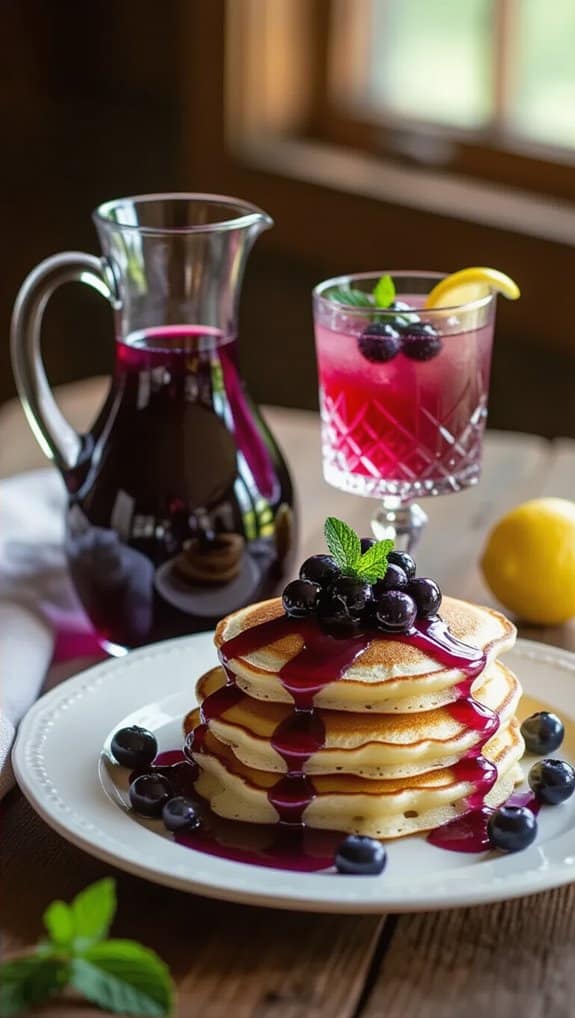
When you’re looking to capture the intense, sweet-tart flavor of huckleberries year-round, making syrup is one of the best preservation methods available.
You’ll need just four ingredients: fresh huckleberries, sugar, water, and lemon juice. Simmer two cups of berries with one cup each of sugar and water for 15 minutes, then strain through cheesecloth.
This versatile syrup transforms ordinary huckleberry cocktail recipes into extraordinary drinks. Mix it with vodka and lime for a signature martini, or add sparkling water for a refreshing mocktail.
You can also drizzle it into lemonade or iced tea.
For huckleberry dessert toppings, your syrup works perfectly over pancakes, waffles, and French toast. It’s equally delicious swirled into yogurt, poured over vanilla ice cream, or used as a cheesecake glaze.
Store your finished syrup in sterilized jars in the refrigerator for up to three months, ensuring you’ve got huckleberry flavor whenever you need it.
Savory Huckleberry Sauces for Meat and Game
You’ll discover that huckleberries create exceptional sauces for wild game, especially when paired with venison’s rich, earthy flavors.
To prepare these savory sauces, you’ll typically reduce fresh or frozen huckleberries with red wine, shallots, and herbs until they form a glossy glaze.
The berries’ natural tartness cuts through gamey flavors while their subtle sweetness complements the meat’s robust character.
Venison Pairing Techniques
While huckleberries shine in desserts, their bold tartness creates exceptional sauces for venison and other game meats.
You’ll find that venison marinades featuring huckleberries tenderize the meat while adding complex flavor layers. Mix crushed berries with red wine, garlic, and rosemary for an overnight marinade that penetrates deep into the meat.

For a stunning huckleberry glaze, reduce fresh berries with balsamic vinegar and honey until thick. Brush it onto grilled venison steaks during the final minutes of cooking. The sauce’s acidity cuts through the gamey richness perfectly.
Try pairing huckleberry-sauced venison with earthy sides like roasted root vegetables or wild mushrooms.
You can also incorporate juniper berries or thyme into your huckleberry sauces to enhance the wild game’s natural flavors.
Sauce Preparation Methods
Creating the perfect huckleberry sauce requires mastering temperature control and timing to preserve the berries’ vibrant flavor.
You’ll want to simmer gently, never boiling, to maintain the fruit’s integrity.
Here’s your essential preparation checklist:
- Start your huckleberry reduction at 180°F for optimal consistency
- Balance acidity with red wine vinegar or balsamic
- Add aromatics like shallots, thyme, or juniper berries
- Finish with butter for silky texture
You’ll discover endless sauce flavor combinations by experimenting with port wine, fresh herbs, and warming spices.
Don’t oversweeten—let the berries’ natural tartness complement your meat’s richness.
Strain for elegance or keep chunky for rustic appeal.
Huckleberry Ice Cream and Frozen Desserts
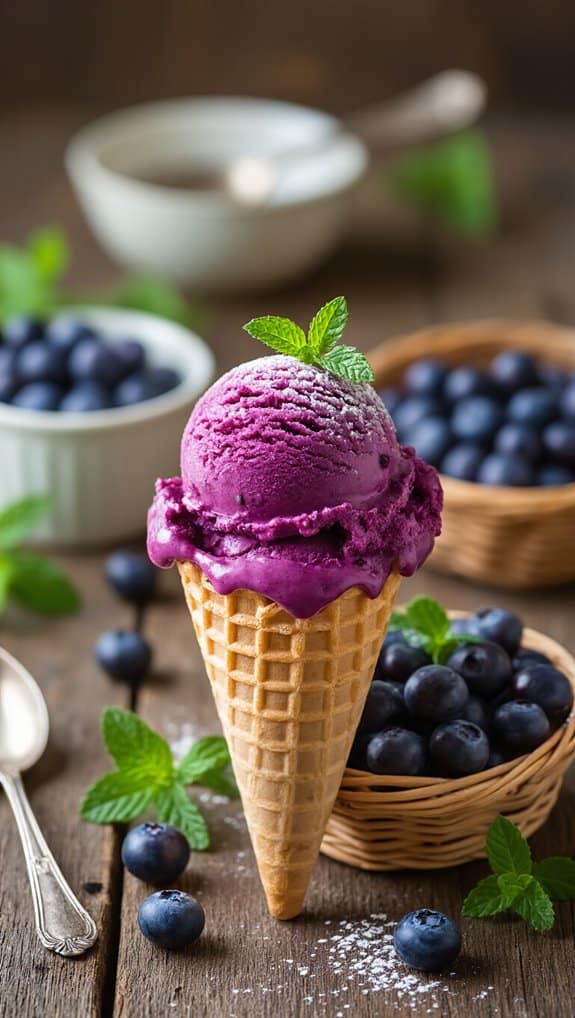
When summer temperatures soar and fresh huckleberries fill your basket, there’s no better way to preserve their intense flavor than in frozen desserts.
You’ll discover that huckleberries create exceptionally creamy ice cream with their natural pectin content. Start with a basic vanilla custard base and fold in fresh berries during the last few minutes of churning.
For the best huckleberry flavor combinations, try pairing them with lemon zest, lavender, or white chocolate. You can also make quick sorbets by blending berries with simple syrup and a splash of vodka to prevent rock-hard freezing.
Don’t forget popsicles – blend huckleberries with yogurt and honey for a healthy treat.
Transform store-bought vanilla into a gourmet dessert with homemade huckleberry ice cream toppings. Simply simmer berries with sugar until they burst, creating a vibrant purple sauce.
You’ll find these frozen treats capture summer’s essence perfectly year-round.
Huckleberry Scones and Tea Time Pastries
The afternoon tea table transforms into something extraordinary with huckleberry-studded pastries gracing your tiered stands. You’ll discover these purple gems elevate traditional British teatime treats with their distinctive sweet-tart flavor profile.
Your huckleberry scone variations offer endless possibilities:
- Classic Buttermilk Scones – Fold fresh berries into cold dough for bursts of flavor.
- Lemon-Glazed Triangles – Drizzle citrus icing over warm, berry-filled wedges.
- Cream Cheese Swirls – Create marbled patterns with sweetened cream cheese.
- Whole Wheat Options – Add nutty depth while maintaining tender crumb.
You’ll find Earl Grey and English Breakfast make ideal tea pairings, their robust profiles complementing huckleberries’ intensity. For lighter options, try jasmine or white tea to let fruit flavors shine.
Don’t overbake these delicate pastries—they’re ready when golden-edged and barely firm. Serve warm with clotted cream and preserve for an authentic experience that’ll impress your guests.
Preserving and Freezing Fresh Huckleberries
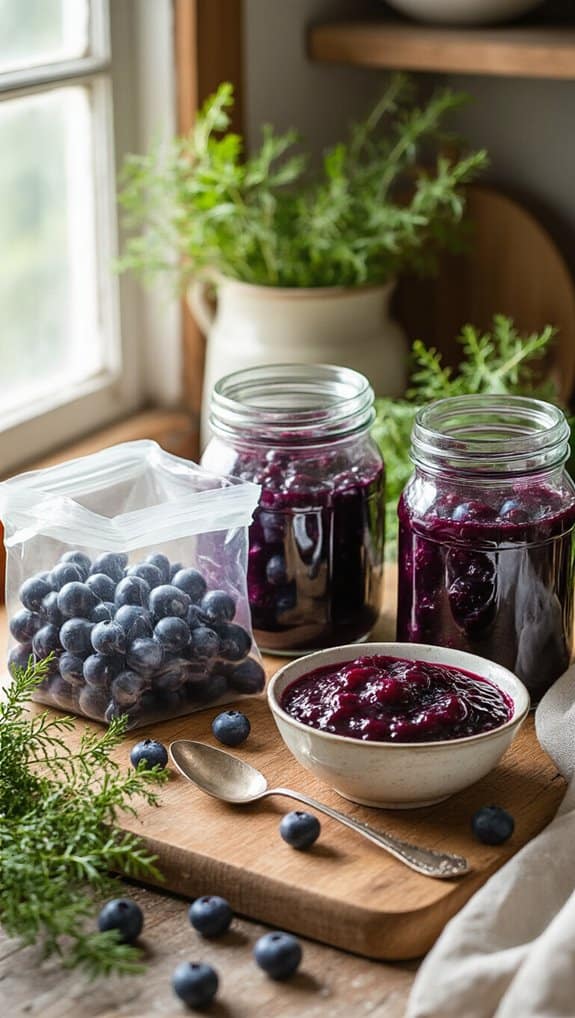
Since huckleberries have such a short season, you’ll want to preserve their peak flavor for year-round enjoyment. When huckleberry foraging, you’ll discover different huckleberry varieties freeze at varying rates, but all maintain their quality beautifully.

To freeze fresh huckleberries, don’t wash them until you’re ready to use them. Spread unwashed berries on a baking sheet in a single layer and freeze for two hours. Once frozen, transfer them to freezer bags, removing excess air. They’ll keep for up to one year.
For preserving, you can make jam, syrup, or fruit leather. Quick-pickle huckleberries in a vinegar brine for savory applications.
Dehydrating works well too—use your oven’s lowest setting or a food dehydrator until berries are leathery but pliable.
Always label containers with the date and variety. Vacuum-sealing extends freezer life even further.
These preservation methods ensure you’ll enjoy your foraged treasures long after the season ends.
Huckleberry Smoothies and Fresh Beverages
After you’ve mastered preserving techniques, you’ll want to explore the vibrant world of huckleberry beverages. Fresh huckleberries transform ordinary drinks into antioxidant-rich treats that’ll energize your mornings and refresh your afternoons.
Try these smoothie variations to maximize your huckleberry harvest:
- Classic Huckleberry-Banana: Blend 1 cup huckleberries, 1 banana, ½ cup yogurt, and ice.
- Green Power Smoothie: Combine huckleberries with spinach, apple, and coconut water.
- Protein-Packed Berry: Mix huckleberries, almond butter, protein powder, and oat milk.
- Tropical Fusion: Blend huckleberries with mango, pineapple, and lime juice.
For optimal beverage pairings, serve huckleberry smoothies alongside whole-grain toast or granola.
You can also create refreshing agua frescas by muddling fresh berries with mint and sparkling water. Freeze leftover smoothies in popsicle molds for healthy summer treats.
Remember to strain seeds if you prefer smoother textures.
Frequently Asked Questions
What’s the Difference Between Huckleberries and Blueberries?
You’ll notice huckleberries have larger, harder seeds and aren’t commercially grown through huckleberry cultivation like blueberries are.
They’re exclusively wild-harvested with a more intense, tart flavor.
While both offer similar huckleberry health benefits including antioxidants and vitamins, huckleberries contain slightly different compounds.
You can’t buy fresh huckleberries in most stores since they resist domestication.
They’re also typically darker with thicker skin than their cultivated blueberry cousins.
Where Can I Buy Fresh Huckleberries if They Don’t Grow Locally?
You’ll find fresh huckleberries through specialty online markets that ship nationwide during peak season (July through September).
Several huckleberry farms in Montana, Idaho, and the Pacific Northwest offer direct shipping.
Check farmers’ market websites, gourmet food retailers, and regional berry farms’ online stores.
You can also contact local specialty grocers who might order them for you.
Expect higher prices due to limited availability and shipping costs.
Can I Substitute Blueberries for Huckleberries in Recipes?
You can substitute blueberries for huckleberries when substituting fruits in most recipes.
They’re similar in size and moisture content, though blueberries are sweeter and less tart.
You’ll need to make recipe adjustments by reducing sugar slightly and adding a splash of lemon juice to mimic huckleberries’ natural tartness.
The texture won’t be identical since huckleberries have larger seeds, but you’ll still achieve delicious results in pies, muffins, and jams.
When Is Huckleberry Season in Different Regions?
You’ll find huckleberry picking season varies by region. In the Pacific Northwest, you can harvest from July through September.
Montana’s season runs late July to early August. In the Rocky Mountains, you’ll pick from mid-August through September.
Alaska’s berries ripen June through August. Plan your huckleberry picking trips accordingly, as these wild berries don’t last long.
Once harvested, you can make delicious huckleberry jams to enjoy year-round.
Are Huckleberries Safe for Dogs and Cats to Eat?
You’ll need to exercise caution with huckleberries around your pets.
While true huckleberries aren’t toxic to dogs and cats, they’re often confused with other berries that pose risks. Huckleberry toxicity concerns arise from misidentification.
Following pet dietary guidelines, you should introduce any new food gradually. Small amounts won’t harm most pets, but excessive consumption can cause stomach upset.
Always consult your veterinarian before sharing wild berries with your furry companions.
Conclusion
You’ve discovered the versatility of huckleberries through these delicious recipes. Whether you’re baking pies, making jam, or blending smoothies, you’ll find these wild berries add unique flavor to every dish. Don’t forget to preserve extras when they’re in season – you’ll thank yourself later. Now grab your basket, head to the berry patch or farmer’s market, and start creating these mouthwatering treats. Your family and friends will love the results of your huckleberry adventures.


Table of Contents




No Comments