
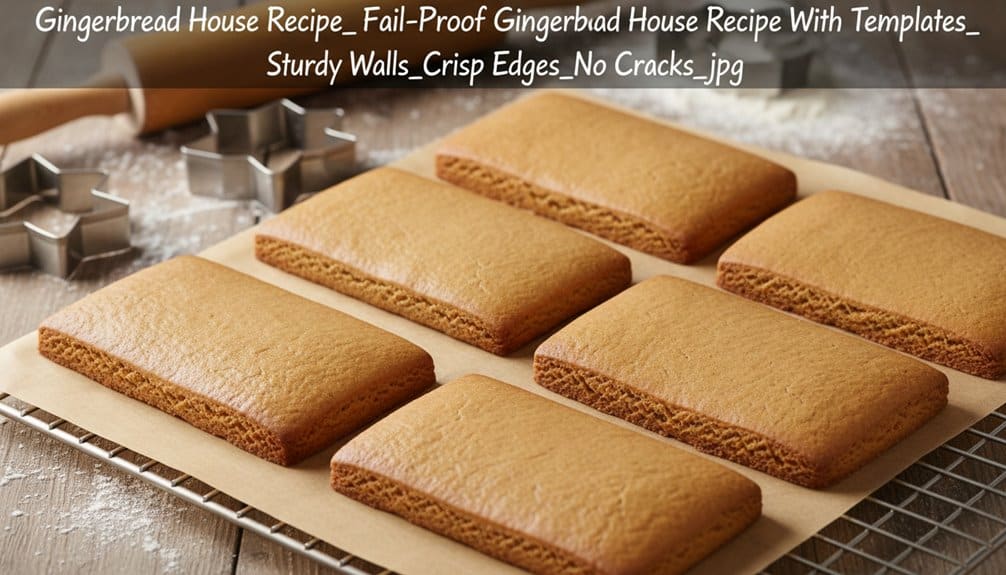
Fail Proof Gingerbread House Recipe With Templates: Sturdy Walls, Crisp Edges, No Cracks
You’ll create a fail-proof gingerbread house by using bread flour for stronger walls, molasses for binding power, and precise 1/4-inch rolling thickness. Cream butter and brown sugar, add wet ingredients, then mix in flour and spices before chilling the dough overnight. Cut with sharp templates, bake at 350°F until golden, and assemble using royal icing as structural adhesive while holding each piece firmly for 30 seconds. Master these fundamentals and discover the advanced techniques that guarantee professional-looking results.
Table of Contents
Key Takeaways
- Use bread flour instead of all-purpose flour for stronger, sturdier walls with higher protein content.
- Roll dough to precise 1/4-inch thickness using adjustable rolling pin guides and cut with sharp templates immediately.
- Bake at 350°F for 12-15 minutes until edges are golden brown, avoiding overbaking to prevent brittleness.
- Use royal icing as construction adhesive and add internal corner bracing with small gingerbread triangles.
- Work in cool, dry conditions and store away from humidity to maintain structural integrity.
Essential Ingredients and Tools for Structural Success
Before you begin constructing your gingerbread masterpiece, you’ll need to gather the right ingredients and tools that’ll ensure your edible architecture stands tall throughout the holiday season.
For sturdy walls, use bread flour instead of all-purpose flour.
Its higher protein content creates stronger dough.
You’ll need molasses for binding power, butter for workability, and brown sugar for structure.
Essential spices include ginger, cinnamon, and cloves.
Your tool arsenal should include a heavy-duty stand mixer, rolling pin with adjustable guides, sharp knife for precise cuts, and a large baking sheet.
Parchment paper prevents sticking, while a ruler ensures accurate measurements.
Storage Conditions matter significantly.

Keep your assembled house in a cool, dry place away from heat sources.
Humidity weakens gingerbread walls quickly.
Tool Maintenance extends your equipment’s life.
Clean mixing bowls thoroughly after each use, and store rolling pins properly to prevent warping.
Sharp knives make cleaner cuts, reducing structural stress points.
Step-by-Step Dough Preparation and Rolling Techniques
With your ingredients measured and tools ready, you’ll start by creaming the butter and brown sugar in your stand mixer until the mixture becomes light and fluffy—about three minutes on medium speed.
Add eggs and molasses, mixing until combined.
In a separate bowl, whisk together flour, baking soda, salt, ginger, cinnamon, and cloves.
Gradually add the dry ingredients to the wet mixture on low speed until a cohesive dough forms.
Don’t overmix—this affects dough elasticity and creates tough walls.

Divide the dough into two portions, wrap in plastic, and flatten into discs.
Chill periods are crucial for success. Refrigerate for at least two hours or overnight.
When ready to roll, work with one disc at a time, keeping the other chilled.
Roll between parchment sheets to ¼-inch thickness, maintaining even pressure.
The properly chilled dough won’t stick and will hold crisp edges when baked.
Cutting, Baking, and Template Guidelines
Once your dough reaches the proper consistency, you’ll need precise templates to ensure structural integrity.
Download printable patterns or create your own using cardboard.
Pattern scaling lets you adjust house size—just maintain proportional relationships between all pieces.
Roll dough directly onto parchment-lined baking sheets to prevent breakage during transfer.
Place templates on dough and cut around them with a sharp knife or pizza cutter.
Remove excess dough immediately, leaving clean edges.
Create cutting jigs from sturdy cardboard for repeated use.
These guides ensure consistent wall heights and perfect angles every time.
Bake at 350°F for 12-15 minutes until edges turn golden brown.
Don’t overbake—pieces become brittle and crack easily.
Let cookies cool completely on baking sheets before removing.
Trim any uneven edges while still slightly warm for cleaner lines.
Store baked pieces flat between parchment layers until assembly day.
Assembly Methods and Decorating Tips for Long-Lasting Results
After your gingerbread pieces have cooled completely, you’ll need royal icing as your construction adhesive—it dries hard and creates strong joints that’ll hold your house together for weeks.
Start by assembling walls one at a time, holding each piece firmly for 30 seconds before adding the next.
Apply thick icing beads along all edges for maximum strength.
Internal bracing with small gingerbread triangles at corner joints prevents wobbling and adds structural integrity.
For decorating, work in sections and let each area dry before moving on.
This prevents smudging and maintains crisp details.
- Use a pastry bag with multiple tips for varied icing textures
- Apply candies while icing is wet for secure attachment
- Create snow effects with sifted powdered sugar
- Add LED tea lights inside for magical illumination
- Work in cool, dry conditions to prevent icing from becoming sticky
Once complete, display protection involves placing your house away from direct sunlight and humidity to preserve colors and prevent melting.
Frequently Asked Questions
How Long Does a Completed Gingerbread House Stay Fresh and Edible?
Your gingerbread house’s shelf longevity typically lasts 2-3 weeks when stored properly at room temperature.
You’ll maintain freshness longer if you keep it in a cool, dry place away from humidity. Watch for signs spoilage like soft walls, mold growth, or stale odors.
You can extend edibility by wrapping it loosely in plastic wrap, but don’t seal it completely since trapped moisture accelerates deterioration and compromises structural integrity.
Can I Make the Gingerbread Dough Weeks Ahead and Freeze It?
Yes, you can freeze gingerbread dough for up to three months with proper Freezer Duration planning.
Wrap the dough tightly in plastic wrap, then place it in freezer bags.
For Thawing Methods, transfer the frozen dough to your refrigerator overnight before use.
Let it sit at room temperature for 15-20 minutes until it’s pliable enough to roll out easily.
What’s the Best Way to Store Leftover Royal Icing for Future Use?
You’ll want to store leftover royal icing in airtight containers in your refrigerator for up to one week.
Press plastic wrap directly onto the icing’s surface before sealing to prevent crusting.
For rehydration tips, add small amounts of water or meringue powder mixed with water while beating until you reach your desired consistency.
Don’t add too much liquid at once, or you’ll thin it excessively.
How Do I Safely Transport a Finished Gingerbread House Without Breaking It?
You’ll need secure baseplates and proper shock absorption to transport your gingerbread house safely.
Place it on a sturdy cardboard base, then set that inside a large box with towels or bubble wrap for cushioning.
Don’t lift by the house itself—always carry the base.
Drive slowly, avoid sudden stops, and keep the box level.
Consider making structural repairs on-site if needed.
Can I Use Gluten-Free Flour as a Substitute in This Recipe?
Yes, you can substitute gluten-free flour, but you’ll need to adjust your approach.
Use a high-quality gluten-free flour blend that contains xanthan gum or other binding agents.
Since gluten-free dough behaves differently, you might need to add extra binding agents like an additional egg or increase chilling time.
The walls may be slightly more fragile, so handle carefully during assembly.
Conclusion
You’ve mastered the art of creating a structurally sound gingerbread house that won’t collapse or crack. Your careful attention to ingredient ratios, proper dough handling, and precise baking techniques has paid off. Now you can confidently build stunning edible architecture year after year. Remember to store your finished house in a cool, dry place, and don’t forget to take photos before it’s too tempting to eat!


No Comments