
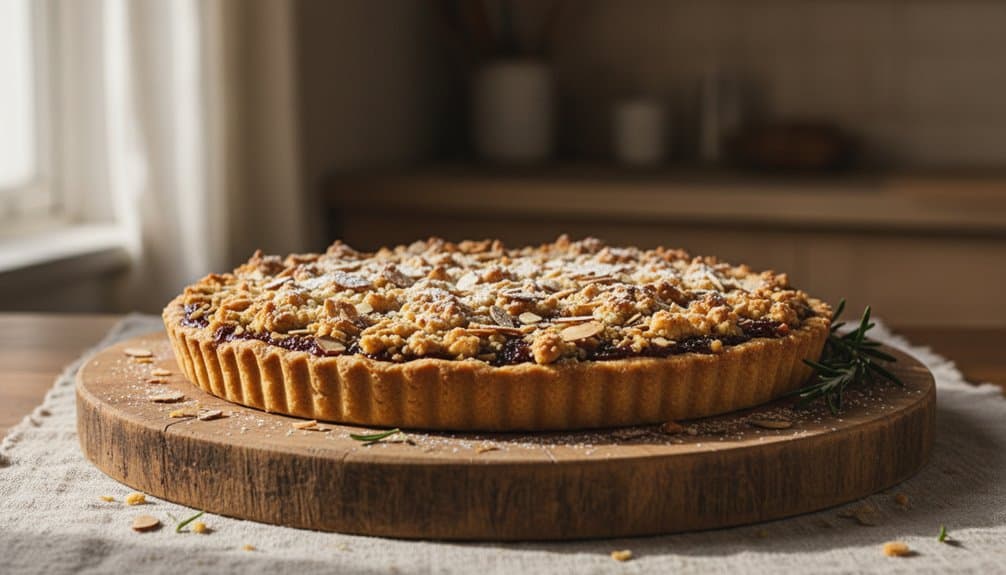
Mince Tart Classic Mince Tart With Almond Crumble Top
You’ll create an extraordinary holiday dessert by combining traditional mincemeat filling with a golden almond crumble topping in buttery pastry. Start with quality dried fruits, warming spices, and aged spirits for authentic flavor that’s developed over 700 years of British culinary tradition. The crumble adds delightful texture contrast using flour, cold butter, ground almonds, and sugar rubbed to breadcrumb consistency. This modern twist on classic mince tarts will elevate your Christmas baking beyond ordinary expectations.
Table of Contents
Key Takeaways
- Mince tarts originated in 13th-century England, evolving from meat-based recipes to modern fruit and spice combinations.
- Essential mincemeat includes dried fruits, warming spices like cinnamon and nutmeg, plus brandy or rum for richness.
- Create flaky pastry using cold butter rubbed into flour, adding ice water gradually to prevent tough texture.
- Prepare homemade mincemeat 3-4 days ahead, allowing flavors to develop through daily stirring and refrigeration.
- Make almond crumble topping by combining flour, cold butter, ground almonds, and sugar into breadcrumb-like texture.
The History and Heritage of Mince Tarts
While many assume mince tarts are simply festive treats, they’re actually rooted in medieval culinary traditions that stretch back over 700 years. You’ll find the origins of mincemeat trace to 13th-century England, where cooks combined meat, fruits, and spices as preservation methods during harsh winters.
Originally, you’d encounter recipes featuring actual minced meat – typically beef or mutton – mixed with suet, dried fruits, and exotic spices like cinnamon and nutmeg. These ingredients weren’t just flavorful; they were practical necessities for food storage before refrigeration existed.
During the Victorian era, traditional recipes evolved significantly. You’ll notice meat gradually disappeared from most versions, replaced by increased amounts of dried fruits, nuts, and alcohol. This transformation reflected changing tastes and improved food preservation methods.
Today’s mince tarts maintain their ceremonial importance while adapting to modern palates. You’re experiencing centuries of culinary evolution when you bite into these beloved pastries during holiday celebrations.
Essential Ingredients for Perfect Mincemeat Filling
You’ll need to master three key components to create an authentic mincemeat filling that captures centuries of tradition.
The foundation starts with carefully selected dried fruits and warming spices that define the classic flavor profile. Don’t overlook the crucial roles of alcohol and fat, as they’ll bind your ingredients while adding richness and preserving your mincemeat’s texture.
Traditional Fruit and Spices
Several key ingredients transform ordinary fruit into the rich, aromatic filling that defines an authentic mince tart. You’ll need raisins, currants, and sultanas as your base dried fruits, providing natural sweetness and chewy texture. Fresh apples add moisture and tartness to balance the sweetness.
Your spice blend creates the distinctive flavor profiles that make mincemeat irresistible. Use cinnamon, nutmeg, allspice, and cloves for warmth. Add ground ginger for subtle heat and cardamom for floral notes. These seasonal ingredients work together harmoniously.

Don’t forget candied orange and lemon peel for citrusy brightness. A splash of brandy or rum enhances depth and helps preserve the mixture. Finally, include chopped almonds or mixed nuts for crunch and richness that complements your almond crumble topping perfectly.
Alcohol and Fat Components
Beyond these aromatic elements, alcohol and fat form the backbone of exceptional mincemeat, binding flavors while creating the rich, moist texture that makes each bite memorable. You’ll want to include brandy or dark rum as your alcohol component, adding depth and preserving the mixture naturally. The brandy content should be generous but balanced – roughly two tablespoons per cup of fruit mixture works perfectly.
For fat, you can’t go wrong with butter or suet. Butter creates a silky consistency, while traditional suet provides authentic richness. Both options contribute to the high calorie filling that makes mincemeat so indulgent and satisfying during the holidays.
These components work together, creating a luxurious filling that improves with time as flavors meld and intensify.
Making the Buttery Pastry Base
You’ll want to start with plain flour as your foundation, since it creates the perfect tender texture without making your pastry tough.
Next, you’ll rub cold butter into the flour until it resembles breadcrumbs, keeping everything chilled so the fat doesn’t melt.
Finally, you’ll add your liquid bit by bit—whether it’s beaten egg or cold water—until the dough just comes together without overworking it.
Choosing the Right Flour
When crafting the perfect pastry base for your mince tart, flour selection makes all the difference between a tender, flaky crust and a tough, dense disappointment. You’ll want plain flour with lower gluten content for optimal results. The protein composition directly affects your pastry’s texture – choose flour containing 8-10% protein rather than bread flour’s higher levels.
Lower protein means less gluten development when you mix the dough, preventing that chewy texture you’re trying to avoid. Look for pastry flour or cake flour if available, though standard plain flour works perfectly well. You’re aiming for a delicate crumb that’ll complement your sweet mincemeat filling without overwhelming it. Don’t overwork the dough once you’ve added liquid, as this activates gluten unnecessarily.
Incorporating Cold Butter
Cold butter serves as the cornerstone of exceptional pastry, creating those coveted flaky layers that distinguish homemade mince tarts from store-bought alternatives. You’ll need to work quickly during cold butter incorporation to prevent melting, which compromises the perfect dough texture you’re seeking.

Cut your chilled butter into small cubes and add them to your flour mixture. Using your fingertips or a pastry cutter, work the butter until the mixture resembles coarse breadcrumbs with some pea-sized pieces remaining.
- Keep butter pieces visible throughout the mixing process
- Work in short bursts to maintain cold temperature
- Stop mixing once butter reaches breadcrumb consistency
These butter pockets will create steam during baking, resulting in the flaky, tender pastry base that perfectly complements your mince filling.
Adding Liquid Gradually
Water temperature plays a crucial role in bringing your pastry together without overworking the dough. Use ice-cold water, adding just one tablespoon at a time while gradually mixing with a fork. You’ll prevent the butter from melting and maintain those essential flaky layers.
Watch carefully as you’re incorporating each addition – the mixture should barely hold together when pressed. Don’t dump all the liquid at once, as this creates a sticky mess that’s difficult to handle. Stop adding water the moment the dough forms loose clumps. You might need 3-4 tablespoons total, but every flour behaves differently.
The goal is achieving a shaggy texture that’ll come together when gently pressed, not a wet, sticky mass.
Preparing Your Homemade Mincemeat
Most traditional mincemeat recipes require several days of preparation, but you’ll find the extra time investment creates deeper, more complex flavors that define an authentic classic mince tart.
Start by sourcing quality ingredients like dried fruits, fresh suet, and aged spirits. Combine these with spices, citrus zest, and brown sugar in a large mixing bowl. The mixture needs time to meld and develop its characteristic rich taste.
Your preparation timeline should include:
- Day 1-2: Mix all ingredients and allow flavors to marry in the refrigerator
- Day 3-4: Stir daily and taste-test for balanced sweetness and spice levels
- Day 5: Final seasoning adjustments before use
When preserving homemade mincemeat, store it in sterilized jars with tight-fitting lids. Properly prepared mincemeat keeps for months in cool, dark conditions. You can also freeze portions for up to six months, ensuring you’ll have premium filling ready whenever you’re craving this beloved dessert.
Creating the Golden Almond Crumble Topping
With your rich mincemeat ready, you’ll want to crown your tart with a topping that complements those deep, spiced flavors. This golden almond crumble transforms your traditional mince tart into something extraordinary.
Start by combining 100g plain flour with 75g cold butter, rubbing between your fingertips until the mixture resembles breadcrumbs. Add 50g ground almonds and 40g caster sugar, mixing gently.
For crunchy texture variations, incorporate 25g flaked almonds – they’ll create delightful contrasts against the smooth mincemeat below.
Don’t overwork the mixture; you want distinct pieces that’ll bake into golden clusters. Sprinkle the crumble evenly over your mincemeat filling, ensuring even baking distribution across the entire surface. Press lightly to help the topping adhere without compacting it completely.
The key lies in achieving that perfect balance – enough coverage to protect the mincemeat while allowing the crumble to develop its characteristic golden-brown color during baking.
Assembly and Baking Techniques
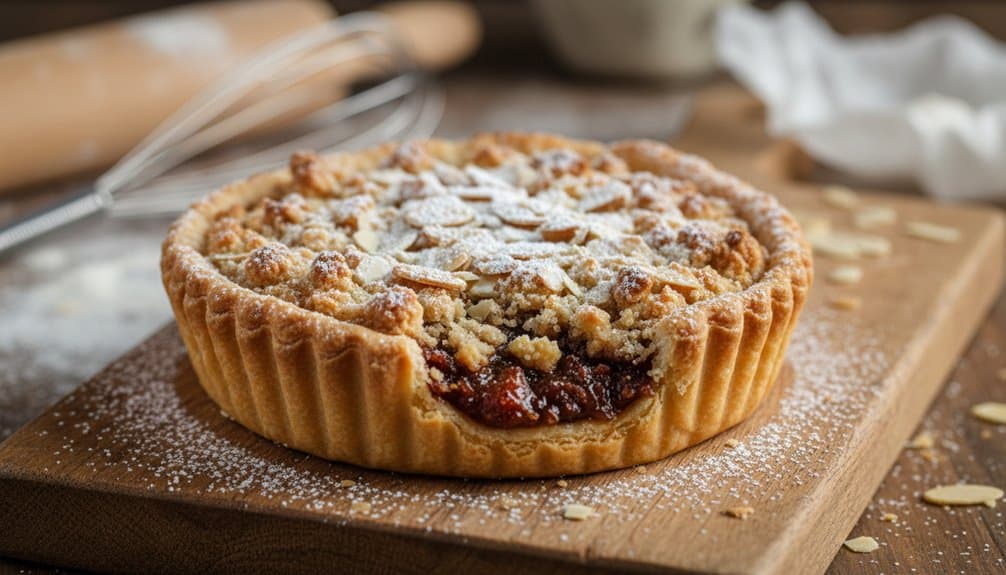
Once your crumble topping‘s perfectly positioned, you’ll need to master the baking process that transforms these components into a beautifully unified tart. Proper rolling techniques ensure your pastry base achieves uniform thickness—aim for 3mm throughout. Roll from center outward, rotating the dough quarter-turns to maintain shape.
Blind baking forms the foundation of success. Line your pastry case with parchment paper, fill with baking beans, and bake at 200°C for 15 minutes. Remove weights and parchment, then continue for 5 minutes until lightly golden.
Critical baking steps include:
- Temperature control: Reduce to 180°C after adding mincemeat and crumble
- Timing precision: Bake for 25-30 minutes until crumble turns golden brown
- Visual cues: Watch for bubbling mincemeat edges and firm, crisp topping
Cool completely before slicing to allow filling to set properly and prevent crumble displacement.
Serving Suggestions and Storage Tips
Your perfectly baked mince tart deserves thoughtful presentation to maximize its festive appeal. Serve at room temperature with dollops of brandy butter, whipped cream, or vanilla ice cream. Dust with powdered sugar for an elegant finish, or drizzle warm custard alongside each slice.
Store your tart covered at room temperature for up to three days. For longer refrigerator shelf life, wrap tightly and keep for one week. The almond crumble topping may soften slightly when refrigerated, but you can restore crispness by warming slices in a 300°F oven for five minutes.
Freezer storage options include wrapping the whole tart in plastic wrap and foil for up to three months, or freezing individual slices in airtight containers. Thaw overnight in the refrigerator before serving. Frozen slices can be reheated directly from frozen—just add extra warming time. This makes mince tart perfect for holiday meal planning.
Frequently Asked Questions
Can I Make Mince Tarts Gluten-Free Without Affecting the Taste?
Yes, you can make delicious gluten-free mince tarts without sacrificing taste. Use high-quality gluten free flour blends that contain xanthan gum for best results. If your blend doesn’t include binders, add alternative binders like xanthan gum or guar gum. You’ll need slightly more liquid since gluten-free flours absorb differently.
The almond crumble topping works perfectly with gluten-free pastry, maintaining authentic flavors.
How Far in Advance Can I Prepare Mince Tarts for Christmas?
You can prepare mince tarts up to three months ahead for Christmas. Make the pastry dough and filling separately, then assemble and bake the tarts completely. Once cooled, wrap them individually and use freezer storage to maintain freshness.
The dough prep time remains the same whether you’re making them fresh or ahead. Thaw at room temperature before serving, or warm gently in the oven.
What’s the Best Way to Reheat Leftover Mince Tarts?
You’ll get best results when you reheat in oven at 350°F for 8-10 minutes until the pastry’s crisp and filling’s warmed through.
If you’re short on time, you can reheat in microwave for 20-30 seconds, though this’ll soften the pastry. Cover with damp paper towel when microwaving to prevent drying out.
Let cool briefly before serving.
Can I Freeze Unbaked Mince Tarts and Bake Them Later?
Yes, you can freeze unbaked mince tarts for later baking.
When freezing unbaked tarts, wrap them individually in plastic wrap or place them in airtight containers.
For storing prepared tarts in the freezer, they’ll keep well for up to three months. You can bake them straight from frozen—just add an extra 10-15 minutes to the original baking time for best results.
Are There Any Good Substitutes for Almonds in the Crumble Topping?
You can easily substitute almonds with other nuts for delicious results.
Hazelnut crumble creates a rich, buttery flavor that pairs beautifully with mincemeat’s spiced sweetness. Cashew nut crumble offers a milder, creamy taste that won’t overpower the filling. You’ll want to grind either substitute to the same consistency as you’d use for almonds. Both nuts work perfectly in the same proportions as the original recipe calls for.
Conclusion
You’ve mastered the art of creating this festive classic that’ll become your holiday centerpiece. Your buttery pastry cradles rich, spiced mincemeat while the golden almond crumble adds irresistible texture. Don’t forget to let it cool completely before slicing – this patience ensures clean cuts and prevents the filling from spilling. Store covered at room temperature for up to five days, or freeze individual portions for future celebrations. You’ve created something truly special.


No Comments