
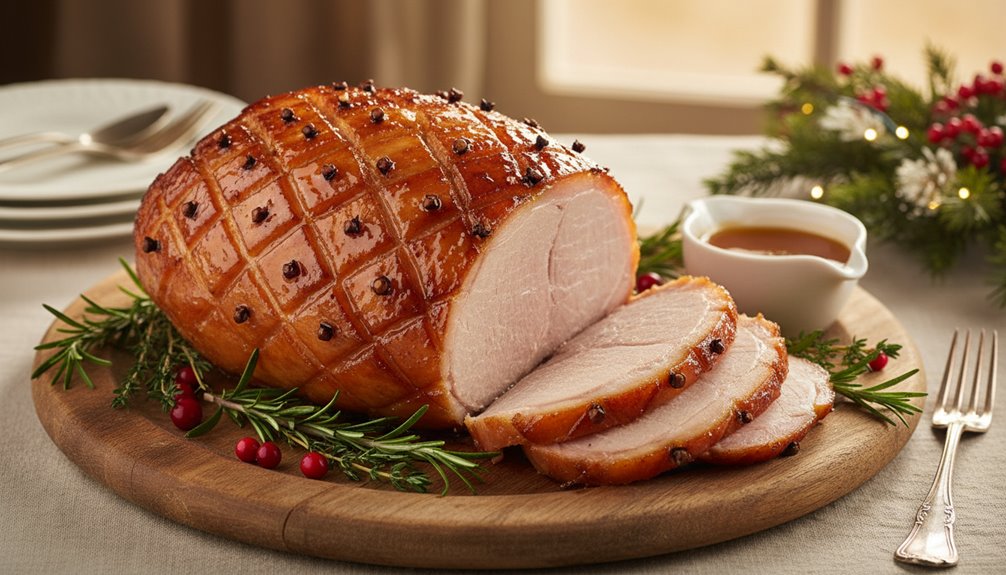
Christmas Gammon Recipe With Sticky Honey-Mustard Glaze
You’ll create a stunning Christmas centerpiece by soaking a 2-3kg gammon joint for 2-4 hours, then scoring the fat in diamond patterns. Roast at 325°F for 20 minutes per pound, covered with foil. Mix honey, Dijon mustard, brown sugar, and apple cider vinegar for your glaze. Remove foil during the final 30 minutes, brushing with glaze every 10 minutes until golden and caramelized. Let rest 15 minutes before slicing. This guide reveals every secret to achieving that perfect sticky finish.
Key Takeaways
- Soak a 2-3 kg gammon joint in cold water for 2-4 hours, then score the fat in diamond patterns before cooking.
- Create the glaze by whisking honey, Dijon mustard, brown sugar, and apple cider vinegar until smooth and glossy.
- Roast covered at 325°F for 20 minutes per pound until internal temperature reaches 145°F for food safety.
- Remove foil during final 30 minutes and brush with honey-mustard glaze every 10 minutes for caramelization.
- Rest the glazed gammon for 15 minutes before slicing against the grain for optimal texture and presentation.
Ingredients You’ll Need
You’ll need a quality gammon joint as your foundation – look for one weighing between 2-3kg that’s been properly cured. For the glaze, gather 4 tablespoons honey, 3 tablespoons Dijon mustard, 2 tablespoons brown sugar, and 1 tablespoon apple cider vinegar. You’ll also need whole cloves for studding and bay leaves for aromatic depth.
When sourcing organic ingredients, prioritize free-range gammon from trusted butchers who can verify the meat’s origin. Organic honey and stone-ground mustard will elevate your glaze’s flavor profile significantly.
Selecting appropriate cookware is crucial for success. You’ll require a large roasting tin that accommodates your gammon comfortably, plus a sharp knife for scoring. A meat thermometer ensures perfect doneness, while a pastry brush applies the glaze evenly. Heavy-duty foil protects the joint during initial cooking phases. Having these essentials ready streamlines your preparation process.
Preparing the Gammon Joint
You’ll want to start with a high-quality gammon joint that’s well-marbled and fresh from your butcher or grocery store. Soak the joint in cold water for several hours to remove excess salt, then score the fat in a diamond pattern about quarter-inch deep.
Pat it dry and you’re ready to begin the initial cooking process that’ll transform this raw joint into your Christmas centerpiece.
Choosing Quality Gammon Joint
Several key factors determine whether your Christmas gammon will be tender, flavorful, and memorable. Start by selecting from butcher recommendations, as they’ll guide you toward the freshest cuts with proper marbling. When evaluating gammon weight options, calculate approximately 8-10 ounces per person, plus extra for leftovers.
Look for joints with pale pink meat and minimal dark spots. The rind should feel firm and dry, not slimy or sticky. Avoid pre-packaged gammon that’s been sitting too long – fresh is always best. Choose between smoked or unsmoked varieties based on your flavor preference.
Bone-in joints typically offer more flavor, while boneless options are easier to carve. Quality gammon will have even fat distribution and minimal excess water when unwrapped.
Soaking and Scoring Technique
Once you’ve secured your quality gammon joint, proper preparation becomes your next priority. Start by soaking your gammon in cold water for several hours, with soaking duration depending on saltiness—typically 2-4 hours for most joints. This removes excess salt and ensures balanced flavor.
After soaking, pat the joint dry and focus on scoring. Use a sharp knife to create diamond scoring patterns across the fat surface, cutting about 5mm deep. Space your cuts roughly 2cm apart, creating an even crosshatch design. These scoring patterns aren’t just decorative—they allow fat to render properly and help your glaze penetrate the meat.
Don’t cut too deeply into the meat itself. You’re targeting only the fat layer, which’ll crisp beautifully during cooking.
Initial Cooking Preparation
With your gammon properly soaked and scored, it’s time to begin the cooking process. After completing your pre cooking soak, you’ll need to focus on essential pre cooking preparation steps that ensure perfect results.
Start by removing the gammon from its soaking liquid and patting it completely dry with paper towels. This removes excess salt and moisture that could interfere with the cooking process.
Follow these critical preparation steps:
- Position the joint – Place your gammon cut-side down in a large roasting tin
- Add aromatics – Include bay leaves, peppercorns, and onion quarters around the joint
- Pour liquid – Add enough water to cover the bottom third of the gammon
This foundation ensures even cooking and develops rich flavors throughout the meat.
Creating the Honey-Mustard Glaze
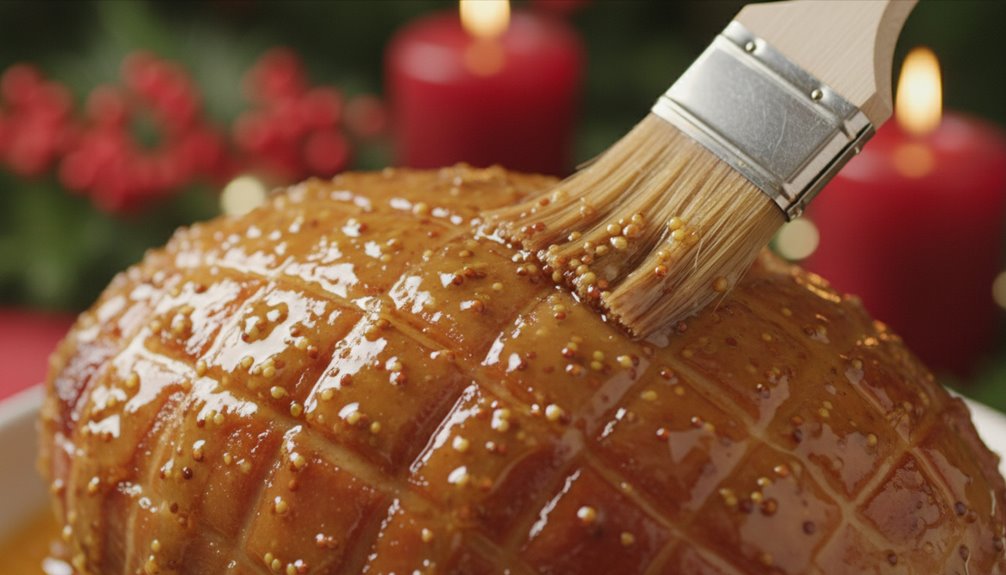
Creating an exceptional honey-mustard glaze starts with choosing high-quality honey and Dijon mustard that’ll complement your gammon’s rich flavor. You’ll need to balance the sweet and tangy elements by mixing the right proportions—typically two parts honey to one part mustard, with a splash of vinegar or citrus juice.
The key is whisking these ingredients until you achieve a smooth, glossy consistency that’ll coat the meat beautifully and caramelize during baking.
Selecting Quality Ingredients
How do you transform a simple gammon into a show-stopping Christmas centerpiece? You’ll start by selecting premium ingredients that’ll elevate your honey-mustard glaze from ordinary to extraordinary.
Consider these essential purchasing methods for optimal results:
- Source your honey locally – Visit farmers’ markets or specialty stores for raw, unprocessed varieties that offer complex flavor profiles
- Choose artisanal mustards – Seek whole-grain or Dijon varieties from delicatessens rather than standard supermarket options
- Select fresh herbs seasonally – Thyme and rosemary have peak seasonal availability during winter months
When shopping, you’ll find that quality ingredients make an enormous difference in your glaze’s depth and richness. Don’t compromise on honey quality – it’s your glaze’s foundation. Fresh herbs will provide aromatic complexity that dried alternatives simply can’t match.
Mixing Perfect Ratios
Now that you’ve gathered your premium ingredients, achieving the perfect honey-mustard balance requires precise measurements and careful technique. Start with a 2:1 ratio of honey to Dijon mustard as your foundation. Measuring proportions accurately ensures consistent results every time you prepare this glaze.
Add brown sugar gradually, using one tablespoon per three tablespoons of honey. This creates depth without overwhelming sweetness. Incorporate apple cider vinegar sparingly—just one teaspoon enhances the glaze’s complexity.
Your blending techniques matter significantly. Whisk ingredients in a small bowl until completely smooth, eliminating any lumps. The mixture should coat the back of a spoon when properly combined. Taste and adjust sweetness or tanginess as needed. This balanced glaze will caramelize beautifully on your gammon.
Achieving Ideal Consistency
The texture of your honey-mustard glaze determines how well it adheres to the gammon and caramelizes during cooking. You’ll want to achieve a consistency that’s thick enough to coat the back of a spoon but fluid enough to spread evenly across the meat’s surface.
When achieving perfect texture, follow these consistency markers:
- Ribbon stage – The glaze should fall in ribbons when lifted with a whisk
- Coating ability – It clings to your spoon without immediately dripping off
- Spreadable thickness – Smooth application without being too runny or paste-like
This balanced consistency ensures proper caramelization while maintaining juiciness in your gammon. If it’s too thick, add a tablespoon of warm water. Too thin? Simmer briefly to reduce excess moisture.
Cooking Instructions
Before you begin cooking, preheat your oven to 325°F (160°C) and remove the gammon from its packaging. Pat the surface dry with paper towels and score the fat in a diamond pattern, cutting about ¼ inch deep. Place the gammon in a roasting pan and cover tightly with foil.
The cooking time depends on your gammon’s weight – calculate 20 minutes per pound. For a 5-pound gammon, you’ll need approximately 1 hour and 40 minutes. Maintain the cooking temperature at 325°F throughout the process to ensure even heating without drying out the meat.
After the initial cooking period, remove the foil and brush the honey-mustard glaze generously over the surface. Return to the oven uncovered for 15-20 minutes until the glaze caramelizes and turns golden brown. Check that the internal temperature reaches 145°F before removing from the oven.
Glazing and Finishing Techniques
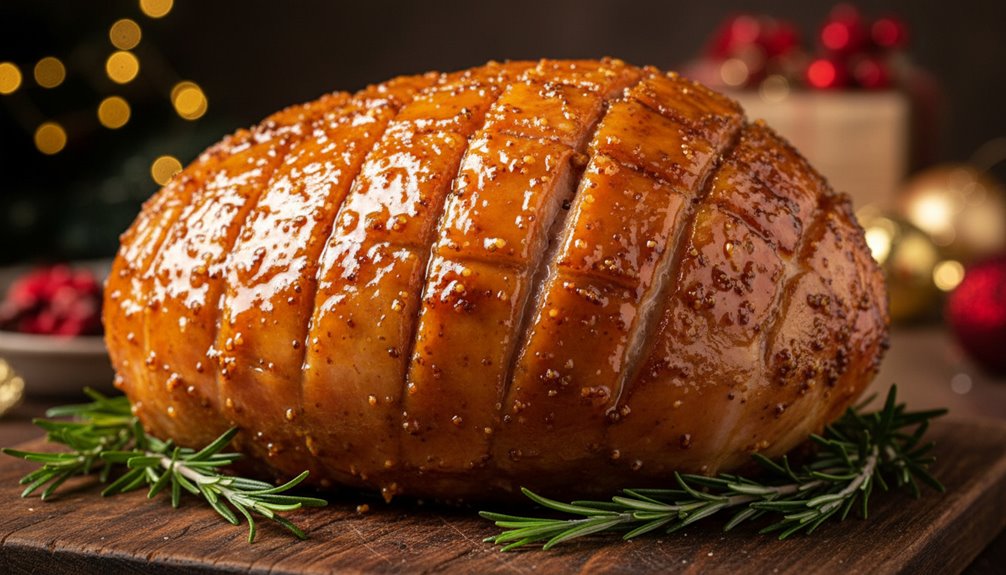
Perfect glazing transforms your Christmas gammon from ordinary to extraordinary, creating that coveted caramelized exterior that’s both visually stunning and packed with flavor. You’ll want to apply your honey-mustard glaze during the final 30 minutes of cooking, brushing it on every 10 minutes for maximum caramelization.
For flawless results, follow these essential glazing steps:
- Score the fat in diamond patterns before glazing to help the mixture penetrate and create beautiful presentation
- Brush generously with your glaze mixture, ensuring even coverage across the entire surface
- Monitor closely during final cooking to prevent burning while achieving that perfect golden finish
While some prefer marinating techniques overnight, glazing works best when applied fresh during cooking. Once finished, let your gammon rest for 15 minutes before implementing proper slicing methods—cut against the grain in thin, even slices for optimal tenderness and presentation.
Serving Suggestions
Your beautifully glazed Christmas gammon deserves accompaniments that complement its rich, sweet-savory profile. Serve at optimal serving temperature—warm but not piping hot—to let the glaze’s flavors shine through.
| Side Dishes | Vegetables | Sauces |
|---|---|---|
| Roasted potatoes | Honey-glazed carrots | Apple sauce |
| Yorkshire puddings | Brussels sprouts | Mustard cream |
| Stuffing | Roasted parsnips | Cumberland sauce |
For garnishing options, consider fresh herbs like rosemary sprigs or thyme. Arrange orange slices around the platter for color contrast and citrus brightness. Apple wedges and cranberries add festive appeal while echoing the glaze’s sweet notes.
Slice the gammon against the grain for tender portions. Present on a warmed serving platter with your chosen accompaniments arranged attractively around the meat. Don’t forget crusty bread rolls for those who want to create hearty sandwiches with the leftovers.
Storage and Leftover Ideas
Once you’ve enjoyed your Christmas feast, proper storage ensures you’ll savor that delicious gammon for days to come. Wrap leftover gammon tightly in plastic wrap or aluminum foil, then refrigerate for up to four days. For longer freezer storage, slice the meat and place portions in freezer bags for up to three months.
Your leftover gammon transforms into countless delicious meals:
- Breakfast Hash – Dice the gammon and sauté with potatoes, onions, and bell peppers for a hearty morning meal
- Sandwiches and Wraps – Slice thin for gourmet sandwiches with mustard, cheese, and fresh greens
- Pasta and Rice Dishes – Chop into chunks for carbonara, fried rice, or creamy risotto
Don’t discard the bone either – it’s perfect for flavoring split pea soup or hearty bean stews. These leftover meal ideas ensure nothing goes to waste while creating exciting new dinners.
Frequently Asked Questions
Can I Use a Ham Instead of Gammon for This Recipe?
Yes, you can use ham substitution for this recipe, but you’ll need to adjust your gammon preparation timeline significantly.
Since ham’s already cooked, you’ll only need to heat it through and apply the glaze during the last 30-45 minutes of cooking.
Reduce your total cooking time by about two-thirds compared to raw gammon, and focus primarily on glazing and caramelizing the surface.
How Far in Advance Can I Prepare the Gammon Before Cooking?
You can prepare your gammon up to 24 hours in advance before cooking. For advance preparation time, remove the packaging, score the skin if desired, and apply any dry rub seasonings. Store it in refrigeration storage by wrapping it tightly in plastic wrap or placing it in a covered dish.
Don’t apply the honey-mustard glaze until you’re ready to cook, as it’ll work best when fresh.
What’s the Difference Between Gammon and Ham?
Gammon and ham are essentially the same cut of meat from a pig’s hind leg, but they differ in their curing process and cooking state. You’ll find gammon is cured but uncooked when you buy it, requiring roasting or boiling at home.
Ham, however, has already been cooked during its curing process, so you can eat it straight from the package or heat it briefly.
Can I Cook This Recipe in a Slow Cooker Instead?
You can definitely adapt this recipe for slow cooker preparation. Place your gammon in the slow cooker with liquid, cook on low for 6-8 hours depending on size.
For slow cooker timing, allow about 1 hour per pound. Key slow cooker cooking tips: apply the honey-mustard glaze during the final 30 minutes, and finish under the broiler for that sticky, caramelized surface you’re craving.
Is It Safe to Eat Gammon That’s Slightly Pink Inside?
Yes, it’s safe to eat gammon that’s slightly pink inside. Unlike fresh pork, gammon’s already been cured, so the pink color doesn’t indicate undercooking.
However, you’ll still want to check the internal temperature reaches 145°F for optimal food safety considerations. The curing process changes the meat’s color naturally, making pink gammon perfectly safe to consume when properly heated through.
Conclusion
You’ve created a show-stopping centerpiece that’ll have everyone asking for seconds. The sticky honey-mustard glaze transforms ordinary gammon into something truly special. Don’t forget to save those delicious leftovers – they’re perfect for boxing day sandwiches or hearty soups. Your family will remember this festive feast for years to come. Next time, you’ll feel confident tackling this recipe with your own creative variations and seasonal touches.


Table of Contents






No Comments