
Christmas Filipino Food Lechon, Bibingka, and More
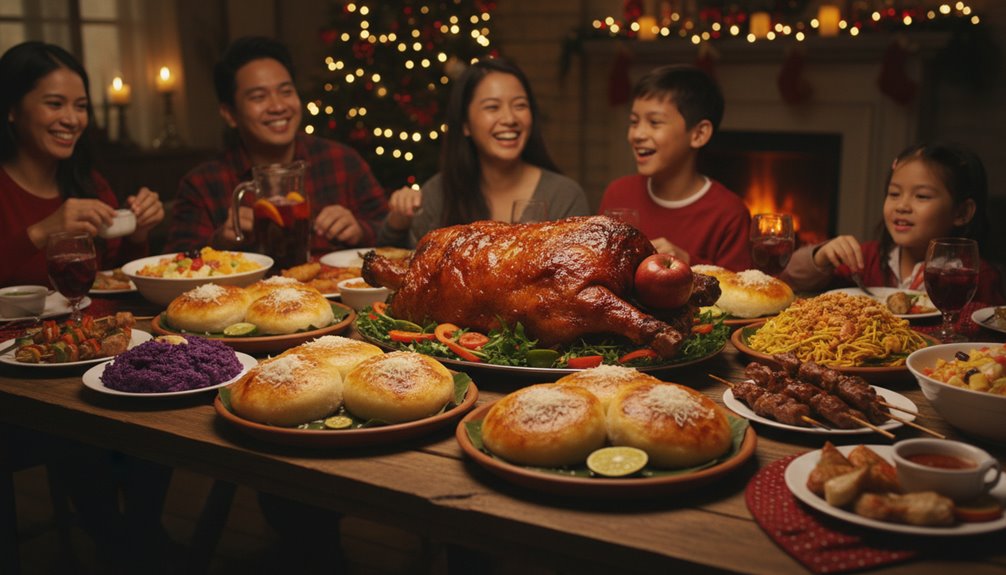
Filipino Christmas celebrations center around spectacular dishes that’ll make your holiday table unforgettable. You’ll find crispy-skinned lechon as the star centerpiece, slow-roasted with lemongrass and garlic. Traditional rice cakes like bibingka and purple puto bumbong bring authentic flavors, while glazed ham adds Spanish colonial influence with tropical twists. Pancit noodles symbolize longevity, and queso de bola paired with colorful fruit salad completes the feast. Each region offers unique specialties that showcase the Philippines’ rich culinary heritage and festive traditions.
Key Takeaways
- Lechon is the ultimate Filipino Christmas centerpiece featuring slow-roasted pork belly with crispy skin and tender, flavorful meat.
- Bibingka is a traditional rice cake cooked in clay pots with banana leaves, topped with salted eggs and cheese.
- Pancit noodles symbolize longevity and prosperity, making them essential dishes for Filipino Christmas celebrations and family gatherings.
- Regional specialties include Mindanao’s coconut milk tamales and Visayan decorative traditions that unite families across generations.
- Essential ingredients include glutinous rice, coconut milk, ube, native spices, and specialty items like salted duck eggs.
The Magnificent Lechon: Crown Jewel of Filipino Christmas Tables
When you hear the crackling skin and smell the aromatic herbs wafting from a perfectly roasted pig, you’ll know lechon has arrived to transform your Christmas celebration into an unforgettable feast.
You’ll witness culinary artistry when skilled lechoneros prepare this centerpiece dish. The slow roasting process takes six to eight hours over charcoal, requiring constant attention and careful rotation to achieve perfection.
They’ll stuff the pig’s cavity with lemongrass, onions, garlic, and bay leaves, creating layers of flavor that penetrate every bite.
What sets exceptional lechon apart is the pork skin texture – achieving that perfect balance between crispy exterior and tender meat beneath. You’ll hear that satisfying crunch with each bite, revealing succulent pork infused with smoky aromatics.
This isn’t just food; it’s your family’s gathering point. You’ll find relatives hovering around the lechon table, sharing stories while savoring crispy skin pieces. It transforms your Christmas dinner from ordinary to extraordinary.
Bibingka and Puto Bumbong: Traditional Rice Cakes That Define the Season
Two beloved rice cakes will transport you straight to the heart of Filipino Christmas tradition the moment their distinctive aromas fill the air. Bibingka and puto bumbong represent centuries-old culinary heritage that defines December celebrations across the Philippines.
You’ll find bibingka cooked in clay pots lined with banana leaves, creating its signature smoky flavor. The preparation techniques involve careful timing as vendors cook this spongy rice cake over charcoal, then top it with salted duck eggs, cheese, and grated coconut. Each bite delivers a perfect balance of sweet and savory elements.
Puto bumbong’s purple hue comes from glutinous rice steamed in bamboo tubes. You’ll watch vendors expertly unmold these delicate cylinders before coating them with butter, sugar, and cheese. The unique regional variations include different toppings and cooking methods, but the essence remains unchanged. Both treats embody Christmas nostalgia, connecting generations through shared flavors and cherished memories.
Glazed Ham: A Colonial Legacy That Became Filipino Tradition
Spanish colonizers brought ham to the Philippines centuries ago, yet Filipino families have transformed this imported tradition into something distinctly their own. You’ll find that Filipino glazed ham differs significantly from its Western counterparts through creative cultural adaptations that reflect local tastes and ingredients.
When you prepare Filipino-style glazed ham, you’re incorporating tropical flavors like pineapple juice, brown sugar, and sometimes even banana or mango preserves into the glaze. These colonial influences evolved beyond simple imitation—Filipino cooks adapted the dish using readily available local ingredients, creating sweeter, more complex flavor profiles.
You’ll notice that Filipino families often serve ham alongside rice rather than traditional Western sides, demonstrating how seamlessly this dish integrated into local dining customs. During Christmas celebrations, you’ll see glazed ham taking center stage on Filipino tables, proving how successfully this colonial introduction became an authentic Filipino Christmas tradition.
Pancit: Noodles for Longevity and Celebration
Beyond main dishes like glazed ham, Filipino Christmas tables feature symbolic foods that carry deep cultural meaning. Pancit stands out as one of the most significant dishes, representing longevity and prosperity for the coming year.
You’ll find various noodle varieties gracing Filipino holiday tables. Pancit canton features thick egg noodles stir-fried with vegetables and meat. Pancit bihon uses thin rice noodles that absorb flavors beautifully. Pancit palabok showcases rice noodles topped with shrimp sauce, hard-boiled eggs, and chicharrón.
The long strands symbolize long life, making pancit essential during celebrations. You shouldn’t cut the noodles while eating – this breaks the luck. These mealtime customs reflect Chinese influences deeply embedded in Filipino culture.
During Christmas gatherings, you’ll see families sharing large platters of pancit, ensuring everyone partakes in the blessing. The dish bridges generations, connecting modern Filipino celebrations with ancestral traditions that honor family, prosperity, and hope for extended life.
Queso De Bola and Fruit Salad: Sweet Accompaniments to the Feast
Christmas magic fills Filipino homes when families unveil two beloved sweet treats that complete their holiday spread. You’ll find queso de bola, that iconic red-waxed cheese ball, sitting proudly on your Noche Buena table. Its creamy texture melts beautifully on crackers or bread, offering a rich, nutty flavor that balances the feast’s savory dishes.
Alongside this cheese, you’ll discover Filipino fruit salad – a colorful medley that’s become synonymous with Christmas celebrations. You’ll mix canned fruits like peaches, pears, and cherries with fresh ingredients, then fold everything into sweetened cream or condensed milk. The vibrant colors create a festive presentation that brightens your dessert table.
These sweet accompaniments provide the perfect ending to your Christmas meal. You’ll appreciate how they cleanse your palate after rich lechon and hearty pancit, creating that satisfying conclusion every Filipino Christmas dinner deserves.
Regional Christmas Specialties Across the Philippines
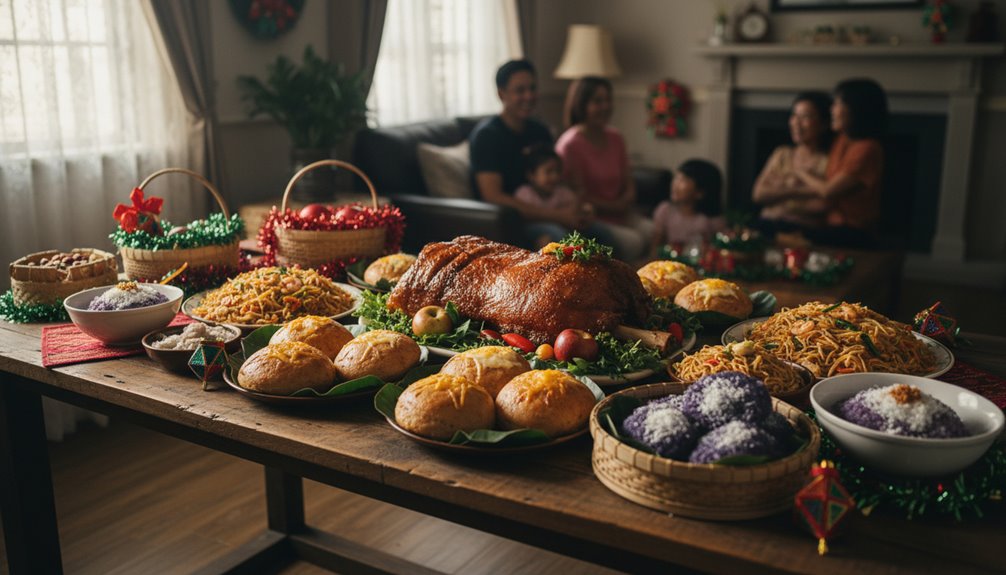
You’ll discover that Christmas food traditions vary dramatically across the Philippines’ three main island groups. Luzon’s holiday delicacies showcase Spanish colonial influences, while Visayas festive traditions blend indigenous ingredients with centuries-old recipes.
Mindanao’s Christmas flavors reflect the region’s diverse cultural heritage, incorporating Muslim, Christian, and indigenous cooking methods into their seasonal celebrations.
Luzon’s Holiday Delicacies
Northern lights of Filipino cuisine shine brightest during the holidays when Luzon’s diverse provinces showcase their most treasured Christmas delicacies. You’ll discover unique regional specialties that complement the familiar lechon and bibingka during simbang gabi celebrations.
Ilocanos prepare their signature longganisa and bagnet for Noche Buena, while Kapampangans craft elaborate morcon and relleno. You’ll find Bicolanos adding their beloved chili to holiday dishes, creating spicy versions of traditional fare. Parol decorations illuminate streets as families gather around tables laden with regional favorites.
| Province | Signature Christmas Dish | Key Ingredient |
|---|---|---|
| Ilocos | Bagnet | Crispy pork belly |
| Pampanga | Morcon | Stuffed beef roll |
| Bicol | Laing | Taro leaves & chili |
Each province’s Christmas table tells its own delicious story through these cherished holiday traditions.
Visayas Festive Traditions
While Luzon showcases its northern culinary traditions, the Visayas islands celebrate Christmas with their own distinctive flavors that reflect centuries of Spanish, Chinese, and indigenous influences. You’ll discover puto bumbong‘s purple rice cakes steamed in bamboo tubes, traditionally served with grated coconut and muscovado sugar. Bibingka takes center stage with its coconut milk-infused batter topped with salted duck eggs and cheese.
During visayan christmas rituals, you’ll encounter humba—a sweet-savory pork belly dish that graces holiday tables. Inasal, the region’s famous grilled chicken, becomes part of festive gatherings. You can’t miss kakanin varieties like suman and biko that complement visayan christmas decorations adorning homes. These culinary traditions unite families while honoring the islands’ rich cultural heritage through generations-old recipes.
Mindanao Christmas Flavors
Moving south from the Visayas, Mindanao’s Christmas cuisine reflects the island’s remarkable cultural diversity, where Muslim, Christian, and indigenous traditions create a unique holiday food landscape. You’ll discover tamales de mindanao, which differs from Luzon’s version with its distinctive use of coconut milk and local spices that reflect the region’s Malay influences. The filling often includes chicken, pork, or beef wrapped in rice and banana leaves.
You can’t miss binatog de mindanao, a beloved street food that becomes especially popular during Christmas celebrations. This corn-based treat gets topped with grated coconut, sugar, and sometimes condensed milk. Local vendors often add regional twists like ube or pandan flavoring, creating colorful variations that capture Mindanao’s vibrant multicultural spirit during the holiday season.
Creating Your Own Filipino Christmas Feast at Home
You can bring the magic of a traditional Filipino Christmas to your own kitchen with the right ingredients and techniques.
Start by gathering essential staples like glutinous rice, coconut milk, ube, and quality pork for dishes such as bibingka, biko, and lechon kawali.
We’ll walk you through each recipe step-by-step, ensuring you can confidently recreate these beloved holiday classics for your family’s celebration.
Essential Filipino Christmas Ingredients
Before you can recreate the magic of a Filipino Christmas feast, you’ll need to stock your pantry with specific ingredients that form the backbone of traditional holiday dishes. Native spices like star anise, bay leaves, and peppercorns are crucial for lechon’s aromatic rub and seasoning broths.
You’ll want coconut milk, glutinous rice flour, and pandan extract for bibingka and other kakanin. Stock up on seasonal produce including ube, macapuno, and fresh coconut. Essential pantry staples include soy sauce, vinegar, brown sugar, and tamarind paste. Don’t forget specialty items like salted duck eggs, kesong puti, and banana leaves for wrapping. These authentic ingredients ensure your homemade Filipino Christmas dishes taste genuinely traditional.
Step-by-Step Cooking Guide
With your pantry properly stocked, it’s time to transform these authentic ingredients into a memorable Christmas feast. Start by preparing ingredients the night before—marinate your lechon belly, soak glutinous rice for bibingka, and prep vegetables for side dishes.
| Dish | Cooking Technique |
|---|---|
| Lechon Belly | Slow roast at 325°F for 3-4 hours |
| Bibingka | Steam-bake in clay pots with banana leaves |
| Lumpia Shanghai | Deep fry at 350°F until golden |
| Pancit Bihon | Stir-fry noodles with high heat |
| Leche Flan | Steam for 45 minutes using double boiler |
Master these cooking techniques by maintaining proper temperatures and timing. You’ll create layers of flavor that define authentic Filipino Christmas dining. Each dish requires patience and attention to detail for the best results.
Frequently Asked Questions
What Are the Origins of Filipino Christmas Food Traditions?
You’ll find Filipino Christmas food traditions stem from centuries of Filipino cultural influences blending Spanish colonial practices with indigenous customs. Spanish missionaries introduced wheat-based desserts and roasted meats, while pre-colonial Filipinos contributed rice cakes and coconut-based treats.
These culinary adaptations over time created unique holiday dishes like bibingka and lechon that you recognize today, reflecting both foreign and native Filipino heritage.
How Do Filipino Christmas Foods Differ From Other Southeast Asian Countries?
You’ll notice Filipino Christmas foods stand apart through their unique Spanish colonial influences, unlike neighboring countries. Your holiday preparations center around dishes like lechon and bibingka, reflecting centuries of Catholic traditions.
While Thailand and Vietnam emphasize Buddhist-influenced celebrations with lighter fare, you’re embracing heartier, meat-centric feasts. Cultural influences from Spain created distinctly Filipino combinations that don’t exist elsewhere in Southeast Asia.
What’s the Typical Cost of Preparing a Traditional Filipino Christmas Feast?
You’ll spend around ₱8,000-15,000 ($140-270) for a traditional Filipino Christmas feast, depending on your menu choices.
For typical family sizes of 8-12 people, that’s roughly ₱700-1,250 ($12-22) cost per person.
Lechon drives up expenses significantly at ₱4,000-8,000, while dishes like pancit, lumpia, and bibingka keep costs manageable.
You can reduce expenses by preparing smaller portions or substituting expensive items with budget-friendly alternatives.
Are There Vegetarian Alternatives to Traditional Filipino Christmas Dishes?
Yes, you’ll find many vegetarian alternatives for traditional dishes. Meatless lechon alternatives include jackfruit or tofu-based versions that mimic the original’s texture and flavor.
You can prepare veggie based bibingka using coconut milk and topped with vegan cheese or salted egg alternatives. Other options include vegetable lumpia, plant-based ham using seitan, and coconut-based desserts that maintain authentic Filipino flavors.
What Drinks Are Traditionally Served With Filipino Christmas Meals?
You’ll find punch drinks dominating Filipino Christmas tables, with traditional fruit punches made from pineapple, orange, and other tropical fruits. Coconut beverages like buko juice and coconut water are equally popular choices.
You can’t miss the classic Filipino hot chocolate called sikwate, made from tablea. Beer, soft drinks, and various fruit juices also complement the festive meals perfectly during celebrations.
Conclusion
You’ll discover that Filipino Christmas food creates more than just a meal—it builds connections to heritage, family, and celebration. Whether you’re preparing traditional lechon for your family gathering or trying your hand at homemade bibingka, you’re participating in centuries-old traditions. Don’t hesitate to experiment with regional specialties and make these recipes your own. Your Filipino Christmas feast will become a cherished tradition that’ll bring joy for years to come.


No Comments