
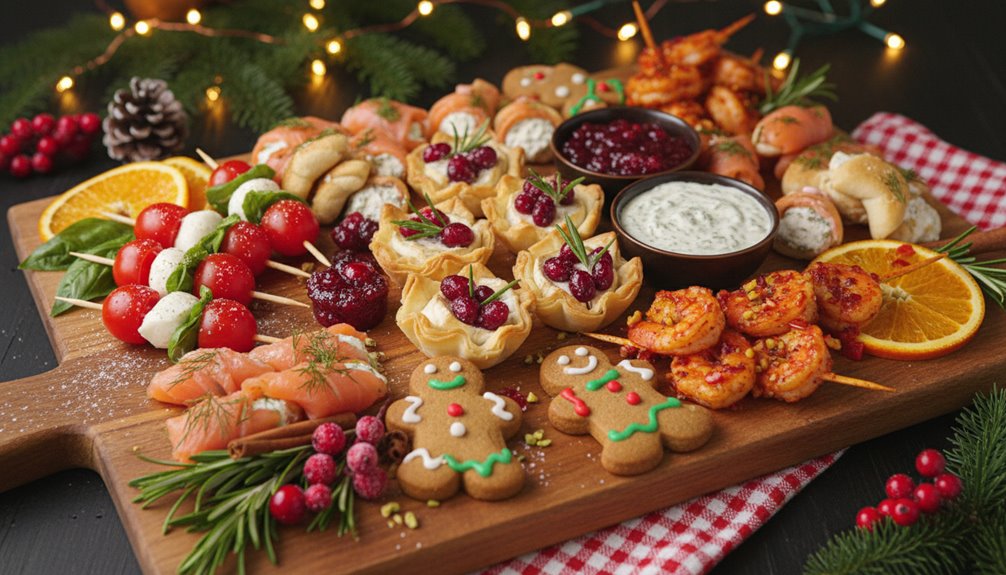
Christmas Day Starter Ideas Guests Will Actually Eat
Your Christmas Day starters need to balance elegance with crowd appeal—think sriracha-spiked prawn cocktails in martini glasses, warm brie and cranberry puff pastry bites you’ll prep ahead, and budget-friendly smoked salmon blinis that won’t break the bank. You’ll love how roasted vegetable tartlets and simple soup shooters let you mingle instead of staying trapped in the kitchen. These tested appetizers guarantee empty platters and happy guests before the main event even begins.
Key Takeaways
- Modern twists on classic favorites like prawn cocktail with sriracha sauce and mango ensure familiarity while adding excitement to traditional Christmas starters.
- Make-ahead options like brie and cranberry puff pastry bites can be assembled 24 hours early, reducing Christmas Day kitchen stress.
- Budget-friendly alternatives like smoked salmon blinis using Greek yogurt mixed spreads deliver elegance without breaking the bank.
- Soup shooters allow guests to mingle freely while enjoying warm appetizers without committing to sit-down portions.
- Choose moisture-resistant vegetables like bell peppers and cherry tomatoes for roasted tartlets to maintain appealing textures throughout service.
Classic Prawn Cocktail With a Modern Twist
Nostalgia meets innovation when you transform the beloved prawn cocktail into something extraordinary for your Christmas table. You’ll elevate this retro favorite by swapping traditional sauce for a sriracha-spiked marie rose, adding fresh mango chunks, and incorporating crisp cucumber ribbons for texture.
Your shrimp presentation matters more than you’d think. Arrange jumbo prawns around martini glass rims instead of drowning them in sauce. Layer butter lettuce, then spoon sauce artfully at the base. Top with prawns that cascade dramatically over the edge. You’re creating visual impact that’ll have guests reaching for their phones before their forks.
Don’t forget those citrus garnishes—they’re game-changers. Add charred lime wedges for smokiness, or try blood orange segments for festive color. Microgreens and pomegranate seeds provide the final flourish. You’ve now turned a dated appetizer into an Instagram-worthy starter that honors tradition while embracing modern culinary trends.
Warm Brie and Cranberry Puff Pastry Bites
You’ll want to prepare these elegant bites up to 24 hours ahead by assembling them on a lined baking sheet and refrigerating until party time.
Pop them straight from the fridge into a preheated 400°F oven for 12-15 minutes until golden and bubbling. Serve them warm within 10 minutes of baking, as the pastry loses its crispness and the brie firms up once they’ve cooled.
Prep Time Tips
When planning these elegant puff pastry bites, you can complete most of the prep work a day ahead to save precious time on Christmas morning. Cut your puff pastry squares and store them between parchment paper in the refrigerator. You’ll find ingredient sourcing easier when you buy pre-cut brie portions and quality cranberry sauce from specialty stores rather than making everything from scratch.
For marinating tips, combine your cranberries with orange zest and a splash of Grand Marnier the night before – they’ll develop deeper flavors overnight. Assemble the bites directly on lined baking sheets, then cover and refrigerate for up to four hours before guests arrive. You’re essentially creating a production line that moves smoothly when you need it most.
Serving Temperature Guide
| Temperature | Texture Result |
|---|---|
| 140-150°F | Perfectly melted brie, crisp pastry |
| 120-130°F | Slightly firm brie, acceptable crispness |
| Below 110°F | Congealed brie, soggy pastry |
Check internal temperature with a digital thermometer before plating. You can hold these bites in a 200°F oven for up to 15 minutes without quality loss. Place them on prewarmed platters to maintain temperature during service. These serving suggestions prevent the common mistake of letting them cool too quickly. If you’re preparing multiple batches, stagger your baking times to ensure each round reaches guests at optimal warmth.
Smoked Salmon Blinis That Won’t Break the Bank
Few appetizers deliver the elegance of smoked salmon blinis without demanding hours in the kitchen or a hefty grocery bill. You’ll impress guests while keeping costs manageable by using budget friendly ingredients strategically.
Start with store-bought mini pancakes or make your own using basic pantry staples. Instead of covering each blini entirely with expensive salmon, you’ll use smaller portions artfully arranged. Mix cream cheese with Greek yogurt for a lighter, more economical spread that doesn’t sacrifice richness.
Master these flavor combinations for maximum impact:
- Classic: Dill, capers, and lemon zest
- Modern: Cucumber ribbons with chive oil
- Bold: Horseradish cream with pickled onions
- Festive: Pomegranate seeds with fresh herbs
Buy pre-sliced salmon from warehouse stores and freeze half for later. You’ll stretch four ounces to serve twelve people when you’re strategic with portions. Arrange blinis on platters just before guests arrive—they’ll stay crisp and fresh for thirty minutes at room temperature.
Roasted Vegetable and Goat Cheese Tartlets
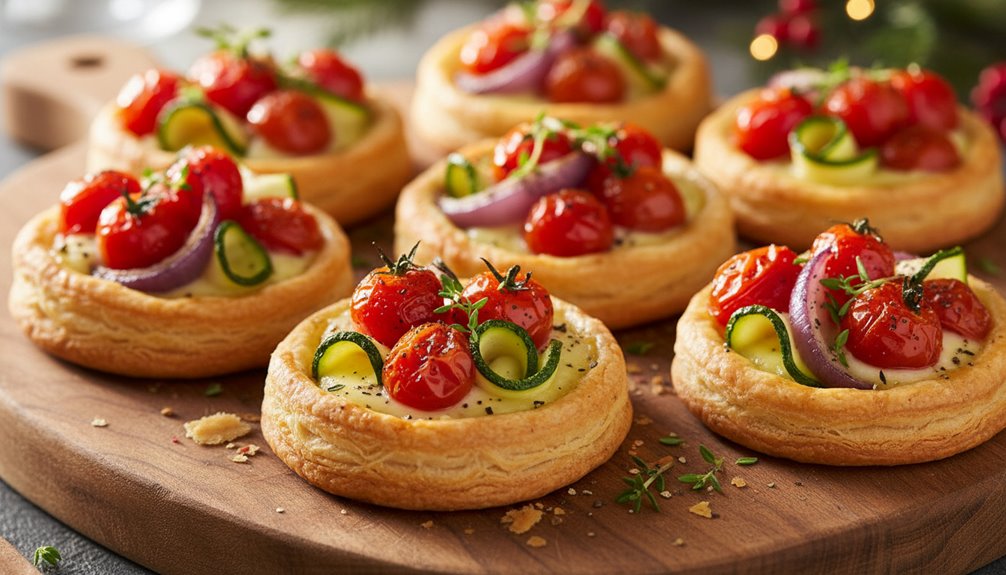
You’ll create elegant tartlets by first selecting colorful vegetables like bell peppers, zucchini, and cherry tomatoes that roast beautifully with goat cheese. Your choice of pastry shell—whether store-bought puff pastry or homemade shortcrust—determines both texture and prep time.
Once you’ve arranged the roasted vegetables and dollops of creamy goat cheese in the shells, a quick 15-minute bake transforms these components into golden, festive appetizers.
Choosing Your Vegetables
When selecting vegetables for your roasted vegetable and goat cheese tartlets, you’re looking for varieties that caramelize beautifully while maintaining their structure. Your seasonal vegetable selection should focus on produce that won’t release excess moisture during roasting.
Here’s what works best:
- Bell peppers – They’ll sweeten naturally and hold their shape
- Cherry tomatoes – Roast until they’re jammy but not burst
- Zucchini – Slice thick enough to prevent mushiness
- Red onions – They’ll add sweetness and gorgeous color
You’ll get better flavor from locally sourced produce since it’s fresher and hasn’t traveled far. Visit farmers’ markets for winter squash, root vegetables, and late-season peppers. They’re picked at peak ripeness, giving you vegetables that’ll taste incredible once roasted and nestled into your tartlet shells.
Pastry Shell Options
The foundation of your tartlets matters just as much as those perfectly roasted vegetables you’ve selected. You’ll find several flaky crust options that work beautifully with goat cheese and vegetables. Store-bought puff pastry variations save time while delivering professional results.
| Pastry Type | Baking Time |
|---|---|
| Classic Puff | 18-20 mins |
| Phyllo Sheets | 12-15 mins |
| Shortcrust | 20-25 mins |
| Whole Wheat | 22-25 mins |
| Gluten-Free | 15-18 mins |
Pre-bake your shells for 10 minutes before adding fillings to prevent soggy bottoms. You can prepare tartlet shells two days ahead and store them in airtight containers. For extra crispness, brush shells with egg wash before baking. Mini muffin tins create perfect individual portions, while a standard tart pan works for sharing-style appetizers.
Assembly and Baking
Setting up your tartlet assembly station before you begin saves precious time and ensures smooth preparation. You’ll need your pre-baked shells, roasted vegetables, goat cheese mixture, and garnishes within easy reach.
Follow these pre baking techniques for perfect results:
- Brush pastry shells with egg wash for golden color
- Layer vegetables evenly, avoiding overfilling
- Dollop cheese mixture strategically between vegetables
- Top with fresh herbs just before serving
Bake assembled tartlets at 375°F for 12-15 minutes until cheese melts and edges turn golden. You can transform these into quick chilled appetizers by preparing them ahead and serving at room temperature. They’ll hold beautifully for two hours after cooling.
For crispier bottoms, place your baking sheet on the oven’s lower rack. Watch carefully during the final minutes to prevent over-browning.
Simple Soup Shooters for Easy Mingling
As you’re greeting guests and managing last-minute preparations, soup shooters offer an elegant solution that won’t tie you to the kitchen. These simple soup recipes work perfectly in small glasses or shot glasses, letting guests enjoy warm appetizers while mingling freely.
You’ll find butternut squash soup transforms beautifully into shooters – just blend roasted squash with cream and seasonings, then serve topped with crispy sage. Tomato bisque becomes festive with a tiny grilled cheese crouton perched on the rim. For something heartier, try creamy mushroom soup garnished with truffle oil.
Your soup presentation ideas can elevate these starters instantly. Arrange shooters on vintage silver trays or wooden boards lined with evergreen sprigs. You can prep everything hours ahead and simply reheat before serving. Set up a self-serve station with multiple varieties, letting guests sample different flavors. Add small demitasse spoons tied with ribbon for an extra special touch that’ll impress without extra effort.
Festive Cheese and Charcuterie Boards That Feed a Crowd
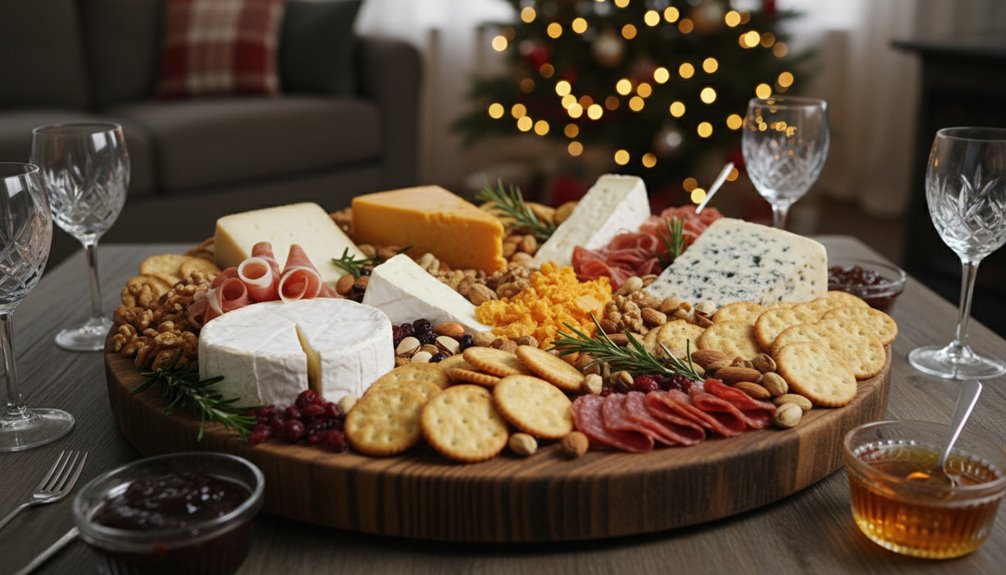
You’ll impress your guests with a well-crafted cheese and charcuterie board that requires minimal cooking but delivers maximum impact. Start by mastering the basic assembly techniques, then select a variety of cheeses that’ll please different palates.
Round out your board with crowd-friendly accompaniments like dried fruits, nuts, and crackers that complement your chosen meats and cheeses.
Board Assembly Basics
The foundation of any show-stopping cheese and charcuterie board lies in thoughtful arrangement and strategic placement. Your ingredient selection determines the board’s success, so choose items that complement each other in flavor and texture.
Follow these assembly steps for maximum visual appeal:
- Place anchor items first – Position your cheese wedges and small bowls at different points across the board
- Add your meats – Fan salami, fold prosciutto into roses, and roll harder meats into cylinders
- Fill gaps with accompaniments – Scatter nuts, olives, and dried fruits throughout empty spaces
- Finish with fresh elements – Tuck herbs and grapes into remaining spots for color
You’ll create natural flow by working in odd numbers and varying heights. Don’t overcrowd—negative space lets each element breathe.
Cheese Selection Guide
Now that your board’s structure is mapped out, selecting the right cheeses becomes your next priority. You’ll want three to five varieties that offer different textures and flavors. Start with a crowd-pleasing aged cheddar selection—sharp enough to stand out but not overwhelming. Add creamy brie varieties like traditional French brie or truffle-infused options for richness.
Include a firm cheese like manchego or gruyere for slicing, and don’t forget a blue cheese for adventurous guests. Calculate about two ounces per person for appetizers, three if it’s the main starter. Remove cheeses from refrigeration thirty minutes before serving—they’ll taste better at room temperature. Arrange them clockwise from mildest to strongest, giving guests a natural tasting progression. Label each cheese so everyone knows what they’re enjoying.
Crowd-Pleasing Accompaniments
Several accompaniments can transform your cheese board from simple to spectacular. You’ll create crowd pleasing arrangements that guests can’t resist with these essential additions:
- Fresh fruits – Include grapes, figs, and sliced pears for natural sweetness
- Nuts and dried fruits – Add toasted walnuts, almonds, and cranberries for texture
- Preserves and honey – Offer fig jam, quince paste, and truffle honey
- Crackers and bread – Provide water crackers, seeded crisps, and sliced baguette
For make ahead preparation, prep your accompaniments the night before. Store cut fruits with lemon juice to prevent browning. Toast nuts in advance and keep them airtight. Arrange preserves in small bowls with serving spoons. You’ll save precious time on Christmas Day while ensuring everything’s perfectly ready when guests arrive.
Light Salads That Leave Room for the Main Course
Fresh, vibrant salads make perfect Christmas Day starters when you’re planning a feast that’ll stretch through multiple courses. You’ll want to choose combinations that awaken the palate without overwhelming it. Toss crisp greens with pomegranate seeds and toasted walnuts for a festive touch that won’t fill your guests before the turkey arrives.
Consider building a citrus and fennel salad that cuts through rich holiday flavors. You can prepare the components ahead and assemble just before serving. Mix blood oranges with shaved fennel, then finish with fresh herbs like mint or dill for brightness.
Don’t underestimate a simple arugula salad with pear slices and pecorino shavings. The peppery greens contrast beautifully with sweet fruit, while a light lemon vinaigrette keeps everything refreshing. You’re creating anticipation for what’s coming next, not competing with your main dishes. These salads serve as palate cleansers that transition smoothly into heartier fare.
Make-Ahead Pâtés and Terrines Worth the Effort
While salads offer lightness and simplicity, pâtés and terrines bring sophisticated depth to your Christmas starter spread. You’ll impress guests with these elegant make-ahead options that showcase complex flavor profiles through careful layering and seasoning. The beauty of pâtés and terrines lies in their convenience—you can prepare them days before Christmas, letting flavors meld while you focus on other dishes.
Master these essential techniques for success:
- Layer strategically – Alternate proteins and vegetables to create stunning texture variations when sliced
- Season boldly – Use cognac, herbs, and spices generously since chilling dulls flavors
- Weight properly – Press terrines overnight with heavy cans for compact, sliceable results
- Rest sufficiently – Allow 48 hours minimum for flavors to develop fully
Serve your creations with cornichons, mustard, and toasted brioche. Duck liver pâté, salmon terrine, and vegetable-studded country pâté all slice beautifully and feed crowds efficiently. You’ll appreciate having these showstoppers ready when Christmas morning arrives.
Quick Canapés You Can Assemble Last Minute
Even when time’s running short on Christmas Day, you can create impressive canapés with smart ingredient choices and simple assembly techniques. You’ll save yourself stress by choosing components that need minimal preparation and look elegant with little effort.
Stock your fridge with ready-to-use bases like blinis, crostini, and cucumber rounds. For quick prep, buy quality ingredients that shine on their own: smoked salmon, prosciutto, soft cheeses, and jarred roasted peppers. You can transform these into sophisticated bites in minutes.
Try these crowd-pleasers for last minute assembly: spread ricotta on crostini and top with honey and crushed pistachios. Roll asparagus spears in prosciutto. Pipe cream cheese onto cucumber slices and crown with smoked salmon rosettes. Fill endive leaves with blue cheese, walnuts, and pomegranate seeds.
Keep garnishes simple but impactful. Fresh herbs, capers, and citrus zest add professional touches without extra cooking. You’ll have beautiful canapés ready before guests arrive.
Dietary-Friendly Options Everyone Can Enjoy
Creating starters that accommodate various dietary needs doesn’t mean sacrificing flavor or presentation. You’ll find that focusing on naturally inclusive ingredients makes hosting easier while ensuring everyone feels welcome at your table.
Consider these crowd-pleasing dietary restrictions solutions:
- Roasted vegetable skewers – Thread bell peppers, zucchini, and cherry tomatoes for a colorful vegan option
- Stuffed mushrooms – Fill with quinoa, herbs, and nutritional yeast instead of cheese
- Rice paper rolls – Pack with julienned vegetables and serve with tahini dipping sauce
- Spiced chickpea bites – Season with smoked paprika and bake until crispy
Plant based options often surprise guests with their richness and complexity. You’re not creating separate “special” dishes but rather expanding your repertoire with naturally delicious choices. Stock your pantry with nuts, seeds, legumes, and quality olive oil. These versatile ingredients transform into elegant starters that’ll have everyone reaching for seconds, regardless of their dietary preferences.
Frequently Asked Questions
How Far in Advance Can I Prepare Christmas Starters?
You can start preparing ingredients ahead up to three days before Christmas. Chop vegetables, make dips, and prepare sauces 2-3 days early, storing them properly in airtight containers.
You’ll save time by assembling starters early – construct items like pinwheels, canapés, or bruschetta toppings the night before.
Cold starters work best for advance prep, while you’ll want to save hot appetizers for day-of cooking to maintain their quality and texture.
What’s the Ideal Number of Starters per Guest?
You’ll want to serve 2-3 starter portions per guest for optimal variety without overwhelming appetites. If you’re offering multiple options, plan appropriate starter quantities by calculating 4-6 pieces total per person. For a single starter, increase portions slightly.
You’ll find guests appreciate having choices, but don’t overdo it – they’ll need room for the main course. Consider your crowd’s appetite and whether you’re serving canapés during drinks beforehand.
Should Starters Be Served Hot or Cold?
You’ll want to serve both hot and cold starters for variety and convenience. Cold options let you prep ahead, while hot dishes add warmth to your spread.
Whether starters should be savory or sweet depends on your menu – savory works best before dinner, though one sweet option adds interest. Keep appropriate portion sizes for starters small – about 2-3 bites each – so guests don’t fill up before the main meal.
How Long Before the Main Course Should Starters Be Served?
You’ll want to serve starters 30-45 minutes before the main course, giving guests time to enjoy them without feeling rushed. The serving order matters – present appetizers when everyone’s seated and settled.
Consider your serving temperature timing too; hot starters shouldn’t sit waiting while cold ones need less precise timing. You’re aiming for a relaxed pace that builds anticipation for the main meal without leaving guests too full or hungry.
Can I Freeze Leftover Christmas Starters for Later?
Yes, you can freeze most Christmas starters for convenient later use. You’ll find easy storage options like airtight containers or freezer bags work perfectly for items like pastry bites, meatballs, and dips.
Don’t freeze fresh salads or cream-based dishes though.
When you’re ready to serve, use proper reheating techniques – thaw overnight in the fridge, then warm in the oven at 350°F until heated through for best results.
Conclusion
You’ve got plenty of options to kick off your Christmas feast without the stress. Whether you’re assembling quick canapés or preparing make-ahead terrines, these starters won’t leave guests pushing food around their plates. Pick recipes that match your schedule and cooking confidence. Remember, the best starter is one that’s actually eaten and enjoyed. Keep portions small, flavors festive, and you’ll set the perfect tone for the Christmas dinner that follows.


No Comments