
Noche Buena Food Ideas Traditional and Modern Favorites
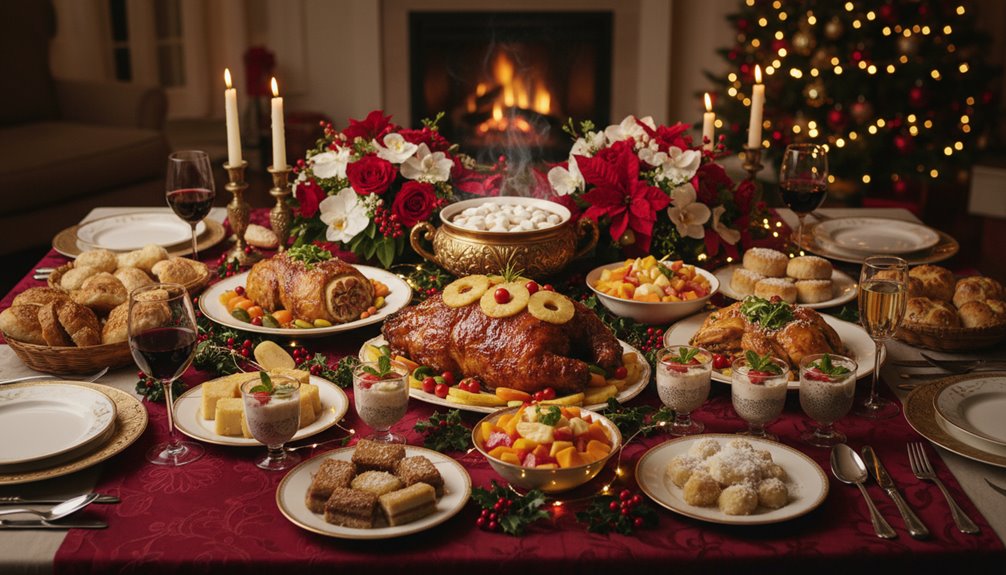
Your Noche Buena feast combines cherished traditions with modern twists that’ll delight every generation. You’ll find crispy lechon and honey-glazed ham anchoring the table alongside pancit for prosperity, while Spanish paella adds Mediterranean warmth to Filipino favorites. Don’t forget bibingka and puto bumbong for dessert, or try fusion options like ube cheesecake and adobo tacos. Whether you’re serving queso de bola or kimchi quesadillas, these dishes transform Christmas Eve into an unforgettable celebration.
Key Takeaways
- Lechon or ham serves as the traditional centerpiece, often accompanied by pancit for prosperity and queso de bola with pan de sal.
- Spanish-influenced dishes like paella, turron, and polvoron reflect the colonial heritage that shapes modern Noche Buena celebrations.
- Essential Filipino desserts include bibingka, puto bumbong, biko, maja blanca, and halo-halo variations featuring ube and leche flan.
- Modern fusion creates innovative dishes like adobo tacos, kimchi quesadillas, ube cheesecake, and churros with coconut-pandan sauce.
- Quick options for busy families include honey-glazed ham, cheese-wrapped ham rolls, bacon-topped deviled eggs, and garlic butter mashed potatoes.
Classic Filipino Christmas Eve Centerpieces and Main Dishes
When you’re planning your Noche Buena feast, the centerpiece dishes define the entire celebration and bring families together around time-honored traditions. You’ll want to showcase the iconic lechon or ham as your table’s crown jewel, paired with pancit for long life and prosperity. Don’t forget the essential queso de bola and its perfect partner, ham-topped pan de sal.
Your spread isn’t complete without Filipino Christmas delicacies. Set up a station for bibingka specialties—these coconut-rice cakes wrapped in banana leaves offer warmth and nostalgia. You can serve traditional versions or experiment with modern toppings like salted egg and cheese. Include puto bumbong variations alongside, from the classic purple sticky rice to contemporary flavors infused with ube or pandan. These steamed treats, topped with butter, coconut, and muscovado sugar, transport everyone back to childhood Simbang Gabi memories. Balance these sweet offerings with savory lumpia, morcon, and rellenong bangus to create an unforgettable feast.
Spanish-Influenced Holiday Favorites That Define Noche Buena
You’ll find Spain’s culinary legacy at the heart of every Noche Buena celebration, where centuries-old recipes transform into festive masterpieces.
The crispy-skinned lechon commands attention as your table’s crowning glory, while saffron-scented paella brings Mediterranean warmth to Christmas Eve gatherings. Spanish desserts like turron and polvoron complete your feast, offering sweet traditions that’ve defined Filipino holiday tables for generations.
Classic Lechon Traditions
The golden-brown skin of lechon, glistening and crackling under festive lights, marks the centerpiece of countless Noche Buena celebrations across Spanish-influenced cultures. You’ll find this roasted pig defines holiday gatherings from the Philippines to Puerto Rico.
Traditional roasting techniques vary by region:
- Filipino style – Stuffed with lemongrass, garlic, and onions
- Cuban method – Marinated in mojo criollo overnight
- Puerto Rican approach – Seasoned with adobo and oregano
- Spanish version – Basted with olive oil and rosemary
When sourcing prime cuts, you’ll want young pigs between 20-30 pounds for optimal tenderness. Order from specialty butchers two weeks ahead. You can’t rush perfection—authentic lechon requires 4-6 hours of slow roasting over charcoal. The result? Crispy skin that shatters at first bite, revealing succulent meat beneath.
Paella Holiday Variations
Beyond the lechon’s commanding presence, paella brings its own theatrical flair to Noche Buena tables, transforming simple ingredients into a festive masterpiece that feeds a crowd. You’ll find families adding their holiday twists to this Spanish classic, creating memorable seafood paella variations loaded with prawns, mussels, and lobster tails that reflect the season’s abundance.
Your saffron infused paella becomes the evening’s showpiece when you present it straight from the paellera, its golden rice glistening with festive colors from red bell peppers and green peas. You can customize traditional recipes by incorporating local favorites like chorizo de Bilbao or adding a Filipino touch with calamansi wedges. Some families prepare two versions—one with meat for traditionalists and a seafood-packed option for those craving ocean flavors during the holidays.
Spanish Christmas Desserts
After you’ve savored the main courses, Spanish Christmas desserts take center stage with their rich traditions and indulgent flavors that have become inseparable from Noche Buena celebrations. You’ll discover
Traditional Filipino Desserts and Rice Cakes for Your Midnight Feast
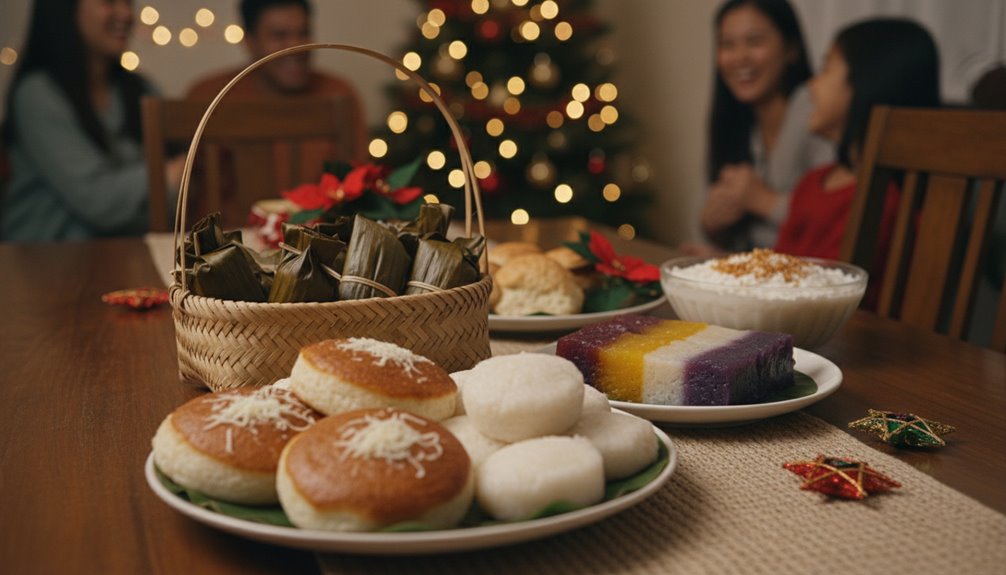
Sweet endings make your Noche Buena celebration complete, and Filipino desserts bring that perfect balance of tradition and indulgence to your midnight feast. You’ll find that bibingka and puto bumbong remain holiday essentials, their coconut-rich flavors capturing the season’s warmth. While halo halo variations typically shine in summer, you can create festive versions using ube, macapuno, and leche flan for your Christmas spread.
Don’t forget the kakanin selection that’ll impress your guests. Prepare biko with its caramelized latik topping, or serve maja blanca garnished with corn and cheese. Your pastillas de leche offers a simpler option – these milk candies wrapped in colorful cellophane double as table decorations.
For something special, you’ll want to include leche flan or ube halaya, both crowd favorites that disappear quickly. Round out your dessert table with cassava cake or buko pie, ensuring everyone finds their preferred sweet treat before midnight strikes.
Modern Fusion Dishes Bringing New Flavors to Christmas Eve
You’re ready to shake up tradition with Asian-Latin holiday mashups that blend kimchi quesadillas, adobo tacos, and miso-glazed empanadas into your Noche Buena spread. These bold combinations honor both Filipino heritage and international influences, creating conversation-starting dishes that’ll have guests asking for recipes.
Don’t forget to reimagine classic desserts too—think ube cheesecake, matcha leche flan, or churros with coconut-pandan dipping sauce.
Asian-Latin Holiday Mashups
When tradition meets innovation on Noche Buena, you’ll discover that Asian-Latin fusion dishes can transform your Christmas Eve table into something extraordinary. You’re creating memorable fusion holiday appetizers that honor both culinary traditions while exciting adventurous palates. These modern pan asian platters blend familiar Latin ingredients with Asian techniques and flavors.
Consider these crowd-pleasing mashups:
- Korean-Mexican Bulgogi Tacos – Marinated beef with kimchi slaw and gochujang crema
- Filipino-Cuban Lumpia Spring Rolls – Filled with mojo pork and plantains
- Japanese-Peruvian Ceviche – Featuring yuzu, soy sauce, and fresh tuna
- Thai-Puerto Rican Mofongo – Infused with lemongrass and coconut milk
You’ll find these combinations respect traditional holiday flavors while introducing unexpected elements that’ll have guests asking for recipes.
Global Dessert Reinventions
After you’ve impressed guests with savory fusion dishes, it’s time to revolutionize the dessert course with globally-inspired sweet treats that’ll redefine your Noche Buena traditions. You’ll transform classic Filipino desserts by incorporating international techniques and flavors. Replace traditional biko with mango sticky rice infused with coconut cream and pandan, creating a Thai-Filipino hybrid that’s both familiar and exotic.
You can elevate leche flan with matcha or ube variations, while yuletide citrus confections like calamansi panna cotta or pomelo tarts add refreshing notes to your spread. Try churros filled with yema or serve tiramisu layered with sans rival wafers. These creative combinations honor your heritage while embracing global influences, ensuring your dessert table becomes the night’s unforgettable finale.
Quick and Easy Noche Buena Recipes for Busy Families
Three hours before guests arrive shouldn’t mean panic in the kitchen. You’ll find that Noche Buena doesn’t require complicated recipes when you’re pressed for time.
No fuss appetizers like cheese rolls wrapped in ham or deviled eggs topped with crispy bacon take minutes to assemble. Your simple side dishes can include store-bought coleslaw mix dressed with vinegar and mayo or instant mashed potatoes elevated with garlic butter.
Here’s what you can prepare quickly:
- Honey-glazed ham – Buy pre-sliced, brush with honey-mustard, bake 20 minutes
- Filipino-style spaghetti – Use bottled sauce, add hotdogs and cheese
- Fruit salad – Mix canned fruits with condensed milk and cream
- Lumpia shanghai – Purchase frozen, deep-fry until golden
You’ve got options for desserts too. Grab pre-made flan from the Filipino store or assemble graham cake layers with whipped cream. Remember, your family won’t judge shortcuts when everything tastes delicious and you’re actually present at the table.
Regional Specialties From Across the Philippines
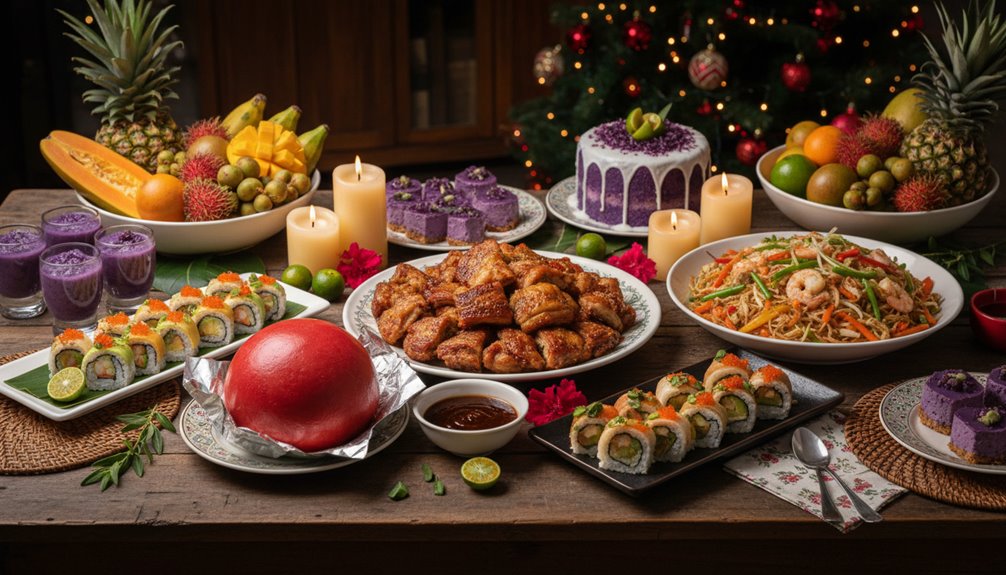
Every region in the Philippines brings its own treasured dishes to the Noche Buena table. You’ll find Vigan’s famous longganisa and tocino among the regional cured meats that make midnight feasts memorable.
In Pampanga, you’re likely to encounter morcon rolled with eggs and pickles, while Cebu offers its distinctive sweet-style chorizo.
Don’t overlook the seasonal vegetable dishes that balance these rich proteins. You can serve Bicol’s laing made with dried taro leaves in coconut milk, or prepare Ilocos’s pinakbet with fresh squash and bitter melon. Northern provinces contribute their bamboo shoot specialties, while coastal areas bring seaweed salads and fresh lumpia.
Each family’s spread reflects their provincial roots. You might pair Batangas’s special tapa with atchara from Quezon, or serve Davao’s kinilaw alongside Baguio’s fresh strawberry taho for dessert. These regional treasures transform your celebration into a delicious journey across the archipelago’s diverse culinary landscape.
Drinks and Beverages to Complete Your Christmas Eve Celebration
With your feast of regional specialties laid out on the table, you’ll want drinks that match the festive spirit of Noche Buena. Traditional Filipino Christmas beverages bring warmth and joy to your celebration, while modern options offer refreshing alternatives.
You’ll find these drinks perfect for your gathering:
- Salabat (Ginger Tea) – Serve this spicy-sweet drink hot to complement rich dishes
- Tsokolate de Batirol – Prepare thick Filipino hot chocolate using traditional tablea
- Holiday Fruit Punch – Mix pineapple juice, sprite, and fresh fruits for a crowd-pleaser
- Wine Options – Offer mulled wine for adults seeking warmth or local fruit wines
Don’t forget international favorites like spiced cider, which you can easily prepare with cinnamon sticks and star anise. For non-drinkers, you’re covered with fresh buko juice or calamansi juice concentrate mixed with sparkling water. These beverages won’t just quench thirst—they’ll enhance every bite of your Noche Buena feast.
Frequently Asked Questions
How Many Dishes Should I Prepare for a Typical Noche Buena Celebration?
You’ll typically want to prepare 8-12 dishes for your Noche Buena celebration, though the ideal dish count depends on your guest list size.
You’re looking at main courses like lechon or ham, sides including rice and salads, desserts, and appetizers. Your customizable menu options let you mix traditional Filipino favorites with modern twists.
Don’t forget you can adjust portions and variety based on your family’s preferences and dietary needs.
What Time Should I Start Serving Food on Christmas Eve?
You’ll want to establish an ideal serving time around 10 PM to midnight for Noche Buena, though many families start earlier.
Consider using staggered food service throughout the evening – serve appetizers and lighter dishes around 8 PM, then bring out main courses after attending midnight mass. This approach prevents guests from getting too hungry while waiting and keeps the celebration flowing naturally.
You can adjust timing based on your family’s traditions.
How Do I Keep Dishes Warm Throughout the Long Celebration?
You’ll want to use thermal containers and insulated serving dishes to maintain food temperatures during your lengthy celebration. Set up warming trays with tea lights underneath for dishes that need gentle heat.
Cover platters with foil between servings, and rotate foods from your oven’s “keep warm” setting. Consider using slow cookers on low settings for soups and stews. Don’t forget chafing dishes with fuel cans for buffet-style serving.
Can I Prepare Noche Buena Dishes Days in Advance?
Yes, you can absolutely prepare many dishes days ahead! You’ll save time by refrigerating Noche Buena dishes like lumpia, embutido, and marinated meats up to three days before.
Desserts like leche flan and biko store beautifully. When thawing Noche Buena dishes, transfer them from freezer to fridge overnight for even defrosting.
You can freeze lechon kawali, menudo, and caldereta up to a month ahead—just reheat gently before serving.
What’s the Proper Table Setting Etiquette for Noche Buena Dinner?
You’ll want to place forks on the left and knives on the right of each plate, with proper napkin placement either on the plate or to the left of forks.
Set dessert utensils horizontally above the plate. For appropriate glassware selection, position water glasses above the knife and wine glasses to their right.
You’re creating a festive atmosphere, so don’t forget centerpieces with candles or poinsettias while keeping decorations low enough for conversation.
Conclusion
You’ve discovered endless possibilities for your Noche Buena celebration, from time-honored lechon and ham to modern fusion creations. Whether you’re preparing traditional kakanin or trying regional specialties, you’ll create memories that last beyond Christmas Eve. Don’t forget to pair your feast with festive drinks that’ll keep the celebration going past midnight. Now you’re ready to blend classic Filipino flavors with your own creative touches, making this year’s Noche Buena truly unforgettable for everyone gathered around your table.


Table of Contents



No Comments