
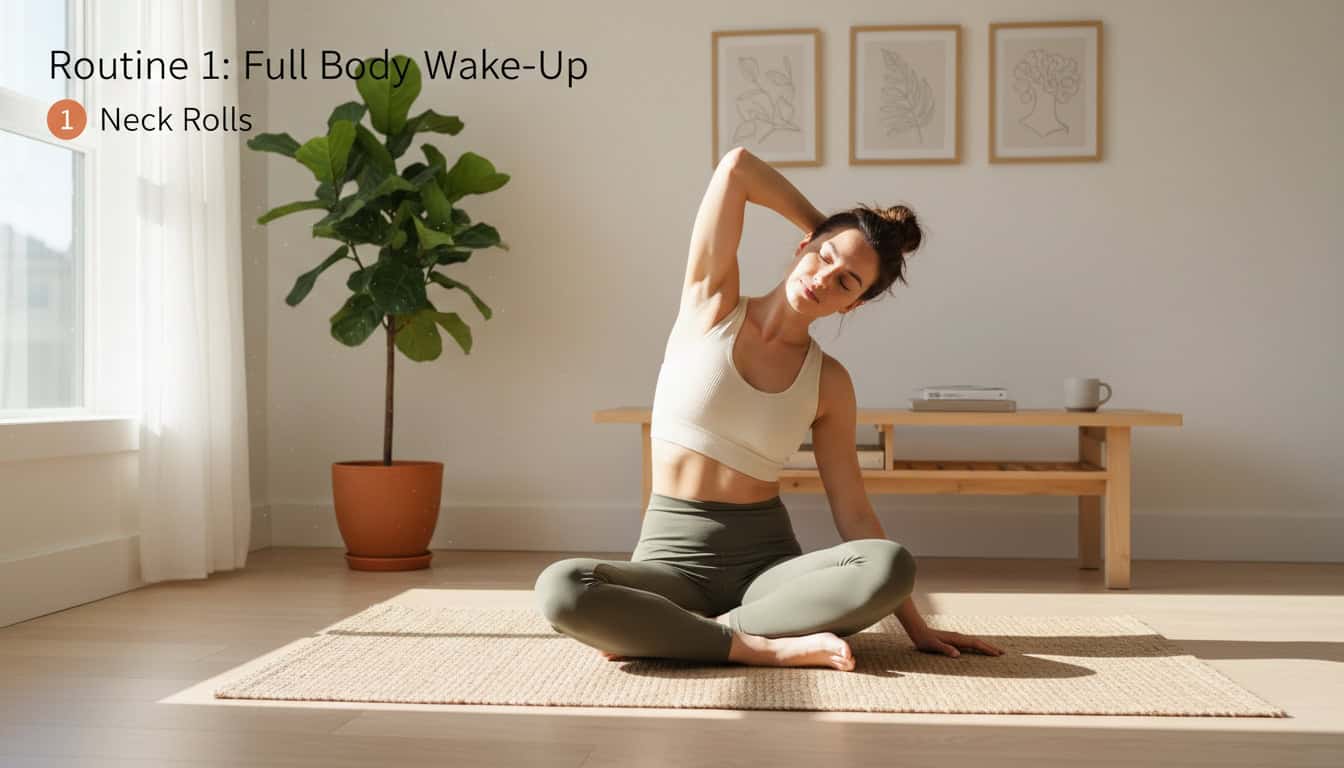
3 Best Morning Stretch Routines No Equipment Needed
Start with a 5‑minute full‑body wake‑up: stand tall, interlock your fingers overhead, hinge into a forward fold, roll up slowly, then flow through cat‑cow and a standing side stretch. Next, try seven desk‑friendly moves—neck side stretch, shoulder rolls, seated spinal twist, wrist flexor stretch, and hip‑flexor release—to melt tension without leaving your workstation. Finally, boost mobility with six dynamic moves: arm circles, leg swings, walking lunges with a twist, high knees, and smooth transitions. Keep breathing steady and you’ll feel the surge of circulation and flexibility, and the next section shows how to turn these into a daily habit.
Table of Contents
5‑Minute Full‑Body Stretch to Jump‑Start Your Day
Ever wondered how a single minute can revitalize your whole body? You stand tall, inhale, and launch into a fluid sequence that awakens every muscle group. First, raise your arms overhead, interlock fingers, and stretch upward, feeling the spine elongate. Then, hinge at the hips, swinging your torso forward into a forward fold, letting the neck relax and the hamstrings lengthen. Next, roll up slowly, vertebra by vertebra, and plant your feet firmly. From here, transition into a dynamic cat‑cow: arch your back while inhaling, round it while exhaling, syncing breath with motion. Finally, finish with a standing side stretch—reach one arm overhead, lean gently to the opposite side, and repeat on the other. This concise routine boosts circulation, improves flexibility, and primes your nervous system, giving you a fresh, energized start without any equipment.
7 Desk Stretches to Relieve Tension Without Leaving Your Workstation
After that quick full‑body wake‑up, you can keep the momentum going right at your desk.
Sitting for long stretches tightens shoulders, hips, and neck, but a few targeted moves can melt that tension without you having to stand up. You’ll stay focused, maintain posture, and keep blood flowing while you type or on calls. The key is to move slowly, breathe deeply, and hold each stretch just long enough to feel a gentle release. Treat these micro‑breaks as a habit, and your workstation will feel less like a trap and more like a supportive space.
- Neck side stretch: Sit upright, drop your right ear toward your right shoulder, use your right hand to gently increase the stretch, hold 15 seconds, switch sides.
- Shoulder roll: Lift shoulders toward ears, roll them back and down in a circular motion, repeat 10 times, then reverse direction.
- Seated spinal twist: Place right hand on left knee, turn torso left, look over left shoulder, hold 20 seconds, repeat opposite side.
- Wrist flexor stretch: Extend right arm, palm up, gently pull fingers back with left hand, hold 15 seconds, switch arms.
- Hip flexor release: Keep one foot flat, slide opposite leg back, gently press hips forward, hold 20 seconds, repeat each side.
6 Dynamic Stretch Moves to Boost Flexibility & Circulation
Looking to jump‑start your day while keeping muscles limber and blood flowing? Try a series of dynamic stretches that mobilize joints, lengthen fibers, and fire up circulation. Begin with arm circles: extend your arms out to the sides and rotate them forward for 15 seconds, then reverse.
Follow with leg swings: hold onto a wall for balance, swing one leg forward and back, then side‑to‑side, 10 reps each direction.
Next, perform walking lunges with a twist: step forward, lower into a lunge, rotate your torso toward the front leg, then switch sides.
Finish with high knees: march in place, lifting knees to hip height, pumping arms for 30 seconds.
Each movement should flow smoothly into the next, keeping your heart rate modestly elevated.
Frequently Asked Questions
How Long Should I Hold Each Stretch for Optimal Benefits?
You should hold each stretch for about 20‑30 seconds, breathing deeply and gently. If you’re new, start at 15 seconds and work up to 45 seconds as flexibility improves, feeling the tension release.
Can I Combine These Stretches With a Short Meditation Routine?
Yes, you can blend them—start with a gentle stretch, then settle into a minute of focused breathing, and finish with a final stretch. This flow keeps your body relaxed while sharpening mental clarity.
What’s the Best Time of Day to Perform These Stretches?
You should stretch first thing after waking, while your muscles are still warm but not yet stiff, because the body’s cortisol peaks and flexibility improves, making the routine most effective.
Do These Stretches Help Improve Posture Over Time?
Yes, you’ll notice better posture as you keep stretching daily. Consistent mobility work strengthens core and back muscles, releases tight hips and shoulders, and trains you to sit and stand taller over time.
Are There Any Contraindications for People With Chronic Back Pain?
You should avoid deep forward bends and twisting motions if you have chronic back pain; instead, focus on gentle spinal flexion, hip openers, and scapular retractions, and stop any stretch that provokes sharp discomfort.
Conclusion
Now that you’ve got a quick full‑body routine, desk‑friendly moves, and dynamic stretches, you can start every morning feeling looser, more energized, and ready to tackle anything. Pick the set that fits your schedule, stay consistent, and watch your flexibility and circulation improve. No equipment, no excuses—just a few minutes of intentional movement to set a positive tone for the whole day.


Sorry, the comment form is closed at this time.