
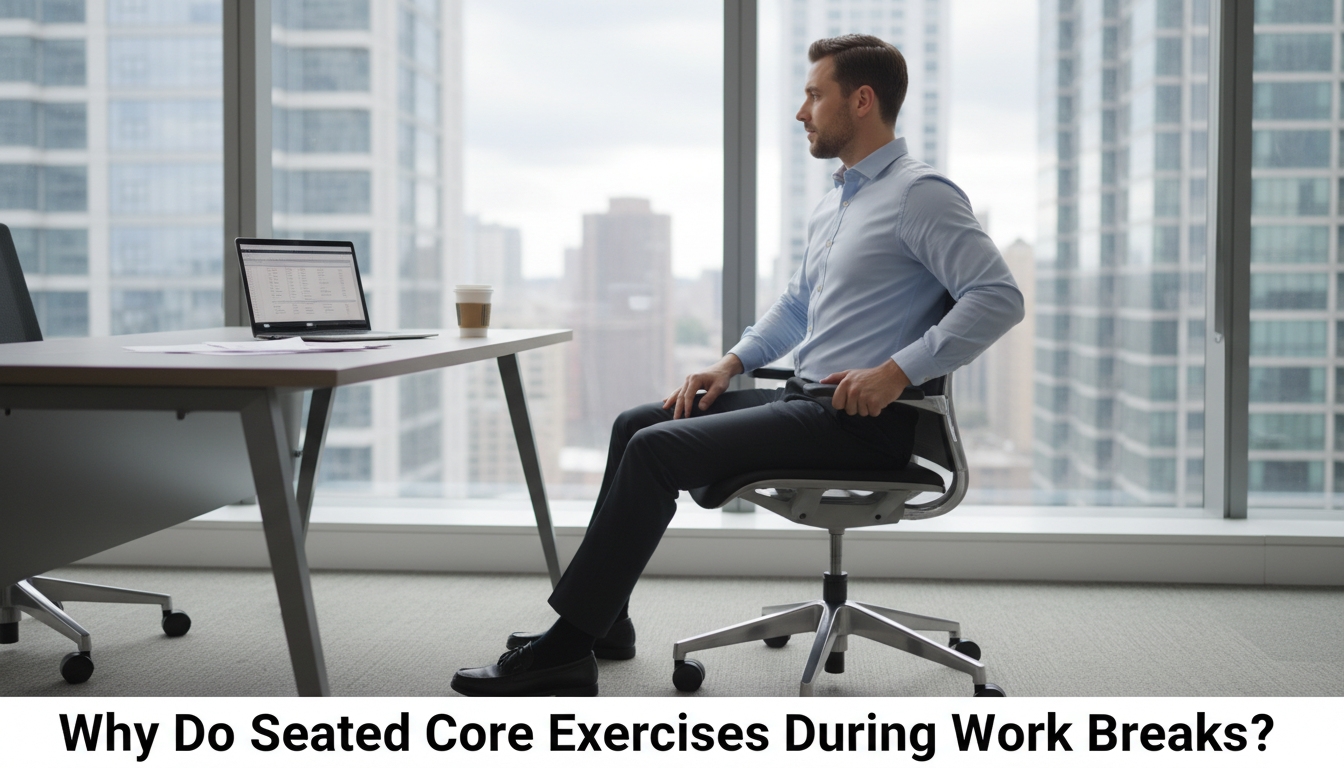
Why Do Seated Core Exercises During Work Breaks?
When you do a quick seated core move during a break, you boost blood flow to your prefrontal cortex, which clears mental fog and lifts mood. The rhythmic activation of your transverse abdominis and obliques also lowers cortisol, easing anxiety and reducing neck‑back strain. These micro‑resets prevent the cognitive plateau that comes from sitting too long, so you return to work sharper, more energetic, and with steadier focus—keep going and you’ll discover the exact exercises to try.
Table of Contents
Why Desk‑Friendly Core Moves Boost Productivity
When you slip a quick, desk‑friendly core routine into a break, you’re actually rebooting your brain as much as your muscles. A short series of seated twists, seated leg lifts, or seated bicycle crunches spikes blood flow, delivering oxygen and nutrients to the prefrontal cortex. That surge sharpens focus, reduces mental fog, and steadies mood, so you return to tasks with clearer priorities.
Core engagement also stimulates the autonomic nervous system, lowering cortisol and curbing the jittery anxiety that builds during long screen sessions. By stabilizing your spine and activating deep abdominal muscles, you improve posture, which lessens neck and back strain—common distractions that sap concentration.
The brief, rhythmic movement creates a micro‑reset, breaking the monotony of sitting and preventing the cognitive plateau that follows prolonged inactivity. Consequently, you finish projects faster, make fewer errors, and maintain a higher energy level throughout the workday.
How to Pick the Best Desk‑Friendly Core Exercises
Which desk‑friendly core moves are truly effective? Start by checking the movement’s range of motion. Choose exercises that engage the transverse abdominis, obliques, and lower back without forcing you out of your chair. Look for moves that let you keep a neutral spine, such as seated knee lifts, seated twists, or desk‑press planks with your forearms on the edge. Prioritize those that require minimal equipment—just a stable chair and maybe a light resistance band. Test the exercise: if you can maintain proper form for 30‑45 seconds without straining your neck or shoulders, it’s a good fit. Also, consider your work schedule; pick routines you can repeat every hour or two. Finally, make sure the exercise aligns with any personal limitations—avoid movements that aggravate existing back issues. By focusing on stability, simplicity, and repeatability, you’ll select desk‑friendly core moves that actually work.
5‑Minute Chair‑Based Core Routine to Try Now
After narrowing down the most reliable desk‑friendly moves, you can string them together into a quick, one‑minute routine that fits right into any break.
Sit tall, feet flat, and engage your core. First, do a 10‑second seated bicycle: alternately draw each knee toward your chest while twisting opposite elbow toward the knee. Next, transition to a 15‑second seated Russian twist: clasp your hands together, lean back slightly, and rotate torso left and right, keeping hips stable. Then, perform a 20‑second plank‑to‑kneeling: place forearms on the chair, extend legs behind you, hold a plank, then pull one knee toward your chest, alternating. Finish with a 15‑second seated leg‑raise: straighten legs, lift them a few inches, hold, then lower slowly. Breathe steadily throughout, keep shoulders relaxed, and reset your posture before you sit back at the desk.
This routine activates the abs, obliques, and lower back in just sixty seconds.
Frequently Asked Questions
Can Seated Core Exercises Help Lower Back Pain?
Yes, seated core exercises can ease lower back pain by strengthening the deep abdominal muscles, improving spinal stability, and promoting better posture; you’ll notice reduced strain and increased comfort throughout the day.
How Often Should I Do These Exercises Each Day?
You should aim for three to five short sessions per day, each lasting two to three minutes. Spread them evenly across your work hours, and listen to your body, adjusting if you feel any discomfort.
Do I Need Any Special Equipment for Chair Core Workouts?
You don’t need any special gear—just a sturdy chair, a small towel or mat for comfort, and maybe a resistance band if you want extra challenge; everything else is body weight.
Are There Any Contraindications for People With Spinal Issues?
You should avoid seated core moves if you have her her disc, spinal stenosis, or severe scoliosis unless a doctor clears you, because those conditions can worsen pain or cause injury during the exercises.
How Long Before I See Noticeable Strength Improvements?
You’ll notice strength gains after about four to six weeks of consistent, daily seated core work, especially if you increase intensity gradually and keep proper form each session.
Conclusion
By squeezing in a few minutes of desk‑friendly core work, you’ll keep your posture sharp, your energy steady, and your focus laser‑clear. Those simple moves counteract the slump of sitting, boost circulation, and fire up the muscles that support your spine. In turn, you stay more productive, feel less fatigued, and avoid the aches that derail a workday. So make those micro‑breaks a habit—your body and your to will thank you.


Sorry, the comment form is closed at this time.