
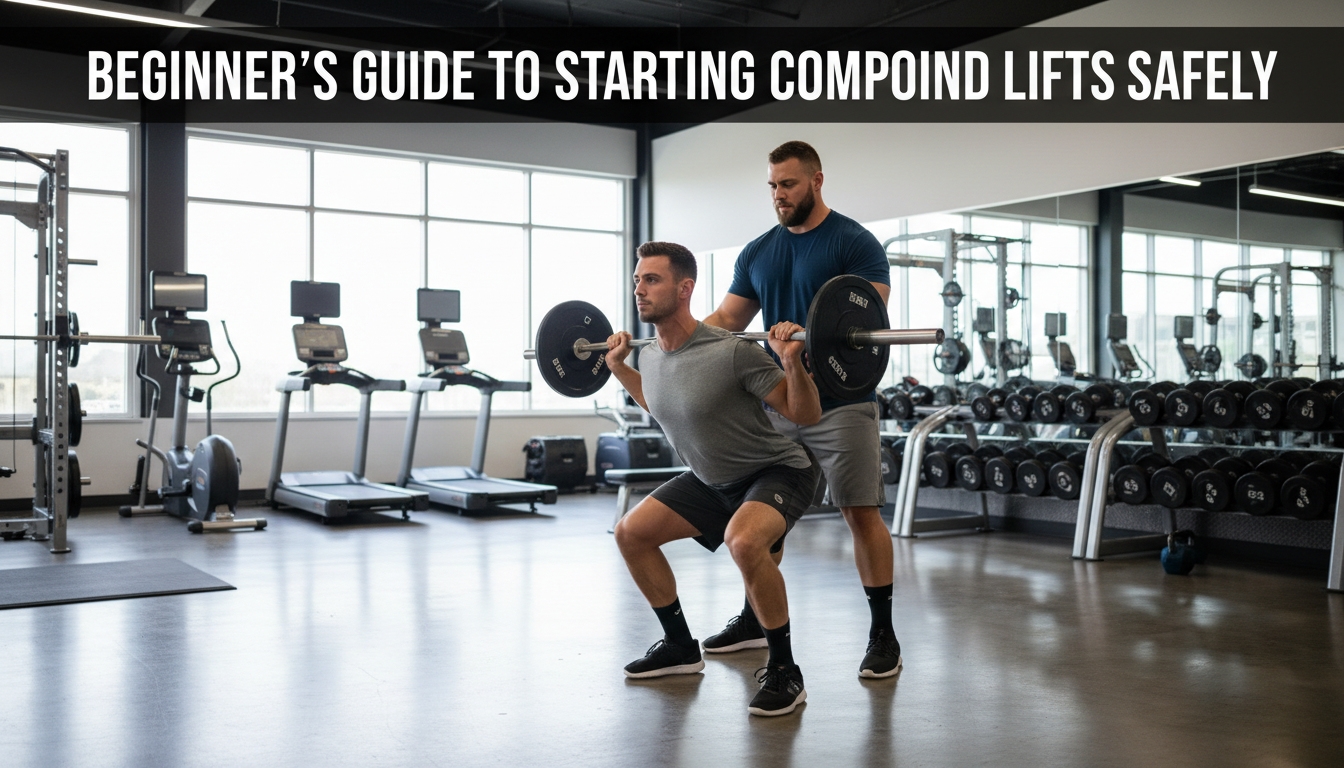
Beginner’s Guide to Starting Compound Lifts Safely
Start with three full‑body sessions a week and focus on squat, bench, and deadlift using a double‑progression scheme—first add reps, then add 2–5 % weight when you hit the target range. Warm up with five minutes of dynamic stretches, band pull‑aparts, and light sets before each lift, keeping your core braced and breathing steady. Use a light bar or dowel to nail the movement pattern, then increase load only when form stays solid. Follow these steps and you’ll keep progressing safely while avoiding common beginner mistakes.
Beginner Strength Program Overview
A solid beginner strength program gives you a clear roadmap, hits all major muscle groups, and builds a foundation for safe, progressive compound lifts. You’ll train three days a week, alternating full‑body sessions with a rest day in between. Each workout centers on three core lifts—squat, bench press, and deadlift—paired with accessory moves that reinforce the same muscle chains. Start with a weight that lets you complete 8‑12 reps with good form; you’ll add 2‑5 % each week as the reps become easy. Keep a log of sets, reps, and load so you can track progress and spot plateaus. Warm‑up with 5‑10 minutes of light cardio and dynamic stretches, then perform 2‑3 warm‑up sets before the main lift. Focus on technique, maintain a neutral spine, and breathe consistently. By sticking to this schedule, you’ll develop strength, coordination, and confidence before moving to heavier, more complex variations.
Warm‑up & Mobility for Beginner Strength Program
You’ll start with a dynamic stretching routine that raises your heart rate and loosens muscles.
Then you move into joint activation drills to fire up the shoulders, hips, and ankles before loading the bar.
Finally, you expand your range‑of‑motion progressively, ensuring each movement stays controlled and pain‑free.
Dynamic Stretching Routine
Ever wondered how to prime your body for heavy lifts without wasting time? Start with a 5‑minute dynamic stretching routine that targets the hips, shoulders, and spine—areas you’ll stress most. Perform leg swings (forward/backward and side‑to‑side) for 30 seconds each leg, then hip circles, 10 reps per direction. Follow with arm circles, small to large, 15 seconds forward and backward. Add torso twists, 20 reps, to activate the core and thoracic mobility. Finish with inchworms: walk hands forward to a plank, then step feet to hands, repeat 8 times. Move smoothly, breathe steadily, and keep the range of motion controlled. This warm‑up raises temperature, improves joint lubrication, and prepares neural pathways for the compound lifts ahead.
Joint Activation Drills
After the dynamic stretch, shift focus to the joints that will bear the load. Activate your shoulders with band pull‑aparts: hold a light resistance band, pull it apart, and keep elbows slightly bent for 15‑20 reps.
Warm up the elbows by performing wrist circles and elbow extensions with a light dumbbell, 10 reps each side.
Mobilize the hips using glute bridges and bodyweight hip circles, 12 reps each direction.
Engage the knees by doing bodyweight squat‑to‑stand drills, pausing at the bottom for a two‑second count, 10 reps.
Finish with ankle mobility: kneel, then drive the front knee forward while keeping the heel down, 10 reps per side.
These drills prime the joints, improve range of motion, and reduce injury risk before heavy compound lifts.
Progressive Range‑of‑Motion
How can you safely expand the movement window before loading the bar? Start with a light‑weight or empty bar, perform a few slow reps, then add a few inches of depth each set. Focus on smooth joint travel, breathing, and tension control. This progressive range‑of‑motion (ROM) builds confidence, prevents strain, and primes muscles for heavier loads.
| Phase | Goal |
|---|---|
| Warm‑up | Activate joints, increase blood flow |
| Mobility | Increase flexibility, maintain alignment |
| Expansion | Add 5‑10 % depth each set |
| Confirmation | Lock in full ROM before loading |
First Lift: Mastering the Squat for Beginners
Ready to nail your first squat? Start by standing with feet shoulder‑width apart, toes slightly turned out. Keep your chest up, shoulders back, and engage your core. Take a deep breath, then hinge at the hips while pushing your knees outward, lowering until your thighs are at least parallel to the floor. Aim for a controlled descent; avoid collapsing forward. As you rise, drive through your heels, squeeze your glutes, and exhale. Use a light barbell or a sturdy dowel to practice the movement pattern before adding weight. Focus on maintaining a neutral spine throughout—no rounding or excessive arching. If you feel any knee pain, adjust foot placement or reduce depth. Perform three sets of eight to ten reps, resting ninety seconds between sets. Consistency builds confidence, and proper form sets the foundation for heavier lifts later.
Set Up a Safe Bench Press Routine
You’ll want a spotter positioned just behind the bar, ready to intervene if the weight drops.
Adjust the bench so the bar rests at a comfortable height for your arms, allowing a smooth lift and lockout.
Choose a grip that’s neither too narrow nor too wide—about shoulder‑width apart—so you engage the chest and shoulders evenly.
Proper Spotter Placement
A solid bench‑press routine starts with the spotter positioned directly behind the bar, feet planted firmly on the floor, and hands ready to intervene if needed. You’ll keep your elbows tucked, shoulders retracted, and head flat against the bench while the spotter mirrors your stance, ensuring a balanced line of force. Communicate your reps and a “stop” cue before each set; the spotter should stay within arm’s reach, ready to lift the bar just enough to prevent a crash. This collaboration reduces injury risk and builds confidence, letting you focus on controlled movement and progressive overload.
| Spotter Action | When to Apply |
|---|---|
| Grip bar lightly | Start of each set |
| Lift slightly | If bar stalls |
| Assist on descent | When you reach failure |
| Return bar to rack | After final rep |
| Give verbal cue | Before you begin |
Adjust Bench Height
How high should the bench sit for a safe press? Position the bench so that when you lie down, your eyes are roughly level with the bar. This typically means the seat is about 12–14 inches off the floor, depending on your torso length. Adjust the backrest angle to a slight incline (0–15°) if you prefer a chest‑focused press; keep it flat for a classic bench. Ensure your feet can plant firmly on the ground without straining your knees. When you grip the bar, your forearms should be vertical at the bottom of the movement. If you feel your shoulders hunch or your elbows flare excessively, lower the bench slightly until your body forms a stable, ergonomic line. This setup protects shoulders, reduces strain, and promotes consistent lift mechanics.
Master Grip Width
After setting the bench height so your eyes line up with the bar, the next factor that determines safety and performance is grip width. Choose a grip that places your forearms perpendicular to the floor at the bottom of each lift; this usually means your hands are just outside shoulder width. A narrower grip shifts stress to the triceps and can increase shoulder strain, while an overly wide grip reduces triceps involvement and may compromise shoulder stability. Test the position by pulling the bar down to your chest—your elbows should form a 45‑degree angle relative to your torso. Keep your thumbs wrapped around the bar for a secure hold, and maintain consistent spacing each set to protect joints and maximize power output.
Master Deadlift Grip, Stance, and Lift Path
When you set up for a deadlift, your grip, stance, and lift path work together to keep the bar close and your back safe. Choose a double‑overhand grip or mixed grip if the weight feels heavy, and wrap your thumb around the bar for security. Position your feet hip‑width apart, toes slightly pointed out, and place the bar over the middle of your foot. Bend at the hips and knees until your shins touch the bar, keeping your shoulders just in front of it. Pull your shoulder blades down and back, creating a tight “shelf” for the bar.
As you drive through the floor, keep the bar hugging your shins and thighs, moving in a straight line upward. Avoid letting the bar drift away from your body; this maintains leverage and reduces shear on the spine. Finish the lift by standing tall, then reverse the path with control, keeping the bar close until it reaches the floor.
How to Safely Add Weight to Your Beginner Strength Program
Mastering your deadlift grip and stance gives you a solid foundation, so the next step is figuring out how to increase the load without sacrificing form. Begin by adding the smallest possible increment—usually 2.5 kg (5 lb) on each side. This keeps the total jump modest and lets your nervous system adapt. Track each session in a simple log; note how the new weight feels on the last rep of each set. If you can complete all reps with clean technique, the increment is safe. If form breaks down, drop back to the previous weight and repeat the same progression until you master it.
Use a “double‑progression” scheme: increase reps first (e.g., from 5 to 6), then add weight once you hit the target rep range. Warm up thoroughly, focus on breathing, and keep your core braced. Consistency, not haste, drives long‑term strength gains.
Common Mistakes in Beginner Strength Program and How to Fix Them
Why do so many beginners stall or get injured in their first strength program? You often skip warm‑ups, lift too heavy too fast, and ignore form cues.
First, neglecting a proper warm‑up reduces muscle elasticity and spikes injury risk; fix it by spending five minutes on dynamic stretches and light sets before the main lifts.
Second, chasing weight without mastering technique leads to compensations—use a weight you can control for eight to twelve reps, then add 2‑5 % only when you nail the movement pattern.
Third, inconsistent training frequency stalls progress; schedule three full‑body sessions weekly and stick to them.
Fourth, forgetting progressive overload makes gains plateau—track reps, sets, and load, then increase one variable each week.
Finally, skipping recovery,sleep, nutrition, mobility) hampers adaptation; prioritize 7‑9 hours of sleep, protein intake, and foam‑rolling. Apply these fixes, and you’ll stay strong, steady, and injury‑free.
Frequently Asked Questions
Do I Need a Gym Membership for Compound Lifts?
You don’t strictly need a gym membership for compound lifts; you can set up a sturdy home rig with a barbell, plates, and a bench, but a gym offers varied equipment and spotter safety.
Can I Use Resistance Bands Instead of a Barbell?
Yes, you can replace the barbell with resistance bands for many compound lifts, but ensure the bands provide enough tension, secure them properly, and adjust your form to maintain proper mechanics.
How Often Should I Change My Lifting Shoes?
You should swap your lifting shoes every three to six months, depending on wear. If the sole’s cushioning flattens, the heel lifts, or the upper frays, replace them promptly to keep stability and performance optimal.
What’s the Best Way to Track My Progress?
You should log each session in a notebook or app, noting weight, reps, sets, and RPE. Review weekly, adjust loads by 2‑5 % when you consistently hit target reps, and keep photos for visual reference.
Should I Take Supplements While Starting a Strength Program?
Yes, you can take basic supplements like protein powder and creatine, but focus first on solid nutrition, sleep, and consistent training; only add extras if you’ve covered those fundamentals.
Conclusion
Stick to the basics, progress gradually, and keep your form sharp. Warm‑up every session, listen to your body, and add weight only when you can lift cleanly. By mastering the squat, bench, and deadlift fundamentals, you’ll build a solid strength foundation while staying safe. Consistency, patience, and proper technique are the keys to long‑term gains and injury‑free training.


No Comments