
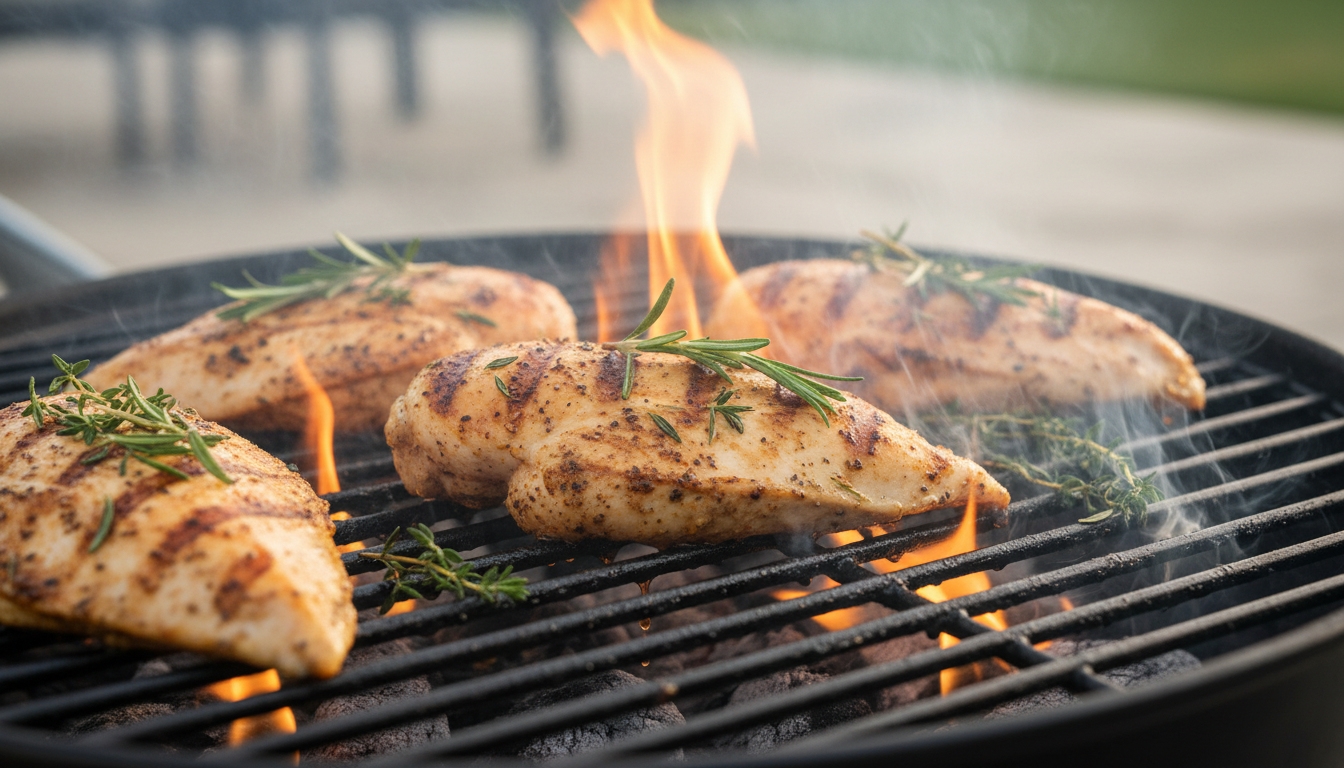
Pat your chicken breasts dry, coat them lightly with olive oil, then season with salt, pepper, garlic, thyme, and oregano. Heat the grill to a sizzling 450‑500 °F, oil the grates, and sear each side for 2‑3 minutes to lock in juices and create perfect grill marks. Move the meat to a cooler zone, close the lid, and cook until the internal temperature hits 165 °F, letting it rest under foil. Follow these steps, and you’ll discover even more tips for juicy, flavor‑packed results.
Table of Contents
Key Takeaways
- Pat chicken dry, coat with extra‑virgin olive oil, and season with salt, pepper, garlic, thyme, and oregano for flavor and moisture retention.
- Marinate in the seasoned oil mixture for at least four hours; create a shallow pocket in each breast to let the marinade penetrate deeper.
- Preheat grill to a high zone (450‑500 °F), oil the grates, and sear each side for 2‑3 minutes to develop caramelized marks.
- Move the chicken to a cooler indirect zone (300‑350 °F), close the lid, and cook until the internal temperature reaches 160 °F, then rest to 165 °F.
- Rest the cooked chicken tented with foil for a few minutes to redistribute juices, then serve with options like smoky glaze, pesto, or rosemary‑garlic skewers.
How to Grill Juicy Chicken in 5 Simple Steps
Grilling juicy chicken in just five steps is easier than you think.
First, pat the breasts dry and coat them with a thin layer of oil; this helps the heat conduct evenly.
Next, season with salt, pepper, and any herbs you like—this is the core of many grilled chicken recipes.
Then, preheat your grill to high and oil the grates so the meat won’t stick.
Place the chicken on the hottest zone for two minutes, creating those coveted sear marks, before moving it to a cooler area.
Finally, close the lid and cook another two to three minutes per side, checking that the internal temperature hits 165°F.
Let the meat rest a minute; the juices will redistribute, giving you tender, flavorful bites every time.
Follow these steps, and you’ll master a reliable method that fits into any grilled chicken recipes collection.

Essential Grilled Chicken Ingredients and Their Flavor Impact
After mastering the five‑step method, you’ll notice how each ingredient shapes the chicken’s taste and texture. Extra‑virgin olive oil coats the meat, locking in moisture and providing a silky mouthfeel while allowing the grill’s sear to develop. Minced garlic injects a pungent, aromatic bite that mellows into a sweet, caramelized note as it cooks. Dried thyme contributes earthy, floral undertones that complement the chicken’s natural flavor, and oregano adds a subtle Mediterranean tang that brightens the profile. Salt enhances all other flavors and helps the proteins retain juiciness, while black pepper supplies a gentle heat and a faint crunch. Lemon zest lifts the dish with citrusy brightness, cutting through richness and sharpening the palate. Together, these components create a balanced, layered taste that’s both robust and refreshing, turning a simple breast into a juicy, flavor‑packed masterpiece.
Step‑by‑Step Marination for Maximum Tenderness
When you let the chicken soak in the seasoned oil mixture for at least four hours, the acid from the lemon zest and the salt begin to break down muscle fibers, while the olive oil and garlic penetrate the meat, locking in moisture and flavor.
First, pat the breasts dry, then slice a shallow pocket into each piece; this lets the marinade reach the interior.
Transfer the chicken to a zip‑top bag, pour the oil‑herb blend over it, and seal, pressing out air bubbles.
Massage the bag for 30 seconds so every surface gets coated.
Refrigerate and turn the bag every hour to ensure even exposure.
If you’re short on time, a 30‑minute rest still imparts noticeable juiciness, but the full four‑hour window maximizes tenderness.
Before cooking, remove excess liquid, dab the meat lightly with paper towels, and let it sit at room temperature for ten minutes to promote even grilling.
Getting the Right Grill Heat: Mark the Chicken, Then Finish Low
How do you achieve those perfect sear marks without overcooking the meat? Light the grill to a high zone of 450‑500°F and oil the grates. Pat the marinated chicken dry, then place each piece directly over the hottest spot. Press gently for 2‑3 minutes, then flip once; you’ll see crisp, caramelized lines. As soon as the marks appear, move the chicken to a cooler zone—medium‑low, around 300‑350°F. Close the lid and let the meat finish cooking slowly, turning only if needed. This two‑stage method seals flavor, prevents a dry exterior, and lets the interior reach the safe 165°F without burning. Keep a thermometer handy, and adjust the heat if the grill flares. By mastering the “sear‑then‑low” sequence, you’ll consistently serve juicy, beautifully marked chicken that’s ready for any side dish.
How to Keep Grilled Chicken Moist and Avoid Over‑cooking?
Ever wondered why some grilled chicken stays juicy while other pieces turn dry? The secret isn’t magic; it’s control. First, let your meat come to room temperature before it hits the grill—this reduces shock and promotes even cooking. Second, use a reliable instant‑read thermometer; pull the chicken at 160 °F and let residual heat finish it to the safe 165 °F. Third, give the meat a brief rest, tented with foil, so juices redistribute instead of spilling onto the plate.

Key steps to lock in moisture
- Pre‑sear on high heat for 1–2 minutes per side, creating a caramelized crust that traps liquid.
- Finish on indirect heat (medium‑low) for the remaining time, preventing the interior from drying out.
- Baste with the leftover marinade or a butter‑herb mix during the last minute, adding flavor and a glossy barrier.
Follow these tactics, and you’ll consistently serve succulent, tender grilled chicken every time.
Grilled Chicken Variations and Serving Ideas for Parties, Weeknights, and Picnic
Looking for ways to make grilled chicken the star of any gathering? Slice the breasts into bite‑size strips, toss them in a smoky chipotle‑lime glaze, and skewer for quick party bites. For weeknights, halve the chicken, spread a thin layer of pesto, and grill until caramelized; serve over mixed greens for a light dinner. Picnic‑ready options include marinating whole thighs in rosemary‑garlic oil, grilling, and then cooling before packing in a cooler with sliced cucumber and cherry tomatoes. Add a drizzle of honey‑mustard sauce for extra zing. If you’re feeding a crowd, roast a whole spatchcocked bird, carve it, and arrange on a platter with grilled corn, avocado wedges, and a side of salsa verde. Pair each variation with a complementary side—quinoa salad, coleslaw, or grilled peaches—to keep flavors balanced and the menu interesting. This approach keeps the chicken juicy, versatile, and always the centerpiece.
Frequently Asked Questions
Can I Use Bone‑In Chicken Thighs Instead of Boneless Breasts?
Yes, you can swap boneless breasts for bone‑in thighs; just adjust cooking time, sear each side three to four minutes, then move to indirect heat until the internal temperature hits 165°F.
What’s the Best Way to Prevent Flare‑Ups on a Charcoal Grill?
You’ll avoid flare‑ups by trimming excess fat, using a two‑zone fire, and keeping a spray bottle of water handy; also, oil the grill lightly and don’t add too much oil to the meat.
How Long Can Leftover Grilled Chicken Be Safely Stored in the Fridge?
You can keep leftover grilled chicken in the fridge for up to four days. Store it in an airtight container, cool it promptly, and reheat to 165°F before eating.
Can I Substitute Dried Herbs With Fresh Ones for the Same Flavor?
Yes, you can swap dried herbs for fresh ones, but use three times the amount—so a teaspoon of dried thyme becomes three teaspoons fresh. Adjust salt and lemon zest if needed, then enjoy the same bright flavor.
Is It Safe to Grill Chicken on a Gas Grill Without Preheating First?
You should preheat the gas grill first; skipping it can cause uneven cooking, longer grill time, and higher bacterial risk. A hot grill sears the meat, locks juices, and ensures safe internal temperature.
Conclusion
Now you’ve got a foolproof method for juicy, flavor‑packed grilled chicken every time. The simple five‑step process, from a generous marination to mastering grill zones, ensures tender meat with a perfect crust. Mix and match herbs, spices, or sauces for endless variations, and pair it with salads, veggies, or rice for any occasion. Master this technique, and your weeknight dinners and gatherings will always impress.


No Comments